News: Brokerage

Emmetsberger, Simons and Rodriguez of Cushman & Wakefield retained to sell 4,800 s/f commercial co-op

Brock Emmetsberger, Cushman & Wakefield
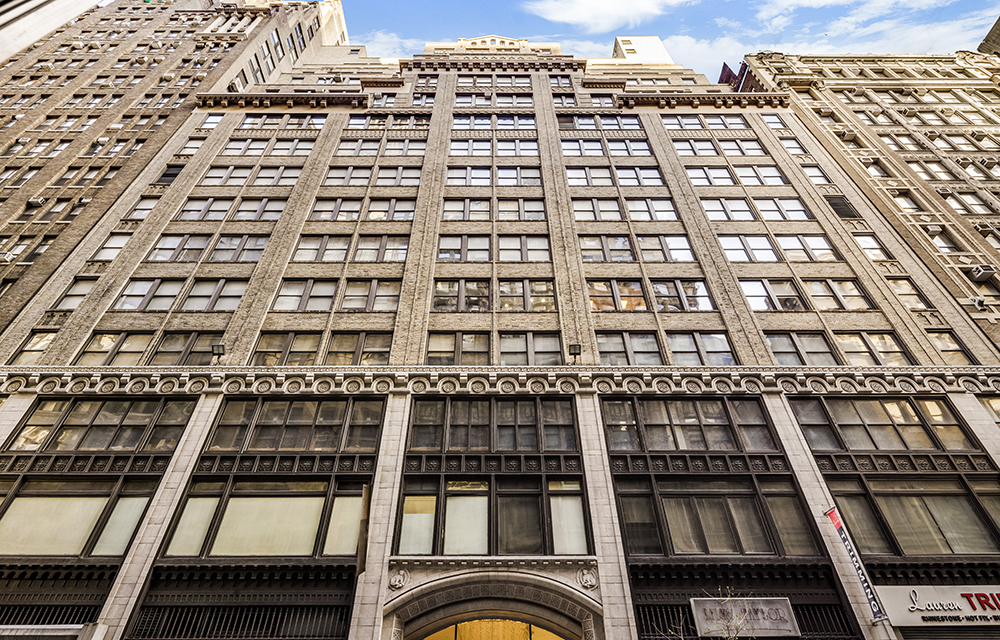
Manhattan, NY Cushman & Wakefield has been retained as the exclusive agent for the sale of a 4,800 s/f loft space on the third floor of 227 West 17 St. A Cushman & Wakefield team of senior managing director Brock Emmetsberger, director Billy Simons and associate Hannah Rodriguez are the agents for the property. “This is a great opportunity to acquire a full-floor commercial cooperative in one of Manhattan’s most dynamic neighborhoods,” said Emmetsberger. “The location is ideal for creative occupants and offers a myriad of uses which makes it a rare opportunity for an end-user looking to convert to residential, an investor looking to benefit from a prospering neighborhood, or a business owner looking for a showroom or office space.” The third-floor loft is a part of an eight-story building. The space is 120-ft. wide with 11-ft. ceilings and large windows which provide an abundance of light exposure. Currently configured as a jewelry showroom with office space, the unit can be tailored to a variety of uses. Cushman & Wakefield is a leading global real estate services firm that helps clients transform the way people work, shop, and live. Our 43,000 employees in more than 60 countries help investors and occupiers optimize the value of their real estate by combining our global perspective and deep local knowledge with an impressive platform of real estate solutions. Cushman & Wakefield is among the largest commercial real estate services firms with revenue of $5 billion across core services of agency leasing, asset services, capital markets, facility services (C&W Services), global occupier services, investment & asset management (DTZ Investors), project & development services, tenant representation, and valuation & advisory. T
MORE FROM Brokerage

NYSCAR June 2026 president’s message - by Mercedes Brien

As I write this letter, we are preparing to be at the Annual Conference being held at the Rivers Casino, Schenectady, New York. I look forward to reporting on the conference in my next letter. We have some great courses coming up via Zoom. Please be sure to keep watch on upcoming courses by visiting nyscar.org/resources and tools/professional development.
READ ON THE GO
DIGITAL EDITIONS
Subscribe
Columns and Thought Leadership
The death of the generic offering memorandum: What buyers expect in 2025 - by Kimberly Zar Bloorian

The death of the generic offering memorandum: What buyers expect in 2025 - by Kimberly Zar Bloorian

There was a time when an offering memorandum (OM) was pretty bare bones, some photos, a few bullet points on income, and a rent roll thrown in at the back. That used to get the job done. Not anymore. In 2025, buyers are sharper, faster, and more selective. They’re looking
A fresh start - by Shallini Mehra and Amit Doshi

A fresh start - by Shallini Mehra and Amit Doshi

For the past several years, the New York City multifamily housing market has been defined by disruption. The combined impact of the HSTPA rent laws and a sharply higher interest rate environment has fundamentally reduced
The anticipated effect of Basel III and ISO 20022 implementation on commercial real estate - by Michael Zysman

The anticipated effect of Basel III and ISO 20022 implementation on commercial real estate - by Michael Zysman

July 1, 2025 is the deadline for US banks to begin to adopt Basel III banking standards and July 14, 2025 is the deadline for U.S. banks to adopt ISO 20022 messaging standards. Both will have a significant effect on the banking and commercial real estate (CRE) finance sectors.
Tri-state capital  migrates nationally amid  regulation pressure - by Reese Weaver

Tri-state capital migrates nationally amid regulation pressure - by Reese Weaver

New York tri-state multifamily investors are increasingly reallocating capital to less-regulated markets across the U.S. as rent control and legislative risk erode returns at home. With over 60% of New York City’s rental housing stock classified as rent-stabilized, the traditional value-add model — buying under-performing buildings,