



News:
Brokerage
Posted: August 24, 2021
Embracing PropTech as New York City’s real estate industry transforms - by Alex Elkin

Three years ago, at the same time that New York City passed the bundle bills behind its sweeping Climate Mobilization Act, New York State enacted its ambitious Climate Leadership and Community Protection Act.
Now, as a slate of environmental legislative mandates (and penalties for lack of compliance) loom, many builders and property owners are concerned over the investment necessary to tighten buildings, improve energy usage and reduce emissions. Unfortunately, this will require additional investment at a time of deep market uncertainty and disruption.
However, real estate industry members can leverage environmental regulations to their own advantage, using their commitment to sustainability as a way to distinguish their properties. As PropTech advances, there are an increasing number of tech offerings available to help the industry build and run better buildings – often with limited up-front cost and significant residual savings.
Between the energy needed for daily operation and power plants generating electric for heating, cooling and lighting, New York City’s buildings are responsible for 66% of the city’s greenhouse gas emissions, according to the mayor’s office.
New York City’s Local Law 97 calls for the city’s biggest buildings to reduce their emissions by 40% by 2030, compared with 2005 levels, and by 80% come 2050. The owners of more than 50,000 buildings face multimillion-dollar annual fines, beginning in 2024, that escalate with tighter emissions limits in 2029 and 2030.
The state’s climate law, meanwhile, requires no less than transforming New York to a net-zero emissions economy, slashing planet-warming pollution 85% below 1990 levels by 2050 and potentially offsetting the rest by removing carbon dioxide from the atmosphere.
These goals place an immense burden on developers and property owners, but, thankfully, PropTech has created significant opportunity for digital transformation in commercial and residential real estate. PropTech has come a long way since being best known for automatic light switches and faucets. From sensors to AI and cloud computing, technology is revolutionizing how we build, lease, run, buy, sell, secure, heat, cool, light and power buildings.
Investors are rushing to fund smart building battery systems, sophisticated power distribution software, high-efficiency HVAC systems and a cavalcade of automated infrastructure tools and 3D capturing and visualization technologies. Then, there’s all the construction tech.
One notable example, CarbonCure, was featured on a recent 60 Minutes episode, with praise from Bill Gates. This proprietary technology injects CO2 into concrete, a major source of worldwide CO2, to accelerate the curing process and reduce the amount of cement needed in concrete mix.
Another construction tech firm, Procore Technologies Inc., grew from a software startup to a publicly listed firm with $12 billion market cap, helping manage far-flung construction sites and tracking every sort of metric to eliminate waste.
These technologies are examples of a larger trend in which companies can help transform the real estate landscape while delivering for investors. Capital is rushing into this space and will deliver many more solutions in the near term.
Beyond exploiting efficiencies as a means to ROI, PropTech also has significant job creation potential. In the New York Metro Area alone, MIT’s David Hsu estimated the city’s Local Law 97 could create 141,000 new positions by 2030, spurring growth in construction, clean energy, design and other sectors when they need it most after a tough 2020.
Recent legislation creates major hurdles for the real estate industry, but these laws also prompt us to re-examine our processes and technologies in a positive way. Ultimately, we will have a much more cost-efficient built environment while reducing energy consumption and greenhouse gas emissions. The period of transition will be difficult, but technology will ease the process.
Alex Elkin is founder and owner of Eastbound Construction, Manhattan, N.Y.
Tags:
Brokerage
MORE FROM Brokerage
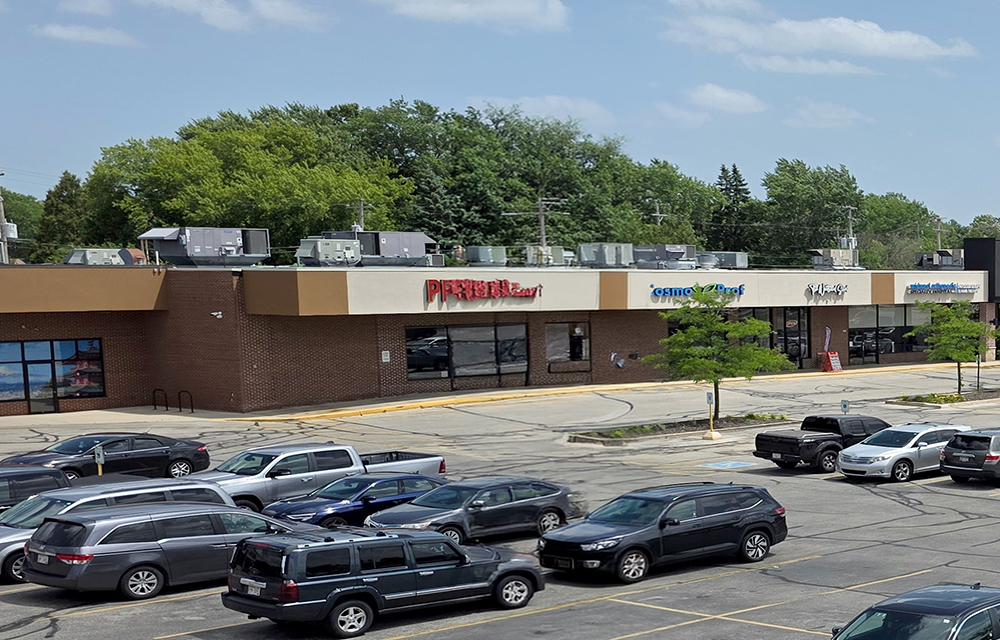
United Properties Corp. expands Wisconsin and Illinois retail presence adding 200,000 s/f
West Allis, WI United Properties Corp. completed two retail acquisitions totaling $27.4 million across Illinois and Wisconsin, adding 205,000 s/f of shopping center space to its portfolio



 (2).gif)

Columns and Thought Leadership

A guide to finding the right NYC property management company - by Sanjay Gandhi
Being a small to midsize landlord in NYC is an increasingly demanding endeavor. From navigating complex regulations, increased compliance demands to dealing with tenant issues and remediating violations. It is wise to enlist the assistance of a partner, a professional

Positive forecast for New York’s pro-housing push? - by Philip Butler
New York’s housing crisis remains a hot button topic despite growing consensus that varied and affordable housing is desperately needed statewide. Governor Hochul has recently introduced several initiatives to overcome N.Y.’s anti-housing

New York’s streets are full again, and the retail numbers prove it - by Noam Aziz
Walk down any New York block this year and you can feel it. The sidewalks are crowded, the storefronts are lit, and the energy that defines this city is back at full volume.

Hunt commercial real estate question and answer: Fortune 500 wisdom - by David Hunt
Yes, there are lessons to be learned from the largest companies in America when comes to managing your real estate. But the decision to buy or lease real estate may not be one of
.gif)