



News:
Brokerage
Posted: November 24, 2014
Eastern Consolidated's capital advisory division finances $25 million
According to Eastern Consolidated, its capital advisory services division has recently arranged $25 million in financing for commercial real estate properties in the city.
Launched earlier this year, Eastern's capital advisory division complements the firm's investment sales division, by arranging the origination and delivery of commercial real estate debt and equity financing at all levels for all property types. Year-to-date the division has arranged an aggregate of approximately $200 million in various finance transactions.
The most recent transactions completed by the capital advisory services team include:
* $7 million with Investors Bank to refinance 3612 Broadway, a six-story, 36,624 s/f mixed-used, elevator building situated in the rapidly improving Hamilton Heights neighborhood in Upper Manhattan.
* $6.25 million with Modern Bank for a cash-out refinance on the first mortgage on 311 Church St., a five-story, 8,738 s/f mixed-use, walk-up property in TriBeCa. The refinance freed up investor capital for further investment.
* $4.5 million loan and a $1 million line of credit with Valley National Bank for the refinance of 181 East 73rd St., a mixed-use co-op building with 114 residential units. The loan provided funds to refinance the existing mortgage and to finance planned improvements to the property.
* $3.75 million with BCB Community Bank for cash-out refinance of 162 Montague St., a five-story, 7,155 s/f landmarked mixed-use property with residential, retail, office, and 19,845 s/f of unused air rights, located in the heart of the historic Brooklyn Heights Montague St. shopping corridor. The new loan provided funds to refinance the existing note and finance future unit renovations.
* $3.5 million with Dime Savings Bank of Williamsburg to refinance 305 East 21st St., a 37-unit multifamily building located in Gramercy Park.
The capital advisory division's seasoned professionals have extensive experience in arranging permanent and short-term debt funding, construction loans, mezzanine financing, preferred equity, and joint venture equity for a variety of major asset types throughout the United States. These assets include multifamily, office, retail, mixed-use, industrial, and hospitality properties, among many others.
Tags:
Brokerage
MORE FROM Brokerage
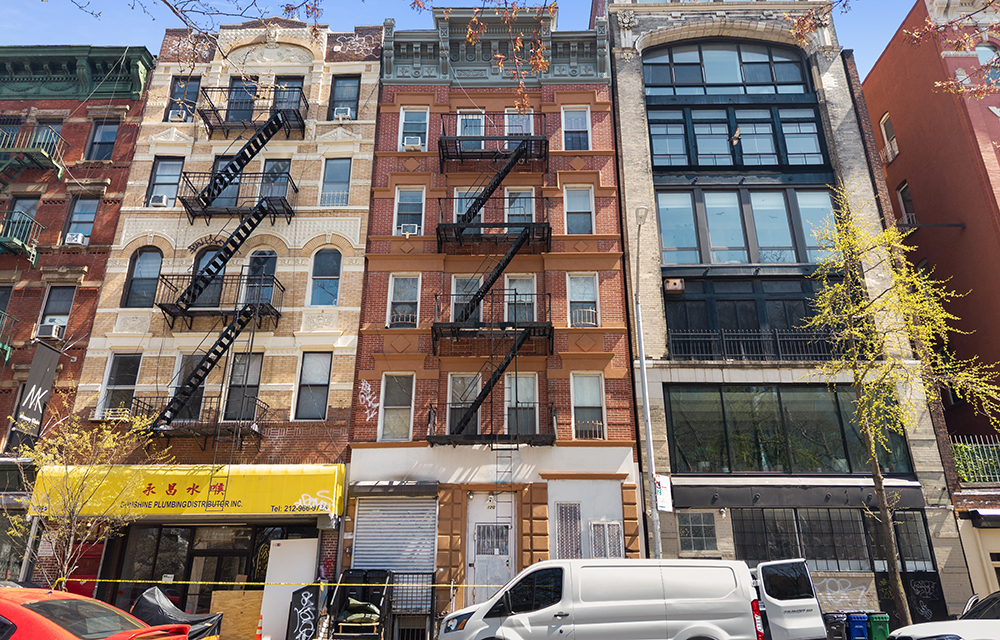
Investment Property Realty Group sells 120 Forsyth St. for $1.35 million
Manhattan, NY Investment Property Realty Group (IPRG) closed the sale of 120 Forsyth St., a mixed-use building located in the Lower East Side section of the city, for $1.35 million.



Quick Hits

Columns and Thought Leadership

Hunt commercial real estate question and answer: Fortune 500 wisdom - by David Hunt
Yes, there are lessons to be learned from the largest companies in America when comes to managing your real estate. But the decision to buy or lease real estate may not be one of

New York’s streets are full again, and the retail numbers prove it - by Noam Aziz
Walk down any New York block this year and you can feel it. The sidewalks are crowded, the storefronts are lit, and the energy that defines this city is back at full volume.

Positive forecast for New York’s pro-housing push? - by Philip Butler
New York’s housing crisis remains a hot button topic despite growing consensus that varied and affordable housing is desperately needed statewide. Governor Hochul has recently introduced several initiatives to overcome N.Y.’s anti-housing

A guide to finding the right NYC property management company - by Sanjay Gandhi
Being a small to midsize landlord in NYC is an increasingly demanding endeavor. From navigating complex regulations, increased compliance demands to dealing with tenant issues and remediating violations. It is wise to enlist the assistance of a partner, a professional
.gif)