



News:
Spotlight Content
Posted: February 22, 2010
Decade Answers: Daun Paris
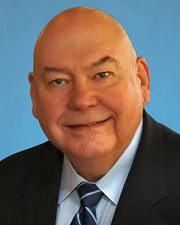
Daun Paris is the president at Eastern Consolidated, New York, N.Y.
What are your predictions for commercial real estate in the new decade?
Once the economy turns around, New York City is better poised than most other cities to see growth. Real estate is still in demand and the next wave of occupants should demonstrate that. Office rents have corrected more than 50% and office availability is so high that it will remain a "tenant's market" for a few years. Everyone had foretold the end of Wall Street as we know it in 2008, just as they did in 2001, and in 1991, etc. But the BMOC is about to move into its new West St. home with its state-of-the-art technology: Goldman Sachs. If we've learned anything over the last 18 months, it is that the market responds to Goldman's every move. If they have planted deep roots in Lower Manhattan, the rest of the industry will stay put in New York as well. While the rent-multiple has fallen from its crazy highs of 2007, investors will continue to see the value of multifamily properties, even those with some rent-regulation. Development projects that were financed with over-inflated assumptions have stalled, but a number of opportunity funds are in the market to pick up where previous developers left off.
Tags:
Spotlight Content
MORE FROM Spotlight Content

The commercial classroom: 1031 tax-deferred exchanges - by Edwad Smith Jr.
The sale of real estate may trigger capital gains taxes on the net profits of that sale. These taxes may be deferred by participating in a 1031 tax exchange, in essence, by purchasing property(s) to replace the


.png)

Quick Hits


Columns and Thought Leadership

From vacancy to vitality: How adaptive reuse is reshaping Long Island’s CRE landscape - by Andrea Tsoukalas Curto
Adaptive reuse has become one of the most important conversations in commercial real estate today. Long Island has a large inventory of aging retail, office and industrial

2026 Developing Long Island: ERG Commercial Real Estate launches its new Retail Leasing division
North Hempstead, NY ERG Retail Leasing is the dedicated leasing division of ERG Commercial Real Estate, an established full-service commercial real estate brokerage for over 35 years.

2026 Developing Queens: Long Island Board of Realtors advances commercial growth and advocacy in Queens
The Long Island Board of Realtors (LIBOR) Commercial Network continues to play a key role in advancing opportunities and strengthening the commercial real estate landscape across Queens. Through targeted programming and global outreach

CRE Guide Featured Company: Merritt Environmental Consulting Corp.
Merritt Environmental Consulting Corp. (MECC) was established in June of 2009 after being part of a larger engineering firm for almost 20 years. The focus of the company is to assist lending institutions, attorneys, real estate investors, and property owners with environmental concerns. Today, MECC has offices in New York, Florida, and Vermont and has grown into a regional consulting firm serving clients along the East Coast.