


 (2).gif)
News:
Spotlight Content
Posted: December 23, 2013
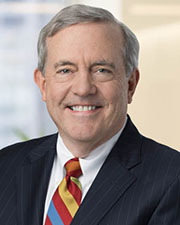
David Schiller, Pyramid Brokerage Company
What was your most notable project, deal or transaction in 2013?
Winthrop Realty Trust was challenged to meet Ingram Micro's requirements (200,000 s/f) to remain in Amherst, including adding parking for new employees economically, without adversely impacting neighbors. I was engaged by Winthrop to represent its interests to retain the tenant and expand the site.
Winthrop's expert development staff worked with a team including Sean Hopkins Esq., Rob Pidanik (Nussbaumer & Clarke Engineering), and Frank Brzezinski as landscape architect. The team achieved a sensitive, elegant, engineered solution in cooperation with the neighbors and the Town of Amherst to accommodate the tenant's requirement for the renewal and protect the neighbors' interests.
Tags:
Spotlight Content
MORE FROM Spotlight Content
Artificial intelligence war stories - by Thomas Kearns
The proliferating artificial intelligence products for law firms show promise of improving the quality of legal services and making lawyers more efficient, but as with any developing technology, the results are mixed, with some results being not worth



.png)

Quick Hits


Columns and Thought Leadership

Properly serving a lien law Section 59 Demand - by Bret McCabe
Many attorneys operating within the construction space are familiar with the provisions of New York Lien Law, which allow for the discharge of a Mechanic’s Lien in the event the lienor does not commence an action to enforce following the service of a “Section 59 Demand”.

From vacancy to vitality: How adaptive reuse is reshaping Long Island’s CRE landscape - by Andrea Tsoukalas Curto
Adaptive reuse has become one of the most important conversations in commercial real estate today. Long Island has a large inventory of aging retail, office and industrial

2026 Developing Queens: Long Island Board of Realtors advances commercial growth and advocacy in Queens
The Long Island Board of Realtors (LIBOR) Commercial Network continues to play a key role in advancing opportunities and strengthening the commercial real estate landscape across Queens. Through targeted programming and global outreach

CRE Guide Featured Company: Merritt Environmental Consulting Corp.
Merritt Environmental Consulting Corp. (MECC) was established in June of 2009 after being part of a larger engineering firm for almost 20 years. The focus of the company is to assist lending institutions, attorneys, real estate investors, and property owners with environmental concerns. Today, MECC has offices in New York, Florida, and Vermont and has grown into a regional consulting firm serving clients along the East Coast.
September Promotion
