



News:
Spotlight Content
Posted: November 20, 2009
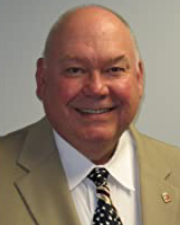
Dale Siegel answers: How do you stay ahead of the curve?
I am the president of Circle Mortgage Group. My responsibilities include overseeing complete process of mortgage loan approval from client intake to post-closing. I have has utilized modern technology and servicing techniques to create a leading firm in the Industry. I write and speak about real estate and finance to thousands of professionals and consumers each year. Some of my career achievements include my book release in September 2009, The New Rules for Mortgages.
I am a licensed attorney in New York and am an adjunct professor at NYU Schack Institute of Real Estate as well as Baruch College. I have been speaking to the public and teaching real estate professionals about mortgage finance for the past ten years. My latest book, The New Rules for Mortgages came out in recently and is used to educate both professionals and consumers on the latest guidelines for home loan. I am currently working on a second book, The 20 Hour S.A.F.E. Comprehensive Mortgage Loan Originator Course Textbook. This course is now required nationally for all those mortgage professionals with direct consumer contact. I will be teaching the course in the New York Metropolitan area.
How do you stay ahead of the curve?
I stay ahead of the curve by being an educator in my fields of mortgages and real estate law. By teaching my industry peers as well as real estate salespeople, it is essential I stay on top of the new regulations and requirements. There are so many changes going on in the mortgage industry that I am always reading, listening and speaking to people about what is happening next. This has allowed me to stay on top of my game for the past decade. It only improves the way I communicate and service my own clients. I will always consider myself both a mortgage professional and an educator.
What motivates you to succeed?
Happy clients make it all worthwhile; when you know you have done the right thing by them you have a sense of pride. When I do a seminar and I see people shaking their heads in agreement and understanding what I say, I leave feeling like I put people in the right direction.
The biggest challenge facing the real estate industry in 2010 is...
The biggest challenge facing the real estate industry in 2010 is the lack of mortgage money. The lenders are very tight and Wall Street is almost nonexistent. Until the money starts to flow, both residential and commercial sales will be sluggish.
Dale Siegel is the president of Circle Mortgage Group, Harrison, N.Y.
Tags:
Spotlight Content
MORE FROM Spotlight Content
The commercial classroom: 1031 tax-deferred exchanges - by Edwad Smith Jr.
The sale of real estate may trigger capital gains taxes on the net profits of that sale. These taxes may be deferred by participating in a 1031 tax exchange, in essence, by purchasing property(s) to replace the




.png)



Columns and Thought Leadership

CRE Guide Featured Company: Merritt Environmental Consulting Corp.
Merritt Environmental Consulting Corp. (MECC) was established in June of 2009 after being part of a larger engineering firm for almost 20 years. The focus of the company is to assist lending institutions, attorneys, real estate investors, and property owners with environmental concerns. Today, MECC has offices in New York, Florida, and Vermont and has grown into a regional consulting firm serving clients along the East Coast.

From vacancy to vitality: How adaptive reuse is reshaping Long Island’s CRE landscape - by Andrea Tsoukalas Curto
Adaptive reuse has become one of the most important conversations in commercial real estate today. Long Island has a large inventory of aging retail, office and industrial

2026 Developing Queens: Long Island Board of Realtors advances commercial growth and advocacy in Queens
The Long Island Board of Realtors (LIBOR) Commercial Network continues to play a key role in advancing opportunities and strengthening the commercial real estate landscape across Queens. Through targeted programming and global outreach

2026 Developing Long Island: ERG Commercial Real Estate launches its new Retail Leasing division
North Hempstead, NY ERG Retail Leasing is the dedicated leasing division of ERG Commercial Real Estate, an established full-service commercial real estate brokerage for over 35 years.