



News:
Brokerage
Posted: December 19, 2017
Construction Law: A lawyer discusses working with the building handymen - by C. Jaye Berger
When a shareholder needs to have something in their apartment fixed, the first person they are likely to reach out to is one of the building handymen. While they are knowledgeable and able to handle many types of repair issues, the boards of directors of the co-op building and their insurance carriers do not usually approve of these types of relationships. They are fraught with too much potential liability. I was recently consulted by a board member about this subject and was interested to note that the board member was arguing in favor of allowing such work, while several attorneys, including me, had recommended against it.
What may start out as fixing a leaky sink, can quickly turn into re-doing kitchen cabinets and changing toilets. These projects are being done with no insurance from the handyman and without filing with the applicable building department. This puts the building and its insurance company at risk for any claims, such as when a worker falls off a ladder and is injured.
The key question that must be answered is “Who are they really working for when these repairs take place?” They are doing this work during their normal working hours for the co-op corporation. The work may be more involved than what is in the normal scope of their employment, but the building may not even know that it is taking place.
The building staff is not usually in business for themselves, but even if they were, who are they working for when they are doing these projects for the shareholders? They do not have the appropriate general liability and workers compensation insurance that general contractors would carry. The co-op is not an additional insured on their policies. They are not licensed home improvement contractors. Therefore, if they are injured in the course of this work, who are they going to sue?
They will no doubt sue the co-op corporation and they will likely also sue the shareholder who invited them to do the work. What started out as a friendly gesture, can quickly become very complex and risky. Therefore, many buildings have an outright ban on such work.
If your building is aware of such projects or they are being discussed as a possibility, you are advised to consult with knowledgeable legal counsel.
C. Jaye Berger, Esq., is the principal of The Law Offices C. Jaye Berger, New York, N.Y.
Tags:
Brokerage
MORE FROM Brokerage
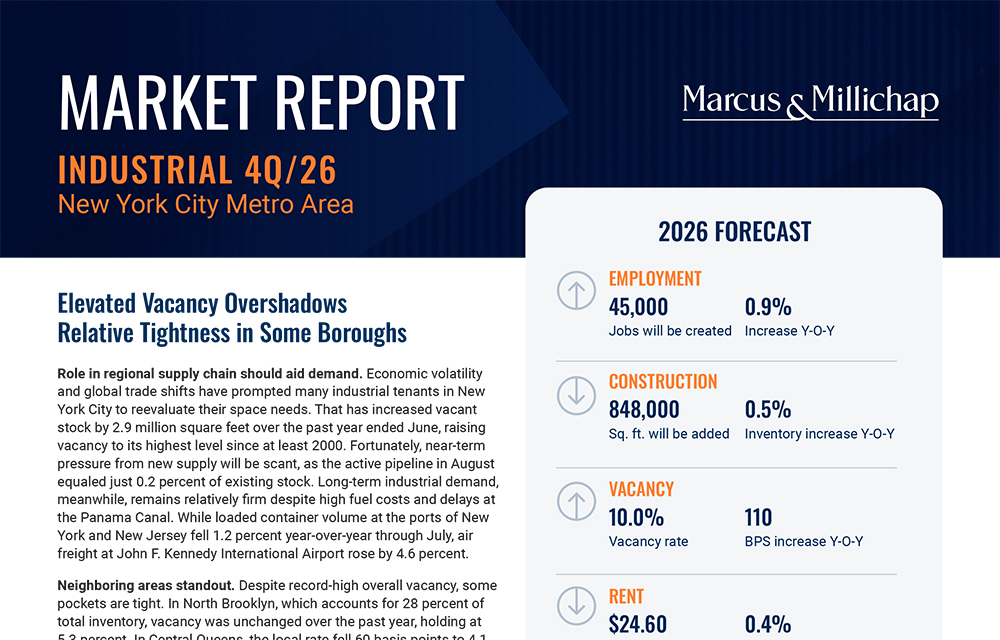
Marcus & Millichap releases fourth-quarter 2026 NYC industrial market report
Manhattan, NY Marcus & Millichap has published its fourth-quarter 2026 New York City Industrial Market Report. “New York City’s industrial market is showing a clear






 (2).gif)

Columns and Thought Leadership

Hunt CRE question and answer: Choosing a real estate agent - by David Hunt
First, we will only work with one agent exclusively. The primary reason is that we want that agent to legally represent our client’s interests. In New York State, a real estate agent has a fiduciary

The art of investing in real estate - by Thomas Donovan
Real estate investing is as much an art as it is a skill. No one can time the market, or the factors that drive it, perfectly. Location, zoning, size, transportation, and neighborhood density give you a baseline for

New York’s streets are full again, and the retail numbers prove it - by Noam Aziz
Walk down any New York block this year and you can feel it. The sidewalks are crowded, the storefronts are lit, and the energy that defines this city is back at full volume.

Hunt commercial real estate question and answer: Fortune 500 wisdom - by David Hunt
Yes, there are lessons to be learned from the largest companies in America when comes to managing your real estate. But the decision to buy or lease real estate may not be one of
.gif)