



News:
Brokerage
Posted: February 10, 2014
Colliers arranges architecture firm relocation to newly repositioned 501 Madison Avenue
Continuing an aggressive pace of activity at the newly repositioned 501 Madison Avenue, Colliers International has arranged a ten-year, 8,939 s/f lease in the building with fast-growing architecture and design firm Design Republic Partners.
The Colliers International Tri-State leasing and property management team of chairman Robert Freedman, vice chairman Alex Jinishian, director Seth Hecht, and associate Timothy Pond arranged the transaction on behalf of the building owner, KRW Realty Advisors, LLC.
With the signing of Design Republic, less than 75,000 s/f of available office space remains in the 30-story, art deco building. Interest in that space is significant.
In addition to leasing the entire 11th floor of 501 Madison Avenue, Design Republic is leading renovations at the 185,000 s/f property, located in the Plaza District at the northeast corner of 52nd Street. The redevelopment calls for a new building entrance and lobby, new elevator cabs and mechanicals, multi-tenant common areas, new windows, restrooms, as well as a new 400-ton cooling tower, upgraded electrical, new building security and Class E systems, and retail space upgrades. The renovations are slated for completion in the first quarter of 2014.
"This transaction was a case of perfect symmetry between building and the tenant," Jinishian said. "Design Republic Partners is not only the lead architect for this wonderful reposition, but they wanted it for their new headquarters space to accommodate their growth, and showcase the quality of the services they provide. I can't think of a better endorsement."
Built in 1930, 501 Madison Avenue includes floor plates ranging from 1,826 to 8,938 square feet, and approximately 8,800 square feet of prime ground and second floor premises, providing a flagship retail opportunity along one of the most exclusive luxury goods corridors in the world. Below grade space can be made available as requested.
Current tenants include Innisfree M&A Inc., World Jewish Congress Foundation, and Oscar Heyman & Bros., among others.
Tags:
Brokerage
MORE FROM Brokerage
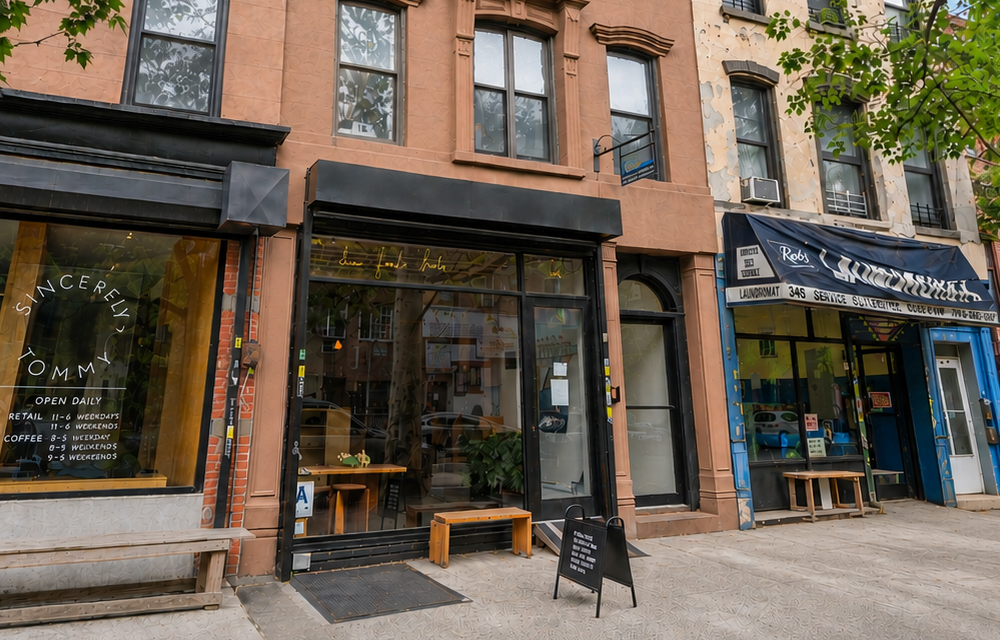
Bestreich, Reynolds, Davila, and Flaherty of Investment Property Realty Group close $1.97 million sale of 343A Tompkins Ave. in Bed-Stuy
Brooklyn, NY Investment Property Realty Group (IPRG) closed the sale of 343A Tompkins Ave., a mixed-use building located in the Bed-Stuy section of the borough, for $1.97 million.



Quick Hits

Columns and Thought Leadership

Hunt commercial real estate question and answer: Fortune 500 wisdom - by David Hunt
Yes, there are lessons to be learned from the largest companies in America when comes to managing your real estate. But the decision to buy or lease real estate may not be one of

Hunt CRE question and answer: Choosing a real estate agent - by David Hunt
First, we will only work with one agent exclusively. The primary reason is that we want that agent to legally represent our client’s interests. In New York State, a real estate agent has a fiduciary

A guide to finding the right NYC property management company - by Sanjay Gandhi
Being a small to midsize landlord in NYC is an increasingly demanding endeavor. From navigating complex regulations, increased compliance demands to dealing with tenant issues and remediating violations. It is wise to enlist the assistance of a partner, a professional

New York’s streets are full again, and the retail numbers prove it - by Noam Aziz
Walk down any New York block this year and you can feel it. The sidewalks are crowded, the storefronts are lit, and the energy that defines this city is back at full volume.
.gif)