



News:
Brokerage
Posted: August 21, 2009
Changes in state law increase comm'l. tax levy by $250m
In fiscal year 2010, commercial buildings (class 4) will be paying $250 million more in real estate taxes as a result of a change in state law, Chapter 207 of 2009. This amendment to the real property tax law was requested by the mayor and the city council, passed by the assembly and the senate, and signed by the governor. REBNY was alone in its strong opposition to this change. As a result of Chapter 207 of 2009 the adjustment to each tax class' share of the real property tax levy is lowered from 5% to 0% for fiscal year 2010.
The 5% cap was included in the real property tax law in part to let the change in market value of real property determine a class' share of the tax levy burden, while preventing any dramatic year-to-year shifts in a class' tax burden that could be a financial hardship on individual taxpayers.
The other long-term goal of the 5% cap was to gradually produce a more equitable balance between the market value and the tax levy burden in each class, thus eliminating the inequities in the assessment process that existed prior to the early 1980s.
Unfortunately, this change to lower the cap to 0% followed an identical law last year that lowered the cap to zero for fiscal year 2009, again costing commercial buildings (class 4) $250 million more in real estate taxes.
In 16 of the last 18 years, these elected officials have lowered the cap (generally to 2 or 2.5%) to protect single family homeowners (class 1) from a growth in their property's share of the tax levy as a result of their market value increases. The growth in market value of single-family homes has been the largest among all property types. However, they pay the smallest share of the tax levy.
In providing this relief to single family homeowners (class 1), commercial buildings (class 4) as well as utility properties and residential rental buildings have continued to pay more than they should have, given the declining share of their property's market value.
Based on the dept. of finance's most recent report, commercial buildings (class 4) paid more than 41% of the real property tax levy and accounted for less than 22% of the market value of real estate in the city. Single family homeowners (class 1) paid less than 16% of the real property tax levy and accounted for 53% of the market value of real estate in the city.
The annual amendments to the real property tax law that began in 1992 have undermined a fundamental aspect of the real property tax law which was designed to create a fair and equitable tax system. Commercial property owners and apartment building owners understand the overwhelming financial burden real property taxes have on businesses, residents and homeowners alike. Real estate taxes on commercial buildings can be more than 22% of a building's gross income; on residential rental buildings real estate taxes can exceed 30% of a building's gross income.
The problem we face as an industry and as a city is that property taxes are too high for all of us—homeowners, businesses and commercial property owners. Shifting the burden from single family homeowners to the other property tax classes has been going on too long and is not the solution to the property tax problem. Instead, it is only a politically expedient approach to a serious issue. These temporary solutions will create more long-term problems for the city's economy and its income producing property.
It is time to reduce government spending, to lower the real estate taxes for all New Yorkers and to begin real reform of our property tax system.
Steve Spinola is the president of the Real Estate Board of New York, New York, N.Y.
Tags:
Brokerage
MORE FROM Brokerage
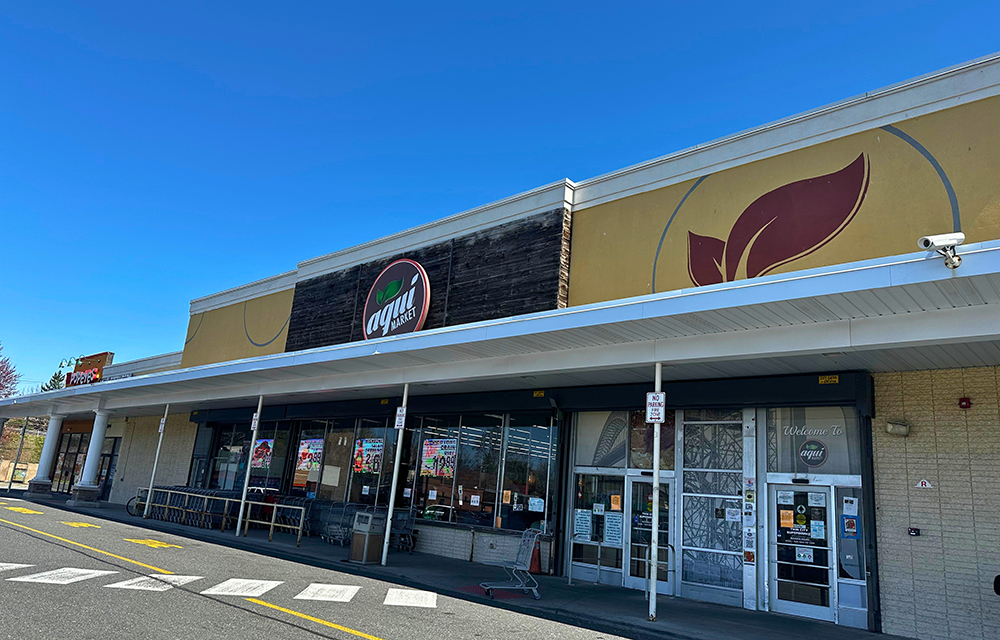
Planet Fitness coming to Twin City Shopping Center in Jersey City
Jersey City, NJ Planet Fitness is coming to Twin City Shopping Center in Jersey City, bringing the 95,000 s/f, grocery-anchored property to full occupancy. The nationally recognized fitness brand has leased a



Quick Hits
 (2).gif)

Columns and Thought Leadership

A guide to finding the right NYC property management company - by Sanjay Gandhi
Being a small to midsize landlord in NYC is an increasingly demanding endeavor. From navigating complex regulations, increased compliance demands to dealing with tenant issues and remediating violations. It is wise to enlist the assistance of a partner, a professional

Hunt commercial real estate question and answer: Fortune 500 wisdom - by David Hunt
Yes, there are lessons to be learned from the largest companies in America when comes to managing your real estate. But the decision to buy or lease real estate may not be one of

Hunt CRE question and answer: Choosing a real estate agent - by David Hunt
First, we will only work with one agent exclusively. The primary reason is that we want that agent to legally represent our client’s interests. In New York State, a real estate agent has a fiduciary

New York’s streets are full again, and the retail numbers prove it - by Noam Aziz
Walk down any New York block this year and you can feel it. The sidewalks are crowded, the storefronts are lit, and the energy that defines this city is back at full volume.
.gif)