



News:
Brokerage
Posted: April 26, 2016
CBRE releases Q1 2016 New York City Market Review
New York, NY A new generation of occupancy requirements is compelling owners to adopt more creative leasing strategies to attract tenants and compete effectively with new construction, CBRE tenant-rep and agency leasing specialists said during a recent panel discussion. The panelists also identified key trends including location fluidity among occupiers, landlords’ drive for increased efficiency and amenities that are most attractive to today’s tenants. In addition, the panelists parsed the new construction pipeline to demonstrate that the supply of new office product coming online through 2020 is less than many observers expect.
On the tenant side, vice chairman John Nugent and vice chairman Andrew Sussman contributed their expertise, while senior vice president Evan Haskell and senior vice president Neil King provided the agency perspective.
Leasing decisions are driven more by space rather than location considerations, and the new “flat geography” has led tenants to weigh options from Midtown to Brooklyn. “Tenants that in the past would only consider the Plaza District or Park Ave. are looking to trendier neighborhoods like Meatpacking and Hudson Square/Tribeca,” Nugent said, citing a number of his clients, including Cadillac, which took space at 330 Hudson St..
“Tenants love new construction, and if they have to go a little further afield to get it, they will,” Sussman said. “And they’re not looking for ho-hum ‘commodity’ space—they really want to brand themselves. Also, we’re seeing increased urbanization—more people living in the city rather than having long commutes. When you add to this how much New York City’s transportation has improved, these three factors have given a real elasticity to the traditional boundaries of the market.”
Discussing greater efficiency, Haskell noted how in major building repositioning initiatives—such as the one currently underway at 1271 Avenue of the Americas—the best starting point is the original Certificate of Occupancy to see what sort of density it allows. “In 1959, Time Inc. was already thinking about density, so its floorplates are virtually column-free. Add to this the fact that The Rockefeller Group is investing $600 million to lower the convectors and raise the windows, and this will transform 1271 into a building that can compete with new construction.”
In terms of amenities, King said, “We’ve seen bike rooms, setbacks turned into private terraces, roof space turned into shared roof decks, and many landlords are doing the math on the return on investment necessary to build a tenant-only gym. In some ways, many of these amenities have become a prerequisite in today’s market. But now we’re driving the next generation of amenities. How do you bring out compelling architectural details in prewar space? How can you curate a unique retail experience that truly serves the wants and needs of your tenants? How can we improve building technology to make the tenant experience more efficient? It’s really about creating a lifestyle for the types of firms you want to occupy your building.” On the tenant side, Sussman discussed the “on-demand” economy and how tenants are seeking more ease of use, whether a smartphone-enabled building pass or the ability to quickly order food from on-site providers.
As far as new office construction coming online, Mr. Haskell said: “There seems to be a misunderstanding in terms of how much space will be coming on the market,” he said. “Looking at the next four years, we see 6.4 million square feet of new construction—examples are 3 World Trade Center, One Vanderbilt—buildings that have tenant commitments. Then there’s 8.6 million square feet of known returns, as in tenants moving out of their space. That leaves us with 11.5 million s/f of speculative development—which will only be built with a significant anchor tenant. So the total should be about 15 million square feet through 2020, which is less than 4% of Manhattan’s current inventory.” The total office inventory across Manhattan as of Q1 2016 is 397.9 million s/f.
Before kicking off the panel discussion, Vice Chairman Peter Turchin provided an overview of the market. “Manhattan’s average asking rents are reaching all-time highs,” Turchin said, “with Midtown just two dollars from its peak, Midtown South one dollar from its peak and Downtown reaching new peaks each month.”
CBRE First Quarter 2016 Office MarketView Highlights:
Midtown: Leasing activity totaled 3.20 million sq. ft. in Q1 2016, 18% below its five-year quarterly average. The availability rate rose 80 basis points (bps) from Q4 2015 and 40 bps from one year ago. Quarterly net absorption registered negative 1.68 million sq. ft. The average asking rent increase 2% quarter-over-quarter and 7% year-over-year. Subleasing availability currently stands at 1.7%, down 4% year-over-year.
Midtown South: Leasing activity totaled 1.46 million sq. ft. in Q1 2016, 9% above its five-year quarterly average. Quarterly leasing activity is up 5% compared to the same period last year. The availability rate rose 70 bps from Q4 2015, but dropped 70 bps from one year ago. Quarterly net absorption registered negative 390,000 sq. ft. The average asking rent decreased 3% quarter-over-quarter, but is up 3% year-over-year. Sublease availability currently stands at 1.8%, down 7% year-over-year.
Downtown: Leasing activity totaled 962,000 sq. ft. in Q1 2016, 31% below its five-year quarterly average. Quarterly leasing activity is down 16% compared to the same period last year. The availability rate fell 20 bps from Q4 2015 and 90 bps from one year ago. Quarterly net absorption registered 442,000 sq. ft. The average asking rent increased modestly over the last quarter and is virtually unchanged from on one year ago. Sublease availability currently stands at 1.5%, with an average asking rent of $45.36, up 6% year-over-year.
Brooklyn: The average asking rent for the overall market is $37.28 per sq. ft., up 15.6% from $32.26 per sq. ft. in Q4 2015—an increase primarily due to activity in Downtown Brooklyn and Williamsburg/Greenpoint. Brooklyn’s overall availability rate is currently 16.2%, up 240 bps quarter-over-quarter from 13.8%, driven by new space added in Downtown Brooklyn, the Navy Yard and DUMBO.
Tags:
Brokerage
MORE FROM Brokerage
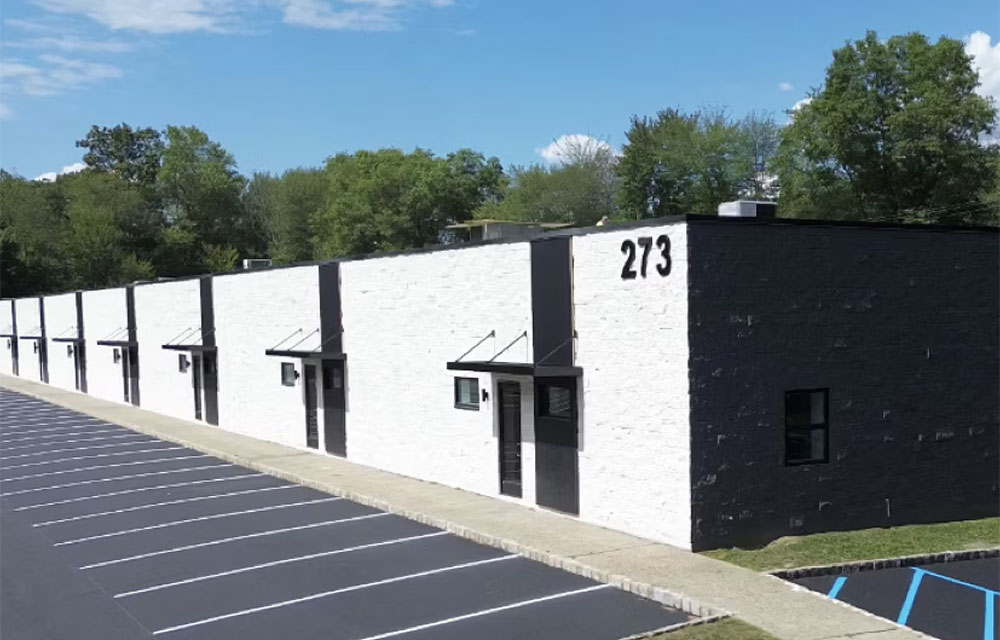
Resource Realty of Northern NJ delivers complete lease-up of 235 Franklin Rd. for Commerce Park Investors
Randolph, NJ Resource Realty of Northern New Jersey (RRNNJ) has completed the lease-up of a 10-unit small-bay industrial property at 273 Franklin Rd., marking the culmination of an investment strategy that began



Quick Hits

Columns and Thought Leadership

New York’s streets are full again, and the retail numbers prove it - by Noam Aziz
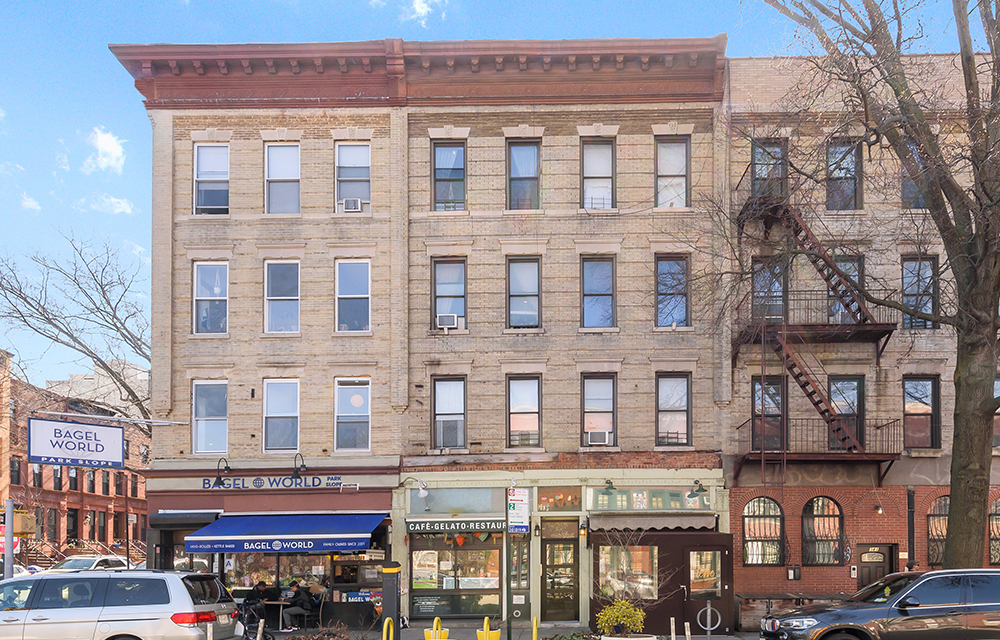
Walk down any New York block this year and you can feel it. The sidewalks are crowded, the storefronts are lit, and the energy that defines this city is back at full volume.

A guide to finding the right NYC property management company - by Sanjay Gandhi
Being a small to midsize landlord in NYC is an increasingly demanding endeavor. From navigating complex regulations, increased compliance demands to dealing with tenant issues and remediating violations. It is wise to enlist the assistance of a partner, a professional

Hunt commercial real estate question and answer: Fortune 500 wisdom - by David Hunt
Yes, there are lessons to be learned from the largest companies in America when comes to managing your real estate. But the decision to buy or lease real estate may not be one of

Positive forecast for New York’s pro-housing push? - by Philip Butler
New York’s housing crisis remains a hot button topic despite growing consensus that varied and affordable housing is desperately needed statewide. Governor Hochul has recently introduced several initiatives to overcome N.Y.’s anti-housing
.gif)