



News:
Brokerage
Posted: August 26, 2013
CBRE Group, Inc. issues August 2013 Manhattan Office MarketView Snapshot
Manhattan saw 2.06 million s/f of leasing in July, down 21% from July 2012's 2.61 million s/f of activity. The year-to-date leasing tally grew to 13.99 million s/f, pacing 8% ahead of the 12.91 million s/f of activity logged during the same seven-month period last year. A combined 370,000 s/f of positive absorption in Midtown South and Downtown offset Midtown's 190,000 s/f of negative absorption, resulting in Manhattan's first month of positive absorption since March. The Manhattan-wide availability rate was unchanged for the third consecutive month at 12.7%. Manhattan's average asking rent remained stable, ending July at $61.07 per s/f.
Among the report's highlights:
* Midtown - Despite the lack of any large-sized deals, July leasing activity was in line with the market's five-year monthly average of 1.17 million s/f. This was the first time since July 2012 that Midtown saw a month without any deal of at least 100,000 s/f. Through July, total leasing activity for the year paced 23% ahead of 2012's year-to-date level. The month's 190,000 s/f of negative absorption was caused by the addition of a handful of large availabilities to the market, including 384,000 s/f of UBS AG sublease space at 299 Park Ave. and 268,000 s/f of direct space at 10 East 53rd St., both of which were already on the market, but fell within 12 months of tenant possession in July. The availability rate inched up 10 basis points during July to 12.6%. The average asking rent was stable during the month.
* Midtown South - July leasing activity was on par with Midtown South's five-year monthly average of 340,000 s/f. Through July, total leasing activity was 25% below 2012's historically robust year-to-date level. Midtown South posted its fifth consecutive month of positive absorption in July. The availability rate fell below the 10% mark, dropping 20 basis points during the month to 9.8%. The average asking rent increased $0.35, or 1%, during July to a record-high $63.79 per s/f — the seventh time in the last 10 months that the average has posted an all-time high. The month's increase was largely caused by the leasing of several mid-sized spaces that were priced below the previous month's average asking rent.
* Downtown - July leasing activity was 71% above Downtown's five-year monthly average of 340,000 s/f. Year-to-date leasing activity paced 12% ahead of 2012 levels. The month's robust leasing activity—coupled with the withdrawal of 87,000 s/f at 2 Rector St. for residential redevelopment—eclipsed the new availabilities brought to market during July, resulting in 260,000 s/f of positive absorption and a 30-basis-point drop in the availability rate. Sublease space represented 13% of all available space in Downtown in July, yielding a sublease availability rate of 1.9%, the lowest sublease availability rate of Manhattan's three markets. The average asking rent dropped $0.56, or 1%, during the month to $46.57 per s/f. Year-over-year, the average was up 17%, or $6.88 per s/f.
* Capital Markets Activity - The leasehold interest in Steinway Hall (109 West 57th St.) was purchased by a joint venture led by JDS Development Group from Steinway Musical Instruments for $131.5 million.
Normandy Real Estate Partners purchased 119 West 25th St. from Delta Management for $50 million ($435 per s/f.)
American Realty Capital New York Recovery REIT purchased the 103,000 s/f office condominium at 50 Varick St. from Joseph Sitt for $90.8 million ($882 per s/f.)
Fisher Brothers, Witkoff Group and Vector Group purchased the development site at 101 Murray Street from St. John's University for $223.0 million ($566 per FAR ft.).
Tags:
Brokerage
MORE FROM Brokerage
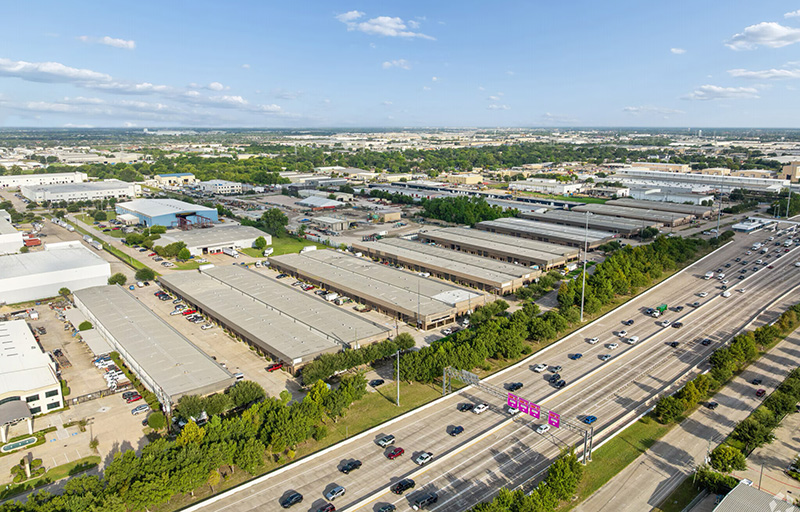
Simi Capital enters Texas with acquisition of 359,000 s/f small-bay industrial portfolio in Northwest Houston
Houston, TX Simi Capital acquired a three-property, 359,000 s/f small-bay industrial portfolio. The transaction, completed in a joint venture with Decker Capital, marks Simi


Quick Hits

Columns and Thought Leadership

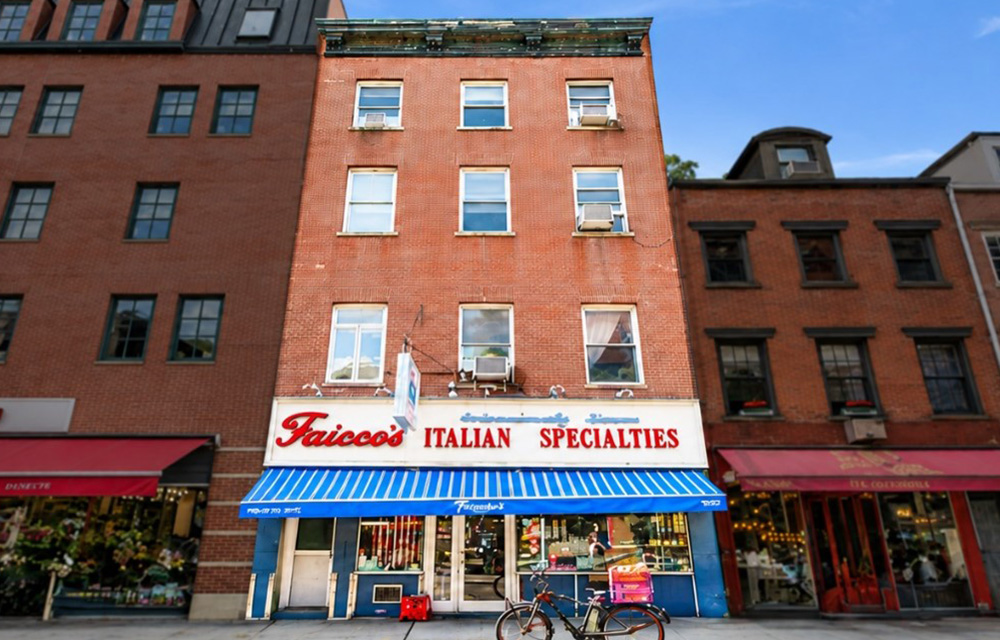
New York’s streets are full again, and the retail numbers prove it - by Noam Aziz
Walk down any New York block this year and you can feel it. The sidewalks are crowded, the storefronts are lit, and the energy that defines this city is back at full volume.

Hunt commercial real estate question and answer: Fortune 500 wisdom - by David Hunt
Yes, there are lessons to be learned from the largest companies in America when comes to managing your real estate. But the decision to buy or lease real estate may not be one of

Hunt CRE question and answer: Choosing a real estate agent - by David Hunt
First, we will only work with one agent exclusively. The primary reason is that we want that agent to legally represent our client’s interests. In New York State, a real estate agent has a fiduciary

A guide to finding the right NYC property management company - by Sanjay Gandhi
Being a small to midsize landlord in NYC is an increasingly demanding endeavor. From navigating complex regulations, increased compliance demands to dealing with tenant issues and remediating violations. It is wise to enlist the assistance of a partner, a professional
.gif)