



News:
Brokerage
Posted: February 22, 2010
Capital Region prepares for a soft landing: Looking ahead to the 2010 industrial real estate market
How bad? How deep? How wide? When will it level off and get better? These were many of the questions that started to surface in the second half of 2008 and became a steady drumbeat throughout most of 2009. I'm not talking about the stock market here but rather the industrial markets around the nation, the state, and the Capital Region. As the questions related to New York's Capital Region industrial real estate market, the answers became more clear by looking back at the vacancy trends over the past two years. The 3rd quarter 2008 vacancy rate for the region as reported by CBRE-Albany was an overall 8.5%. This 2008 rate was indicative of a fairly balanced market. The rate, however, increased significantly by end of the 2nd quarter 2009 to 10.5% with a more moderate increase to 10.9% by December of 2009. The recession seemed to follow classic historical patterns as consumer demand for goods came to a determined halt and diminished manufacturing followed. Supply companies related to the housing sector were especially hard hit early in the recession. The slowdown in production combined with retailers minimizing exposure to sitting inventories reduced the need for both manufacturing and distribution space. The Albany area was no exception to the negative impacts of the recession but a lack of speculative growth prior to the slowdown limited the number of buildings that would go dark over the past 18 months. So, for the Albany region, the answers to the above questions are: not too bad, not too deep, and not too wide but certainly parallel to national trends. Most markets experienced a significant slowdown in 2009 with national space availability rates hitting 12.9% by the end of the 3rd quarter 2009.
So, let's take a crystal ball and look ahead into 2010 for the Albany industrial real estate market. It is expected that the overall vacancy rate will hold in the 10.5-11% range through mid year with improvement by year's end. There are several large manufacturing plants in the region that remain vacant. If the five largest of these facilities are removed for analysis reasons from the available space inventory, the remaining inventory vacancy rate drops to 8.8%. Perhaps this is a more accurate reflection of the market for distribution needs. The activity level for the region has gained momentum from the 4th quarter of 2009 into 2010 with several needs in the market for users of space in the 75,000-100,000 s/f range. As the vacancies are backfilled there will be a stabilization, and likely recovery, in lease rates. Available high bay (>24') distribution space above 50,000 s/f, according to our December 2009 CBRE-Albany industrial data, is in limited supply. The expected increase in demand for this need category should create the need for some new construction by the 4th quarter of 2010. There are two large construction projects in the region that will come online during the first quarter of 2010. Empire Merchants North will be occupying its newly built 250,000 s/f administrative and distribution facility in Coxsackie (Greene County). In addition, Hero (Beech Nut) will open its 650,000 s/f production complex in Florida (Montgomery County). The 160,000 s/f closed Super Steel plant in Scotia (Schenectady County) sold to Dimension Steel who will be moving its full operations there in early 2010. Lastly, FedEx continues with its announced plans to site a new 200,000 s/f distribution facility at the former Albany International property in East Greenbush (Rensselaer County).
There is also some very positive news out of Saratoga County that will help determine the strength of the industrial space recovery for the eastern upstate New York area. Global Foundries is well under construction in Malta for its 1.2 million s/f chip fabrication facility (known as Fab 8). The $4.2 billion project will come online sometime in 2012 with production planned for 2013. The construction phase is creating thousands of jobs on site now. The foundry, when up and running, is expected to create some 1,500 direct new jobs. The unknown wildcard as yet is the number of firms that will locate into the region to supply products, materials, and services to the plant. Some estimates by economic developers have those job opportunities at over one thousand as well. No matter the final number there will undoubtedly be demand for new industrial space in the area as a result.
Richard Sleasman, SIOR, is a executive vice president at CB Richard Ellis-Albany, Albany, N.Y.
Tags:
Brokerage
MORE FROM Brokerage
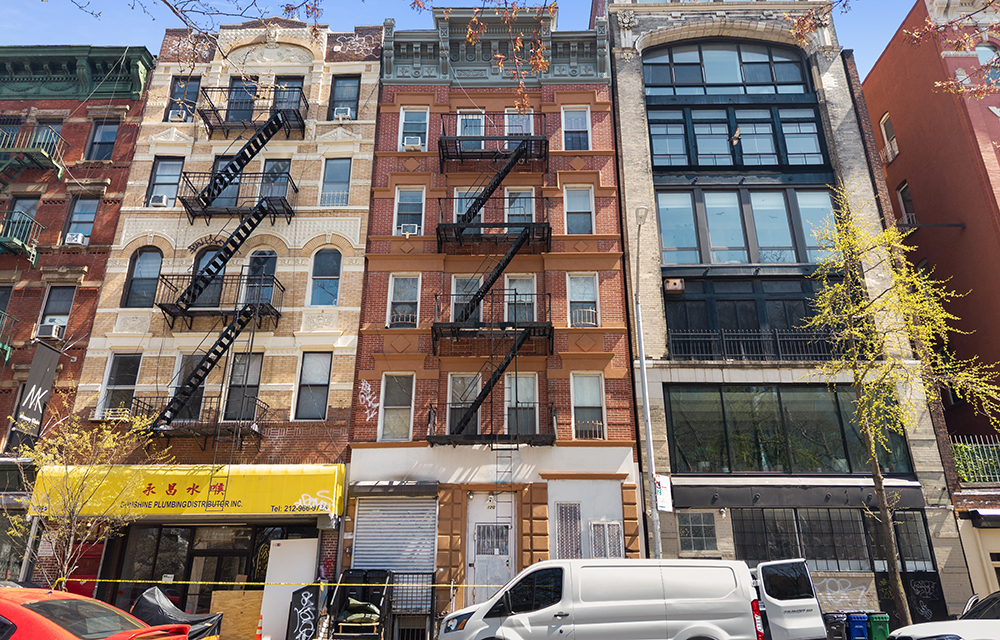
Investment Property Realty Group sells 120 Forsyth St. for $1.35 million
Manhattan, NY Investment Property Realty Group (IPRG) closed the sale of 120 Forsyth St., a mixed-use building located in the Lower East Side section of the city, for $1.35 million.



Quick Hits
 (2).gif)

Columns and Thought Leadership

Hunt commercial real estate question and answer: Fortune 500 wisdom - by David Hunt
Yes, there are lessons to be learned from the largest companies in America when comes to managing your real estate. But the decision to buy or lease real estate may not be one of

A guide to finding the right NYC property management company - by Sanjay Gandhi
Being a small to midsize landlord in NYC is an increasingly demanding endeavor. From navigating complex regulations, increased compliance demands to dealing with tenant issues and remediating violations. It is wise to enlist the assistance of a partner, a professional

Positive forecast for New York’s pro-housing push? - by Philip Butler
New York’s housing crisis remains a hot button topic despite growing consensus that varied and affordable housing is desperately needed statewide. Governor Hochul has recently introduced several initiatives to overcome N.Y.’s anti-housing

New York’s streets are full again, and the retail numbers prove it - by Noam Aziz
Walk down any New York block this year and you can feel it. The sidewalks are crowded, the storefronts are lit, and the energy that defines this city is back at full volume.
.gif)