



News:
Brokerage
Posted: December 17, 2007
Bowen and Nottingham of Studley rep. Buro Happold in 39,000 s/f lease
Buro Happold Consulting Engineers, the U.S. subsidiary of an international engineering firm, has expanded its presence at 100 Bdwy. to just shy of 39,000 s/f, having signed a lease for the entire 14th floor, according to the firm's real estate advisor, international commercial real estate services firm Studley.
The firm opened its first U.S. office of FTL-Happold in New York in 1992 to produce designs for lightweight fabric structures.
In the late 1990s increasing demand to provide structural and MEP solutions for a wider range of building types and design challenges resulted in the establishment of Buro Happold in New York.
"Buro Happold moved to 100 Bdwy. in January 2006, when it leased the top two floors of the building, 23 and 24. In less than two years the firm has grown its business in the United States to such a degree that it needed an additional floor," said, Allyson Bowen, Studley assistant director, who along with executive managing director Howard Nottingham represented the tenant.
Some of the firm's most notable projects in the U.S. include: the Kogod Courtyard at the Smithsonian American Art Museum and National Portrait Gallery and the United States Institute of Peace both in Washington, D.C.; Crystal Bridges Museum of American Art in Bentonville, Arkansas; the Harvard Allston Science Complex in Cambridge, Massachusetts; and the Experimental Media and Performing Arts Center at Rennselaer Polytechnic Institute (RPI) in Troy, New York.
In 2006, Buro Happold moved from 105 Chambers Street to 100 Broadway.
Bowen, said, "The firm wanted to stay Downtown and found the two top floors at 100 Broadway, with its sweeping views and wrap-around terrace, and the building itself possessed design elements to effectively convey the firm's culture."
The landlord was represented by Ed Goldman and Scott Slopes of CB Richard Ellis.
Tags:
Brokerage
MORE FROM Brokerage
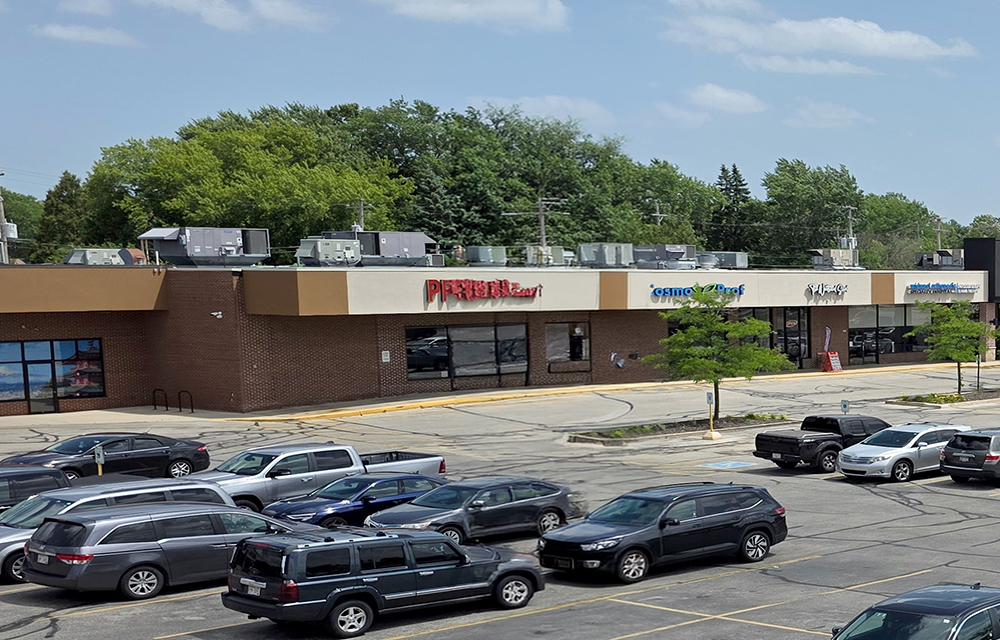
United Properties Corp. expands Wisconsin and Illinois retail presence adding 200,000 s/f
West Allis, WI United Properties Corp. completed two retail acquisitions totaling $27.4 million across Illinois and Wisconsin, adding 205,000 s/f of shopping center space to its portfolio



Columns and Thought Leadership

Positive forecast for New York’s pro-housing push? - by Philip Butler
New York’s housing crisis remains a hot button topic despite growing consensus that varied and affordable housing is desperately needed statewide. Governor Hochul has recently introduced several initiatives to overcome N.Y.’s anti-housing

A guide to finding the right NYC property management company - by Sanjay Gandhi
Being a small to midsize landlord in NYC is an increasingly demanding endeavor. From navigating complex regulations, increased compliance demands to dealing with tenant issues and remediating violations. It is wise to enlist the assistance of a partner, a professional

Hunt commercial real estate question and answer: Fortune 500 wisdom - by David Hunt
Yes, there are lessons to be learned from the largest companies in America when comes to managing your real estate. But the decision to buy or lease real estate may not be one of

New York’s streets are full again, and the retail numbers prove it - by Noam Aziz
Walk down any New York block this year and you can feel it. The sidewalks are crowded, the storefronts are lit, and the energy that defines this city is back at full volume.
.gif)