


News:
Owners Developers & Managers
Posted: August 4, 2026
BKM Capital Partners surpasses $5 billion in AUM following landmark first half
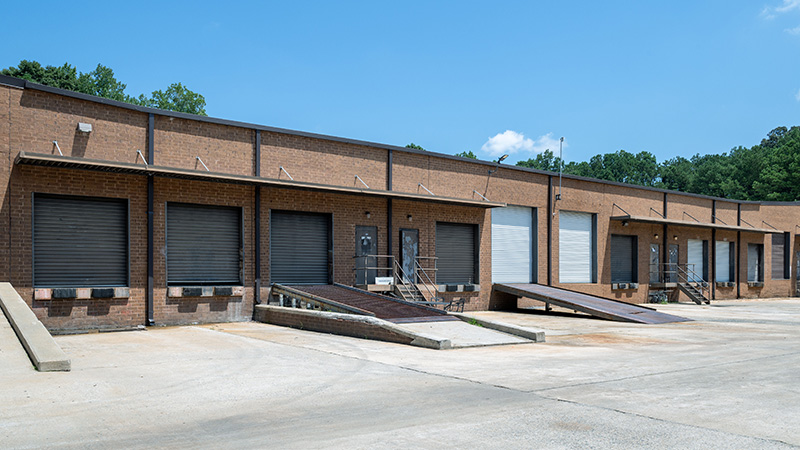
Newport Beach, CA BKM Capital Partners (BKM) closed the first half of 2026 with approximately $5.4 billion in assets under management, capping six months of growth that widened its national footprint and deepened its operating platform. The firm acquired $2.15 billion of real estate during the period and entered the Austin and Atlanta markets for the first time. In tandem with its portfolio growth, BKM posted the largest personnel increase in its history, expanding its headcount by 51% and growing its office network to match.
Having entered the year with a 14.7 million s/f portfolio of 97 assets valued at $3.2 billion, BKM closed the first half with a 24.8 million s/f portfolio of 161 properties across nine states. The firm’s acquisitions during those six months accounted for 64 properties and 10.1 million s/f, executed on behalf of BKM Industrial Value Fund III and several institutional partnerships.
“The first half of 2026 marked an important step in BKM’s evolution,” said Brian Malliet, founder, CEO/CIO of BKM. “Our acquisitions accelerated a strategy we have pursued deliberately for years: building density in high-conviction infill markets and pairing institutional capital with specialized operating capabilities. We entered the second half with greater reach, stronger local market coverage and considerably more capacity to execute.”
Disciplined Acquisitions Across New and Established Markets
BKM completed seven single-asset and portfolio transactions in the first half, spanning both new and established markets. The activity carried the firm into Georgia for the first time and extended its Texas presence into Austin, while adding to holdings in Phoenix, Southern California, Northern California, Dallas-Fort Worth, and Seattle.
The largest of the transactions was the $1.81 billion acquisition of a Link Logistics portfolio, completed in partnership with Kayne Anderson and marking the biggest trade of light industrial space since 2022, according to CBRE. The deal added 51 small- and mid-bay properties totaling 8.5 million s/f across California, Washington, Texas, and Georgia, comprising 275 buildings and nearly 1,900 units. It also brought the operating infrastructure behind the assets under the BKM umbrella, including 40 former Link employees and eight local offices, giving the firm immediate depth in several priority markets.
Besides the Link portfolio, BKM closed six transactions totaling nearly $338 million, bookended by two portfolio deals. The firm entered Georgia early in the year with a $69.5 million purchase of six Metro Atlanta properties totaling 404,000 s/f, and closed the half with an $85.65 million acquisition of three assets in Washington’s Kent Valley. In between, it acquired individual properties across the country, including Central Valley Industrial Park in Phoenix, Post & Paddock Industrial Park in Grand Prairie, Texas, Mission Park Business Center in Silicon Valley, and South Bay Industrial Exchange in Southern California.
“Our approach in the first half was the same whether we were buying a single building or a billion-dollar portfolio,” said Brett Turner, partner and managing director of acquisitions and dispositions at BKM. “We look for well-located infill assets where operational complexity creates room to add value, and we underwrite each one to the same standard. The Link portfolio brought scale and experienced local teams, but the smaller acquisitions reflect the same sourcing discipline that has always driven the BKM platform.”
Institutional Capital and Local Infrastructure Scale Together
BKM strengthened its capital base alongside the portfolio. In March, the firm secured a $150 million strategic commitment from TriPost Capital Partners to support general partner commitments and continued growth across BKM-sponsored vehicles, complementing its existing relationships with institutional partners.
The firm’s team and office network expanded alongside the portfolio. BKM ended the half with 204 employees, up 51% from 135 at the start of the year. BKM brought on 82 new employees during the first half, roughly 70% more than it hired in all of 2025. Headcount rose 51% over the same period, to 204 employees. Much of the growth supported property-level operations and the integration of the expanded portfolio, including the 40 team members who joined through the Link transaction. BKM also added 10 offices, among them locations in Southern and Northern California, Atlanta, Austin and Miami, bringing its national network to 25.
In June, the firm named Mike Valdes partner and chief financial and operating officer, succeeding Bill Galipeau, who is retiring after a nearly five-year long tenure. Valdes, an eight-year BKM veteran and former senior managing director of finance and accounting, worked alongside Galipeau through the transition. BKM is also rolling out artificial intelligence tools across departments to streamline workflows and support faster decision-making.
“Adding assets is only one part of scaling successfully,” said Valdes. “Our work now is to integrate teams, standardize processes and give local operators the data and tools they need to act quickly. Building that connective infrastructure is what allows a larger organization to perform as one platform.
Operating Execution Keeps Pace
As the portfolio grew, BKM kept its attention on leasing, tenant service and physical improvements. The firm signed 425 new leases and renewals, and invested roughly $30 million in interior and exterior work, including tenant improvements and rollover-related upgrades, during the half. With 4,800 tenants across more than 800 buildings, BKM’s midyear occupancy stood at 88%, reflecting a value-add portfolio with space held back for repositioning as the Link properties are integrated.
“Maintaining occupancy while integrating this volume of new space depends on consistent execution at the property level,” said Mason Waite, partner and managing director of asset and portfolio management at BKM. “Our teams stayed close to tenants and brokers, advanced capital projects and addressed rollover needs market by market. That local accountability is critical to translating our business plans into leasing results.”
Reinforcing a Leadership Position
BKM published seven installments of its BKM Intel research series in the first half, including quarterly light industrial market updates and white papers on tenant engagement, investment strategy and operational execution. As one of the few operators publishing sustained research at this depth, BKM has become a reference point for how the niche is analyzed and valued, reinforcing a leadership position that the wider industry has also recognized.
That recognition took concrete form during the first half, in a series of honors for the firm and its team.
• Named to Inc.’s 2026 list of the Fastest-Growing Private Companies in the Pacific (ranked no.103)
• Named among the country’s leading small-bay industrial owners by Small Bay List
• Earned a Quantum Certified Workplace designation, which honors companies that have excelled in creating exceptional workplace cultures
• Brian Malliet, founder, CEO and CIO, selected for The Real Deal’s 2026 TRD 100 list of real estate titans
• Michael Grossner, senior director of acquisitions and dispositions, named one of GlobeSt.com’s CRE Aspiring Leaders 2026
Looking Ahead
In the second half, BKM will continue to focus on integrating its expanded portfolio and executing property-level business plans across the assets and teams it added so far this year.
“Our priority in the second half is to convert the scale added this year into strong operating results,” Malliet said. “That means integrating the portfolio thoroughly, advancing asset-level business plans and remaining selective as new opportunities emerge. We have more capacity to invest, but the standard for where and how we deploy capital remains high.”
Even as that work continues, BKM remains an active participant in a product class that draws heavy competition. The firm is already pursuing several potential acquisition opportunities in existing and select new markets.
MORE FROM Owners Developers & Managers

76% of flex operators plan to expand in the next 12 months driven by increasing occupancy, according to Workthere survey
Manhattan, NY Savills flexible office specialist Workthere, has revealed that more than three quarters (76%) of the flex operators surveyed worldwide as part of its 2026 Flexmark


 (2).gif)

Columns and Thought Leadership
New York City’s historic rent freeze now rests with the courts - by Ron Cohen
New York City’s first-ever two-year rent freeze is now in the hands of a state Supreme Court judge, and the decision could reset income for owners of roughly one million rent-stabilized apartments housing some 2.4 million residents.

Hunt Commercial Real Estate Q&A: Location, location, location? - by David Hunt
In working with our clients, we break down our search objectives into two categories. The first category involves the specific needs of your business such as warehouse height, amount of office space and number of loading
NYC's Community Opportunity to Purchase Act is back - and multifamily owners should pay attention - by Ron Cohen
New York City’s Community Opportunity to Purchase Act (COPA) is back, and this latest version could have a much better chance of becoming law. The proposal would give qualified nonprofit organizations
Don’t leave severance damages behind - by Sebastian Jablonski
When the government takes a portion of a landowner’s property, most assume just compensation stops at the value of the land taken. However, in partial takings, that is only half of the equation.