



News:
Brokerage
Posted: February 5, 2010
Baumstein and Keating of Rudin Management handle two full-floor leases: 49,414 s/f
The Rudin family has finalized two separate full floor leasing transactions involving a combined total of 49,414 s/f of office space at its Information Technology Center (NYITC) at 55 Broad St. In an expansion move, RCN New York Communications, LLC, which presently occupies about 20,000 s/f on the 20th and 21st floor of the building, has leased the entire 24,707 s/f second floor. It will give up its present office and move into its expanded quarters by the end of the first quarter.
At the same time, Align Communications, Inc., an Internet technology company that has been a sub-tenant at 55 Broad St., has entered into a new five-year lease as a direct tenant for the entire 24,707 s/f sixth floor.
Eugene Baumstein and Tom Keating of Rudin Management, respectively, represented the landlord in the RCN and Align Communications lease transactions. Rudin Management Company serves as leasing and managing agent for the property. Paul Formichelli of Jones Lang LaSalle represented RCN.
"We're delighted that cutting edge companies like RCN and Align Communications not only choose 55 Broad St. for their home, but when the opportunity presents itself, opt to continue to grow their businesses at our building, which unquestionably has become the elite address for technology, media and telecommunications firms here in New York," said Bill Rudin, president of Rudin Management Co., the operating arm of the Rudin Family holdings, which owns and developed the NYITC.
True to its pioneering spirit, NYITC at 55 Broad St. recently opened The Hive at 55, a 4,000 s/f, fully outfitted coworking facility that provides affordable and flexible workspace and support to small businesses, freelancers, and entrepreneurs. The facility is jointly sponsored by The Alliance for Downtown New York, the New York City Economic Development Corporation, 55 Broad St. and the Rudin Family.
Rudin Management Company is a full service real estate organization serving the interests of the Rudin Family, which owns and manages one of the largest private property portfolios in New York City. Among its real estate holdings are 16 office buildings containing approximately 10 million square feet of space and 22 apartment buildings comprising over four million square feet of residences.
Tags:
Brokerage
MORE FROM Brokerage
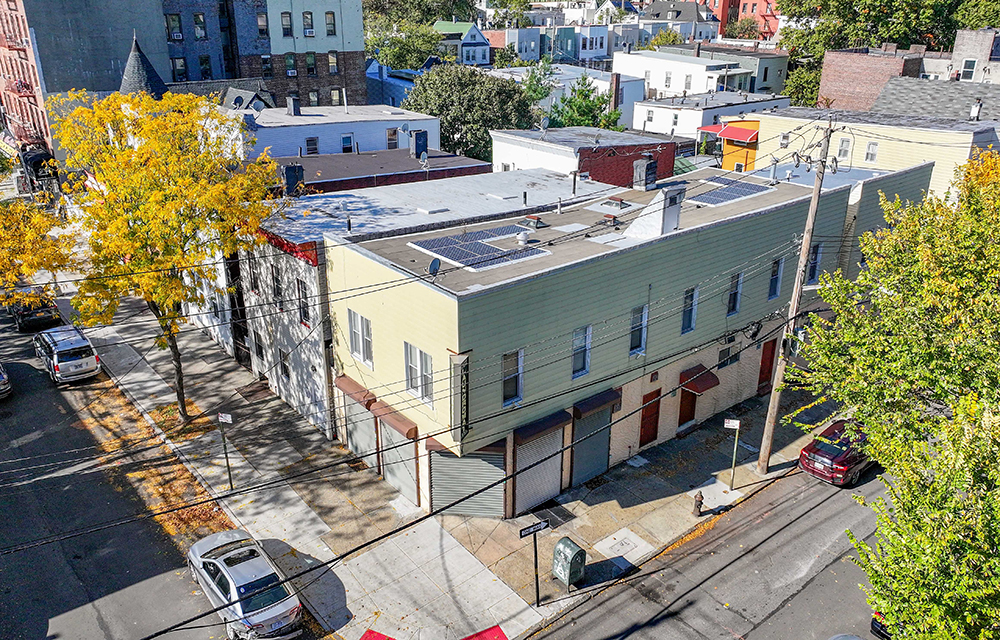
Investment Property Realty Group’s Team Friedman closes five Bronx sales totaling $5.3 million
Bronx, NY Investment Property Realty Group’s (IPRG) Team Friedman closed five sales totaling $5.3 million in the month of September. • 1707 Melville St. sold for $1.35 million. Located in Van Nest, the property




 (2).gif)

Columns and Thought Leadership

Hunt commercial real estate question and answer: Fortune 500 wisdom - by David Hunt
Yes, there are lessons to be learned from the largest companies in America when comes to managing your real estate. But the decision to buy or lease real estate may not be one of

New York’s streets are full again, and the retail numbers prove it - by Noam Aziz
Walk down any New York block this year and you can feel it. The sidewalks are crowded, the storefronts are lit, and the energy that defines this city is back at full volume.

A guide to finding the right NYC property management company - by Sanjay Gandhi
Being a small to midsize landlord in NYC is an increasingly demanding endeavor. From navigating complex regulations, increased compliance demands to dealing with tenant issues and remediating violations. It is wise to enlist the assistance of a partner, a professional

Positive forecast for New York’s pro-housing push? - by Philip Butler
New York’s housing crisis remains a hot button topic despite growing consensus that varied and affordable housing is desperately needed statewide. Governor Hochul has recently introduced several initiatives to overcome N.Y.’s anti-housing
.gif)
September Promotion
