



News:
Brokerage
Posted: July 18, 2017
Assemblages 101: Developers employ strategy, handle risk - by Thomas Kearns

Olshan Frome Wolosky LLP
Assembling many parcels to create a single larger parcel on which a developer may build a large building is one of the more glamorous aspects of the real estate business. Many know the story of how Disney used dummy entities to quietly buy up tens of thousands of acres near Orlando before locals figured out what was happening. Keeping the plans quiet is thought to be key in keeping the pricing reasonable. The owner of a holdout parcel could use the knowledge that the developer has already committed to other parcels to leverage the price higher than the previous market price. But assemblages have unique aspects that make the individual transactions more difficult particularly in cities like New York where assemblages usually combine air rights and land. First, using a beard to start to acquire pieces of the project can be difficult. The beard necessarily has to have some autonomy to negotiate the deal. And to avoid creating the suspicion that an assemblage is being created, multiple beards, buyer brokers and multiple lawyers may be needed, all increasing the risk of a leak or a slip up revealing the true identity of the buyer. And, of course, beards need to be compensated.
During my decades of representing New York, and particularly Manhattan, developers, I have found, perhaps surprisingly, that the value of beards may not be as high as in some other jurisdictions. Manhattan parcels tend to “NOAs,” an acronym I coined for Naturally Occurring Assemblages as play on the better known acronym, NORCs, Naturally Occurring Retirement Communities. Manhattan sites seem to be identified early as places where eventually someone will build something. Sometimes it’s a recalcitrant seller that may be the hold up, other times it might be rent regulated tenants, but the sites are obvious development sites so that pricing will not be a surprise – no owner will sell his or her land for less than it’s worth since all know the site is ripe for development.
But while beards may not be as necessary, getting the key parcel or two under control still involves strategy and risk – the savvy developer can analyze a site and quickly see the controlling parcels that need to be controlled first. Once the key parcels are acquired or more typically placed under contract, then the balance of the assemblage can be acquired, since those owners may wind up with limited choices to sell.
The legal aspects of the assemblage can be challenging. For example, a typical contract of sale will refer to an existing survey of the parcel but for a developer, that’s not enough - he or she must also get a survey of the adjacent parcels to make sure there are no strips between the various parcels. For air rights purchases, the agreed setbacks for the air rights seller’s parcel need to take into account the design of the building to be created, which is difficult to determine for the early acquired parcels – how can the design architect create the design until the final pieces of the assemblage are determined? Often these issues create significant risk for the developer who has to place big non-refundable deposits on the early parcels, but experienced developers and counsel can create alterative roadmaps to success.
Thomas Kearns is a partner with Olshan Frome Wolosky LLP’s real estate department, New York, N.Y.
Tags:
Brokerage
MORE FROM Brokerage
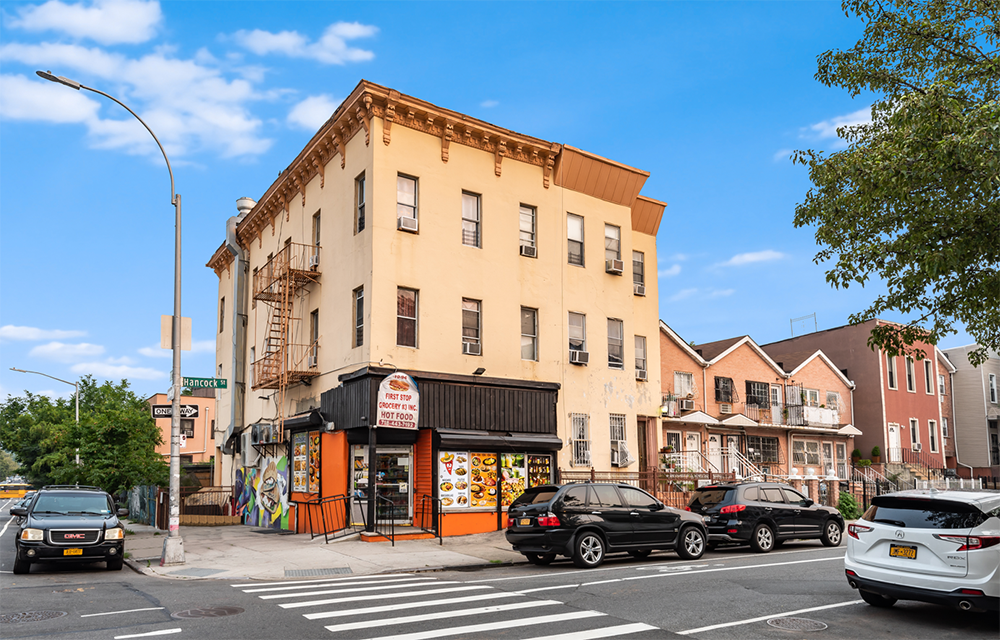
Investment Property Realty Group closes $1.75 million sale of 1094 Hancock Street in Brooklyn
Brooklyn, NY Investment Property Realty Group (IPRG), a New York-based commercial investment firm, has closed the sale of 1094 Hancock St., a mixed-use building in the Bushwick section, for $1.75 million.



Quick Hits

Columns and Thought Leadership

Hunt commercial real estate question and answer: Fortune 500 wisdom - by David Hunt
Yes, there are lessons to be learned from the largest companies in America when comes to managing your real estate. But the decision to buy or lease real estate may not be one of

A guide to finding the right NYC property management company - by Sanjay Gandhi
Being a small to midsize landlord in NYC is an increasingly demanding endeavor. From navigating complex regulations, increased compliance demands to dealing with tenant issues and remediating violations. It is wise to enlist the assistance of a partner, a professional

New York’s streets are full again, and the retail numbers prove it - by Noam Aziz
Walk down any New York block this year and you can feel it. The sidewalks are crowded, the storefronts are lit, and the energy that defines this city is back at full volume.

Hunt CRE question and answer: Choosing a real estate agent - by David Hunt
First, we will only work with one agent exclusively. The primary reason is that we want that agent to legally represent our client’s interests. In New York State, a real estate agent has a fiduciary
.gif)