



News:
Brokerage
Posted: April 14, 2017
As Manhattan investment property sales cool off, Midtown West heats up - by Andre Sigourney and Aryeh Orlofsky
 Aryeh Orlofsky, Ariel Property Advisors
 Andre Sigourney, Ariel Property Advisors
The Manhattan investment property market slowed considerably in 2016 following years of frenzied activity. Prices, however, held steady, and with scant roadblocks ahead, properties in the “The Big Apple,” should continue to draw demand, particularly in Midtown West neighborhoods that offer significant upside.
A confluence of factors posed unique challenges to the Manhattan marketplace last year, with the United Kingdom’s decision to leave the European Union, known as “Brexit,” the Federal Reserve’s first rate hike in nearly a decade, and the election of a new U.S. President firmly on investors’ minds.
As investors sought to reconcile market conditions, Manhattan registered 589 transactions consisting of 706 properties totaling about $29.3 billion in gross consideration, according to Ariel Property Advisors’ “Manhattan 2016 Year-End Sales Report.” On a year-over-year basis, transaction, property and dollar volume declined 23%, 31% and 39%, respectively, but the drops largely reflected a pull-back from 2015, which was a record year.
While Manhattan volume slumped, investors continued to display confidence in pricing, with the average price per square foot in multifamily properties edging 3% higher to $958, and the average price per buildable square foot in development sites rising 5% to $640.
The borough’s multifamily asset class was the most transactional among all product types, with 245 transactions involving 323 properties for an aggregate dollar volume of $6.925 billion. Transaction and property volume fell by 16% and 32%, respectively, but when the $5.5 billion sale of Stuyvesant Town/Peter Cooper Village is removed from 2015’s totals, dollar volume remained stable, with only a 3% annual decrease.
Midtown East and Midtown West dominated activity, accounting for 63% of the borough’s dollar volume in 2016, driven by several sales of large-scale multifamily and development properties. A notable multifamily transaction includes LaSalle Investment Management’s sale of their 204-unit Chelsea apartment building for $211.3 million.
Midtown West is currently undergoing a historic and massive transformation, both from a residential and commercial perspective. While transaction and dollar volume fell along with the general trend in 2016, price gains in Midtown West sharply outpaced the overall market, with multifamily property prices rising 5% to $1,160 per s/f, and the average price per unit increasing 12% to $1,091,851.
Broad appreciation in Midtown West caused average capitalization rates – a widely-used metric to gauge the value of a property relative to its income stream – to compress to 3.58% in 2016, 14 basis points below the previous year and a remarkable 200 basis points lower than 2012.
In the past, Midtown West’s limited transportation options curbed its appeal, but the extension west of the 7 subway line to Hudson Yards has significantly changed that mindset. In fact, an astonishing 56,000 daily commuters are expected to pass through the new subway station by the year 2025, according to the Bloomberg administration.
Hudson Yards – the largest development project ever in the U.S. – is undoubtedly the biggest game-changer for the Midtown West region, with sprawling new office and residential projects underway that will blanket the area and ultimately transform the Manhattan skyline. In fact, Hudson Yards’ rezoning has added the capacity for approximately 24 million square feet of office space and 13,500 residential units. According to Ariel Property Advisors research, 21,500 office, retail and construction jobs will be supported by Hudson Yards.
With several major companies recently signing long-term leases to move their New York offices to the once desolate area of Hudson Yards, the area has seen a sizeable jump in high-income residents. The 10018 zip code – which stretches from Fifth Ave. to the Hudson River between 35th and West 41st Sts. – has seen an astounding 196 percent increase in households earning more than $150,000 annually, according to DNAinfo.
Investors, meanwhile, have been snatching up real estate in Midtown West neighborhoods they deem as having the most room to gain in the years ahead. Hell’s Kitchen is one of those areas, bolstered by its relative affordability versus other Manhattan neighborhoods as well as its proximity to Hudson Yards.
With a seemingly endless supply of trendy restaurants, bars and entertainment venues, it is not a surprise that Hell’s Kitchen has seen a surge in popularity. Anecdotal evidence shows that residents in pricier locations, such as the Lower East Side and the East Village, have been migrating to this area.
At nearly $368 million, Hell’s Kitchen registered the third highest dollar volume for development activity in 2016, driven primarily by large-scale deals. A standout transaction was Tishman-Speyer’s acquisition of the assemblage at 434-444 11th Ave. and 550 West 37th St. for $207.5 million, which will make way for a 1.3 million s/f skyscraper across from the Jacob Javits Center.
Looking ahead, while the overall outlook for Manhattan in 2017 is more uncertain than it has been in recent years, Midtown West remains positive as it continues to be one of the most affordable areas of the city. The colossal transformations that are currently underway in the region will continue to draw investment and all but guarantee near- and long-term price growth in the neighborhood.
Andre Sigourney is a director – investment sales and Aryeh Orlofsky is a senior vice president – investment research at Ariel Property Advisors, New York, N.Y.
Tags:
Brokerage
MORE FROM Brokerage
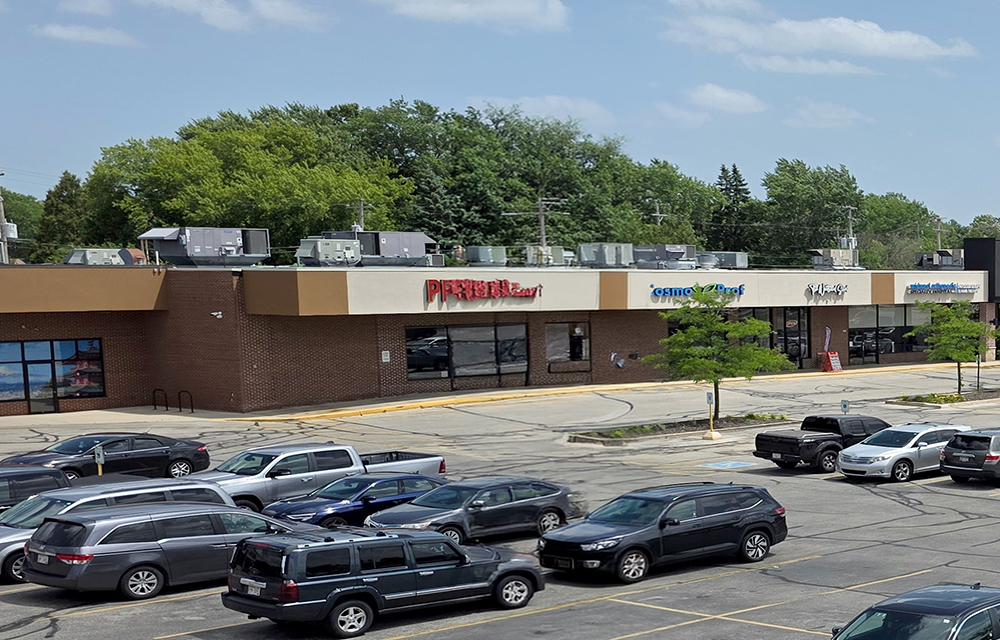
United Properties Corp. expands Wisconsin and Illinois retail presence adding 200,000 s/f
West Allis, WI United Properties Corp. completed two retail acquisitions totaling $27.4 million across Illinois and Wisconsin, adding 205,000 s/f of shopping center space to its portfolio


 (2).gif)

Columns and Thought Leadership

Positive forecast for New York’s pro-housing push? - by Philip Butler
New York’s housing crisis remains a hot button topic despite growing consensus that varied and affordable housing is desperately needed statewide. Governor Hochul has recently introduced several initiatives to overcome N.Y.’s anti-housing

Hunt commercial real estate question and answer: Fortune 500 wisdom - by David Hunt
Yes, there are lessons to be learned from the largest companies in America when comes to managing your real estate. But the decision to buy or lease real estate may not be one of

New York’s streets are full again, and the retail numbers prove it - by Noam Aziz
Walk down any New York block this year and you can feel it. The sidewalks are crowded, the storefronts are lit, and the energy that defines this city is back at full volume.

A guide to finding the right NYC property management company - by Sanjay Gandhi
Being a small to midsize landlord in NYC is an increasingly demanding endeavor. From navigating complex regulations, increased compliance demands to dealing with tenant issues and remediating violations. It is wise to enlist the assistance of a partner, a professional
.gif)