



News:
Brokerage
Posted: June 22, 2009
Architectural and real estate property photography
The task of photographing properties or projects for marketing purposes requires addressing many details in order to avoid costly mistakes and wasted time.
Architectural photos are predominantly shot digitally, so I'll focus on this technology. Here is a how-to checklist for hiring a photographer and organizing a photo shoot.
1. Define what you need your images for - a website, brochure, publicity, large-format advertising or all of the above. Tell the photographer and make sure you receive high-resolution images applicable to various uses.
2. Architectural photography is technically and artistically challenging and you should always retain an experienced professional. Ask for recommendations, review local architectural publications for photo credits, or search on-line real estate resources such as UPworld.com. You may also reach out to professionals like myself, who organize and art direct architectural photo shoots and offer very good pricing thanks to long-term relationships with top photographers.
3. Cost: the price will be either a lump sum or a sum of a photographer's fee (frequently including an assistant's fee) and out of pocket expenses (travel, flowers, plants, props, etc.) The pricing depends on the photographer's prominence and the duration of a photo shoot (i.e. half day vs. full day). In the N.Y.C. area, the cost of a half-day shoot should be in the $1,250 to 3,000 range; a full day: $1,750 to 5,000.
If other parties are to receive the photos (i.e. clients or builders), the photographer may charge an extra fee for each additional entity to receive usage rights. The extra cost per party ranges from $350 - 1,000.
4. Usage rights: be prepared to occasionally hear that the fee you just negotiated permits usage only for a certain period of time or only for certain applications. Unlimited usage rights are the best option, but at a minimum you should receive the following usage rights in perpetuity: all internal company uses, client presentations, brochures, print and on-line media and publications, and on-line posting.
5. Shoot preparation: ensure the photographer has access to all spaces and light controls. The interior spaces should be cleaned, vacuumed, and checked for malfunctioning lights prior to the shoot. Make sure the space is completed, including landscaping, furniture, computers, and wall artwork. If needed, discuss using props in advance.
6. Be aware that spaces occupied prior to the shoot require extensive cleaning. Dealing with clutter on messy desks can take longer than the actual photo shoot of an office interior. On-site assistance may be necessary for moving heavy items or replacing light bulbs. If possible, schedule the shoot outside of work hours.
7. Final product: upon completion of the shoot, you should receive the following: large TIF format files (40+Mb), medium TIF and JPG format file (300 dpi resolution, 4"x6"), and small JPGs at 150 or 100 dpi for on-line and computer monitor viewing. The photos should be color-corrected, with proper brightness and other basic corrections, within the original cost.
8. Sharing photos with parties that did not pay the photographer is unethical and may be a copyright violation. The photographer will sell the files and usage rights for a reasonable fee. When sending photos to the media, include required photo credits.
For additional information regarding architectural photography, contact the author at [email protected].
Peter Wilk is president and founder of Wilk Marketing Communications, Brooklyn, N.Y.
Tags:
Brokerage
MORE FROM Brokerage
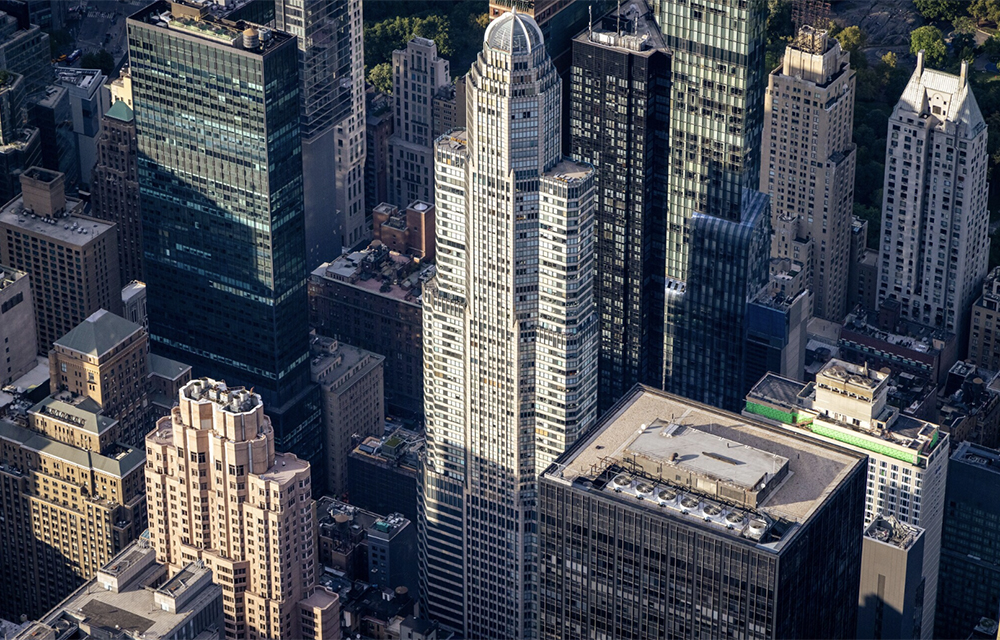
REALM, DelShah Capital and A.M. Properties acquire 377,000 s/f CitySpire office condominium
Manhattan, NY REALM, in partnership with DelShah Capital and A.M. Properties, acquired CitySpire, a 377,000 s/f office condominium comprising 24 floors within the 70-story tower at 156 W 56th St. in Midtown. Adjacent to Central Park with transit access and amenities, CitySpire is a Class A office asset located in one of the city’s most sought-after office corridors.






Columns and Thought Leadership

The death of the generic offering memorandum: What buyers expect in 2025 - by Kimberly Zar Bloorian
There was a time when an offering memorandum (OM) was pretty bare bones, some photos, a few bullet points on income, and a rent roll thrown in at the back. That used to get the job done. Not anymore. In 2025, buyers are sharper, faster, and more selective. They’re looking

Tri-state capital migrates nationally amid regulation pressure - by Reese Weaver
New York tri-state multifamily investors are increasingly reallocating capital to less-regulated markets across the U.S. as rent control and legislative risk erode returns at home. With over 60% of New York City’s rental housing stock classified as rent-stabilized, the traditional value-add model — buying under-performing buildings,

The anticipated effect of Basel III and ISO 20022 implementation on commercial real estate - by Michael Zysman
July 1, 2025 is the deadline for US banks to begin to adopt Basel III banking standards and July 14, 2025 is the deadline for U.S. banks to adopt ISO 20022 messaging standards. Both will have a significant effect on the banking and commercial real estate (CRE) finance sectors.

A fresh start - by Shallini Mehra and Amit Doshi
For the past several years, the New York City multifamily housing market has been defined by disruption. The combined impact of the HSTPA rent laws and a sharply higher interest rate environment has fundamentally reduced