



News:
Brokerage
Posted: June 22, 2009
NYCEDC negotiates prop. acquisition agreement in Willets Point, Queens
The New York City Economic Development Corp. (NYCEDC) has signed property acquisition agreements with two additional property owners at Willets Poin. The acquisitions total 34,403 s/f, bringing the amount of land now controlled by the city to about 40 acres, or 1.742 million s/f. The agreements are the ninth and tenth negotiated land acquisitions in Willets Point, also known as the Iron Triangle.
"We are pleased to be making good on our promise to acquire as much land in Willets Point as possible by negotiated acquisition. These two agreements are further proof of the city's commitment to work with property owners and businesses to reach fair terms of acquisition," said NYCEDC president Seth Pinsky. "We will continue to work with the remaining land owners and businesses as we move forward with our plans to transform this blighted area into a center of economic opportunity and job creation and a 21st century neighborhood."
NYCEDC reached acquisition agreements with 126 Willets Point Blvd. LLC and German Diaz Auto Repair. 126 Willets Point Blvd. LLC owns two parcels totaling 30,403 s/f. One parcel is on Willets Point Blvd., the other is on Roosevelt Ave. German Diaz Auto Repair owns 4,000 s/f of property at 37th Ave.
NYCEDC will continue to reach out to business and property owners in Willets Point to negotiate fair acquisition agreements. NYCEDC has also been engaged in active relocation negotiations with many businesses of all sizes since announcing the redevelopment plans.
Under the plan, which completed the public review process in Nov. 2008, the 62 acres at Willets Point will be transformed from a highly contaminated industrial area into a new, mixed-use community that will include housing, restaurants, stores, parks, and a school. The project will also create about 18,000 construction jobs and 5,000 permanent jobs.
NYCEDC is the city's primary vehicle for promoting economic growth in each of the five boroughs. NYCEDC's mission is to stimulate growth through expansion and redevelopment programs that encourage investment, generate prosperity and strengthen the city's competitive position. NYCEDC serves as an advocate to the business community by building relationships with companies that allow them to take advantage of the city's many opportunities.
The Five Borough Economic Opportunity Plan is a comprehensive strategy to bring the city through the current economic downturn as fast as possible. It focuses on three major areas: creating jobs for New Yorkers today, implementing a long-term vision for growing the city's economy, and building affordable, attractive neighborhoods in every borough. Taken together, the initiatives that the city has launched to achieve these goals will generate thousands of jobs and put the city on a path to economic recovery and growth.
Tags:
Brokerage
MORE FROM Brokerage

REALM, DelShah Capital and A.M. Properties acquire 377,000 s/f CitySpire office condominium
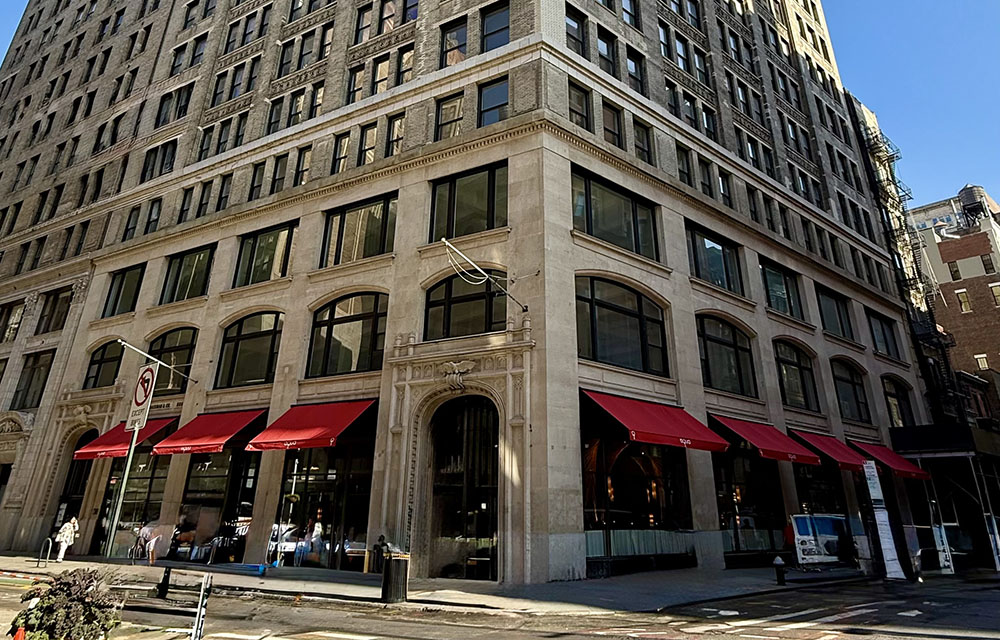
Manhattan, NY REALM, in partnership with DelShah Capital and A.M. Properties, acquired CitySpire, a 377,000 s/f office condominium comprising 24 floors within the 70-story tower at 156 W 56th St. in Midtown. Adjacent to Central Park with transit access and amenities, CitySpire is a Class A office asset located in one of the city’s most sought-after office corridors.




Quick Hits


Columns and Thought Leadership

The death of the generic offering memorandum: What buyers expect in 2025 - by Kimberly Zar Bloorian
There was a time when an offering memorandum (OM) was pretty bare bones, some photos, a few bullet points on income, and a rent roll thrown in at the back. That used to get the job done. Not anymore. In 2025, buyers are sharper, faster, and more selective. They’re looking

The anticipated effect of Basel III and ISO 20022 implementation on commercial real estate - by Michael Zysman
July 1, 2025 is the deadline for US banks to begin to adopt Basel III banking standards and July 14, 2025 is the deadline for U.S. banks to adopt ISO 20022 messaging standards. Both will have a significant effect on the banking and commercial real estate (CRE) finance sectors.

Tri-state capital migrates nationally amid regulation pressure - by Reese Weaver
New York tri-state multifamily investors are increasingly reallocating capital to less-regulated markets across the U.S. as rent control and legislative risk erode returns at home. With over 60% of New York City’s rental housing stock classified as rent-stabilized, the traditional value-add model — buying under-performing buildings,

A fresh start - by Shallini Mehra and Amit Doshi
For the past several years, the New York City multifamily housing market has been defined by disruption. The combined impact of the HSTPA rent laws and a sharply higher interest rate environment has fundamentally reduced