



News:
Brokerage
Posted: July 29, 2025
American Association of Automatic Door Manufacturers launches International Building Council tracker
New York, NY In 2021, after nearly a decade of advocacy, the American Association of Automatic Door Manufacturers (AAADM) celebrated the International Building Council (IBC)’s adoption of an automatic door requirement for public buildings.
Specifically, IBC 1105.1.1 mandates that public entrances in facilities that meet specific occupant load thresholds must have at least one door that is either a full power-operated door or a low-energy power-operated door. The requirement aims to enhance accessibility for individuals with various physical conditions.
However, this did not magically make all public buildings accessible. Each state must individually adopt the code and which version to implement. Some states have adopted the 2021 IBC, while others may use earlier versions or have not adopted it at all.
To help the public track which states have adopted IBC 1105.1.1, AAADM has created a new web page that maintains an updated list. Currently, just 18 states have adopted it. (See if your state is on the list here: https://www.aaadm.com/ibc-adoption-tracker/index.html).
It is widely accepted that automatic doors enhance overall building accessibility and accommodate a wide array of physical conditions that might make using standard doors difficult or impossible. IBC 1105.1.1 addresses a public need and AAADM believes it is important to see this effort through to its adoption in all 50 U.S. states.
For states not on the list, AAADM encourages residents to reach out to their state representatives and tell them how important IBC 1105.1.1 is to them and their other constituents.
For more information about AAADM, visit https://www.aaadm.com/.
Tags:
Brokerage
MORE FROM Brokerage
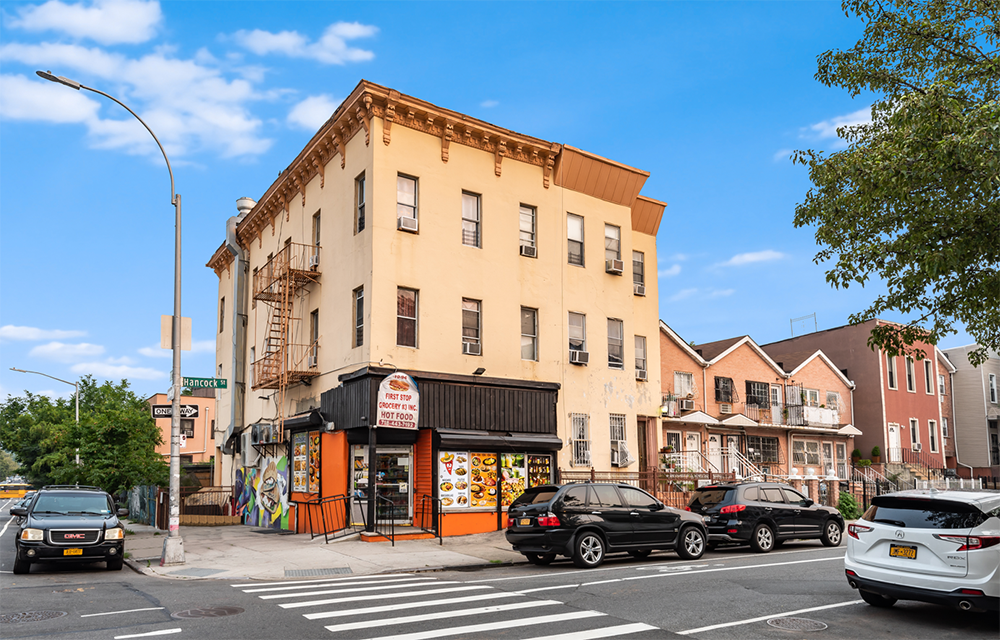
Investment Property Realty Group closes $1.75 million sale of 1094 Hancock Street in Brooklyn
Brooklyn, NY Investment Property Realty Group (IPRG), a New York-based commercial investment firm, has closed the sale of 1094 Hancock St., a mixed-use building in the Bushwick section, for $1.75 million.


Quick Hits

Columns and Thought Leadership

Hunt commercial real estate question and answer: Fortune 500 wisdom - by David Hunt
Yes, there are lessons to be learned from the largest companies in America when comes to managing your real estate. But the decision to buy or lease real estate may not be one of

A guide to finding the right NYC property management company - by Sanjay Gandhi
Being a small to midsize landlord in NYC is an increasingly demanding endeavor. From navigating complex regulations, increased compliance demands to dealing with tenant issues and remediating violations. It is wise to enlist the assistance of a partner, a professional

Hunt CRE question and answer: Choosing a real estate agent - by David Hunt
First, we will only work with one agent exclusively. The primary reason is that we want that agent to legally represent our client’s interests. In New York State, a real estate agent has a fiduciary

New York’s streets are full again, and the retail numbers prove it - by Noam Aziz
Walk down any New York block this year and you can feel it. The sidewalks are crowded, the storefronts are lit, and the energy that defines this city is back at full volume.
.gif)