


News:
Owners Developers & Managers
Posted: March 31, 2026
A stoic’s survival guide to New York’s energy rollercoaster - by Molly Dee-Ramasamy

Becoming a mom of two in the last two years has taught me many things – like how to function on four hours of broken sleep and how to negotiate with a toddler who believes ketchup can, and should, be an entire meal. But more profoundly, entering my mom-era has made me view the world and my work in the New York energy and real estate sectors with new perspective; It’s hard to bring new humans into a world that feels like it’s perpetually on fire (sometimes literally, sometimes metaphorically, sometimes both). Between anxiety about the volatility of the NYC decarbonization scene and toddler tantrums from my two-year-old, I’ve found myself reaching for an unlikely source of comfort: Stoicism.
Yes, Stoicism — the ancient philosophy that says, “You can’t control the chaos, but you can control your reaction to it.” Which is perfect, because New York’s energy landscape right now feels like chaos with a capital “C”. It’s easy to get frustrated and angry about all the ups and downs. But recently, I’ve chosen to do something a little bit different – to have some fun and channel a touch of Marcus Aurelius into how I think about New York’s energy rollercoaster.
Let’s start with Local Law 97’s first compliance year. Navigating compliance has been a bureaucratic escape room. Building owners and their consultants continue to face shifting deadlines, overlapping mandates, and a maze of reporting requirements. The frustration across the industry is palpable. But the stoic does not curse the maze. They walk it with intention.
The stoic does not see the complexity of LL97 as a flaw— instead, they see it as a reflection of the scale of the challenge. Decarbonizing 50,000 buildings in the nation’s largest city was never going to be simple. The law’s iterative rollout, grace periods, and extension options (now stretching to December 31, 2025), while admittedly jarring at times, do indicate that the administrators of this law are listening to our feedback and adjusting requirements to move things forward. The stoic building owner or service provider doesn’t seek perfect clarity. They seek progress and I am happy to acknowledge that a lot of progress has been made.
Next, let’s talk about some of the halts to New York’s clean energy initiatives, most notable its offshore wind transmission plans. Federal permitting uncertainty and political reversals have forced the state to hit pause. It feels like a significant setback. But in the stoic tradition, setbacks are not failures. They are simply events, neither good nor bad, until we assign them meaning.
From this lens, the cancellations are not the end of clean energy progress, but a recalibration. The Public Service Commission’s decision to pause transmission planning was made to protect ratepayers from premature costs. Some might call that prudence rather than retreat. The stoic doesn’t mourn delay. They prepare for the moment when action becomes possible again.
And now, the moment for action has returned. After a period of uncertainty, New York’s offshore wind projects are regaining traction. In mid-2025, the state announced the revival of several key initiatives, including the reissuance of contracts for previously stalled projects and new commitments to transmission infrastructure. Developers have resumed work on major installations off Long Island and the Rockaways, buoyed by updated federal guidance and renewed state support. These aren’t just signs of recovery — they’re reminders that progress often requires pause.
Then there’s the repeal of §179D and other IRA energy tax credits. The One Big Beautiful Bill Act (OBBBA) of 2025 has accelerated their sunset, leaving developers scrambling. But the stoic doesn’t cling to incentives. They adapt. They build with purpose, not just subsidy. And they recognize that windows — like §179D’s construction start clause — are meant to be used before they close.
And finally, Con Edison’s rate cases: a thicket of filings, confidential negotiations, and proposed double-digit increases for electric, gas, and steam. The process behind coming to these numbers? A labyrinth of filings, confidential settlement talks, and public comment deadlines. It’s easy to feel powerless. But the Stoic knows that power lies in participation.
The rate case process is not designed for speed or simplicity. It’s designed for scrutiny. Every line item — property taxes, infrastructure upgrades, pension obligations—is debated, dissected, and weighed. The stoic ratepayer doesn’t rage at the increase. They examine it. They ask: Is this investment necessary? Is the burden shared fairly? They submit comments to the Public Service Commission and testify on behalf of their fellow ratepayers.
And if the outcome feels unjust? The stoic doesn’t despair. They organize. They educate. They prepare for the next cycle. Because participation isn’t passive, it’s persistent.
So yes, the New York energy world is messy. But so is parenting. And both require patience, humor, and the occasional existential scream into a pillow. Stoicism won’t fix the grid or lower your utility bill, but it might help you stay sane while trying.
And in a world that feels like its burning, sanity is a renewable resource worth cultivating.
Molly Dee-Ramasamy, PE, CEA, is the director of the Deep Carbon Reduction Group at Jaros, Baum & Bolles Consulting Engineers, LLP, in Manhattan, N.Y.
MORE FROM Owners Developers & Managers
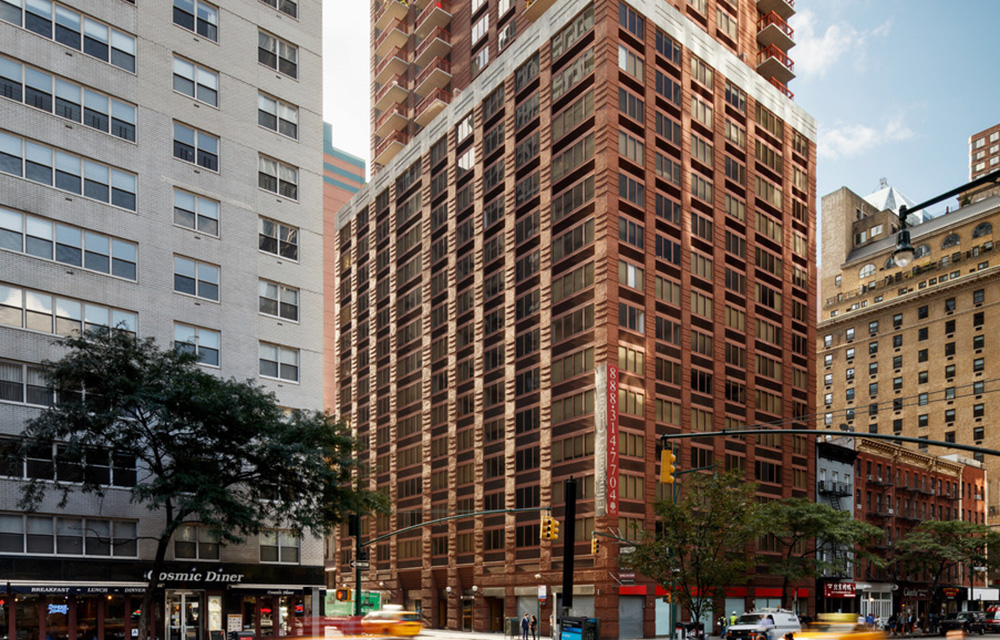
Rose Assocs. partners with Morgan Stanley Real Estate Investing to recapitalize The Ellington
Manhattan, NY Rose Associates, Inc., the New York-based multifamily real estate developer and manager, has partnered with a fund managed by Morgan Stanley Real Estate Investing (MSREI) in the recent recapitalization


Quick Hits
 (2).gif)

Columns and Thought Leadership

New York City’s historic rent freeze now rests with the courts - by Ron Cohen
New York City’s first-ever two-year rent freeze is now in the hands of a state Supreme Court judge, and the decision could reset income for owners of roughly one million rent-stabilized apartments housing some 2.4 million residents.
NYC's Community Opportunity to Purchase Act is back - and multifamily owners should pay attention - by Ron Cohen
New York City’s Community Opportunity to Purchase Act (COPA) is back, and this latest version could have a much better chance of becoming law. The proposal would give qualified nonprofit organizations

Hunt Commercial Real Estate Q&A: Location, location, location? - by David Hunt
In working with our clients, we break down our search objectives into two categories. The first category involves the specific needs of your business such as warehouse height, amount of office space and number of loading

Don’t leave severance damages behind - by Sebastian Jablonski
When the government takes a portion of a landowner’s property, most assume just compensation stops at the value of the land taken. However, in partial takings, that is only half of the equation.