



News:
Brokerage
Posted: September 29, 2008
A six month extension to look for property; ruling confirms opportunity to buy from related party
Exchanges between related parties have been a major source of confusion. The absence of Regulations and the IRS' mixing-up of different related party exchange rules contribute to the confusion. In Private Letter Ruling 200440002, the IRS had both the rule and the rationale correct. This ruling completes a critical piece of the puzzle for exchanges involving related parties. Unfortunately, the guidance is a private letter ruling, rather than a revenue ruling which other taxpayers can rely on.
The general rule, stated in Rev. Rul. 2002-83, 2002-2 C.B. 927, is that, when a taxpayer does a deferred exchange through a qualified intermediary (QI) and acquires replacement property from a related party, the exchange will fail as a valid exchange under §1031(f)(4). The exceptions to this rule are ill-defined, and require analysis of the purpose of §1031(f). The exceptions arise when the acquisition of the replacement property in this manner does not result in cashing out on the sale of high basis property and deferring gain from the exchange of low basis property (basis shifting).
In this new ruling, the taxpayer was Partnership AB. AB sold Building 1 to an unrelated third party for cash through a QI, then used the proceeds to acquire Building 2 from Partnership CD, a related party, in a like-kind exchange. Partnership CD sold Building 2 to AB through a QI and acquired its replacement property from an unrelated third party in a like-kind exchange.
Citing the legislative history of 26 U.S.C. §1031(f), the IRS held that this transaction was not a transaction structured to avoid the related party rules and did not result in a failed exchange under §1031(f)(4). Since both AB and CD were doing a like-kind exchange, there was no cashing out and no basis shifting among AB and CD. Both AB and CD ended up with a carryover basis and reinvestment of equity in their respective replacement properties.
So what is the benefit of this ruling? Answer: It can lengthen the amount of time to find replacement property by 6 months. Here is how the strategy works...
First AB sells property to an unrelated party and starts an exchange. Then by the 45th day after closing AB identifies in writing properties X, Y and Z, Z being the related party's property. Lets assume that the acquisition of property X and Y falls through. AB can keep looking for suitable replacement property until day 180. Once a new replacement property (NewProp) is found (and hopefully put under contract) then AB buys property Z from the related party (CD) closing out AB's exchange. Now CD has started an exchange and can close out its exchange by acquiring NewProp.
It should be noted that this strategy is most effective when the related parties' interests are closely aligned. However, if they are, then finding replacement property may have become a bit easier.
Note:
*Both AB and CD represented in the ruling they would hold their replacement property for two years.
*If both AB and CD are prohibited from disposition their replacement property for two years, this prohibition seem to preclude not only a sale (which would be a cashing-out) but also an exchange (which would not be a cashing-out).
*The two-year limitation precludes CD from repeating this strategy with yet another related party.
*The ruling did not mention that AB identified other replacement property and the property acquired from CD was an alternative "back-up" identification.
*A taxpayer undertaking this strategy should insure that BOTH the taxpayer and the related party not only start, but also complete their exchanges. If the second exchange is not completed then there will be two failed exchanges.
*If the exchanges involved a party acquiring not only like-kind property, but also boot, a different result might be obtained, making this an "all or nothing" strategy.
Andrew Gelson is a managing director of Compass Exchange Advisors, Plymouth, Mass.
Tags:
Brokerage
MORE FROM Brokerage
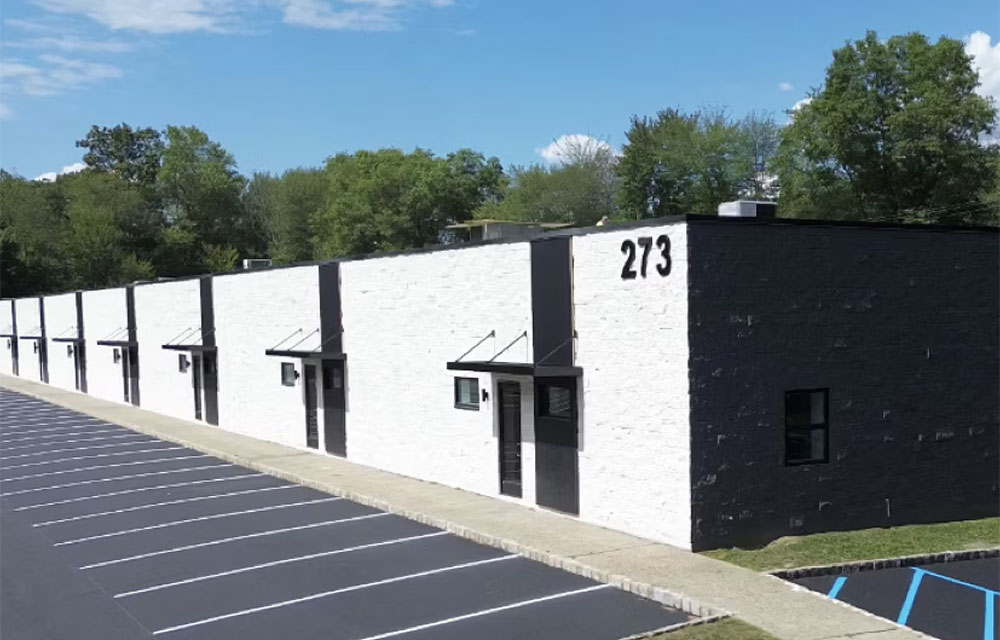
Resource Realty of Northern NJ delivers complete lease-up of 235 Franklin Rd. for Commerce Park Investors
Randolph, NJ Resource Realty of Northern New Jersey (RRNNJ) has completed the lease-up of a 10-unit small-bay industrial property at 273 Franklin Rd., marking the culmination of an investment strategy that began




Columns and Thought Leadership

New York’s streets are full again, and the retail numbers prove it - by Noam Aziz
Walk down any New York block this year and you can feel it. The sidewalks are crowded, the storefronts are lit, and the energy that defines this city is back at full volume.

Hunt commercial real estate question and answer: Fortune 500 wisdom - by David Hunt
Yes, there are lessons to be learned from the largest companies in America when comes to managing your real estate. But the decision to buy or lease real estate may not be one of

A guide to finding the right NYC property management company - by Sanjay Gandhi
Being a small to midsize landlord in NYC is an increasingly demanding endeavor. From navigating complex regulations, increased compliance demands to dealing with tenant issues and remediating violations. It is wise to enlist the assistance of a partner, a professional

Positive forecast for New York’s pro-housing push? - by Philip Butler
New York’s housing crisis remains a hot button topic despite growing consensus that varied and affordable housing is desperately needed statewide. Governor Hochul has recently introduced several initiatives to overcome N.Y.’s anti-housing
.gif)