



News:
Brokerage
Posted: October 3, 2008
A look at the 2006 American Land Title Association Policy
The 2006 American Land Title Association (ALTA) Policy is the standard policy used to insure title in the U.S.
Prior to 2006, the title industry was  insuring under a policy that was adopted in 1987, with an additional exclusion added in 1990 and as modified in 1992.  In 1992 the " fee policy" or  "owner's policy" in New York was written on a completely different form than the form used to insure residential loans. There was truly a need to standardize the policy on a national basis to simplify the sale of loan policies in bulk packages to the secondary market.
In 2003, the effort was made by The Board of Governors of ALTA. The forms committee consisted of a group of title insurance industry veterans with aggregate years of experience in excess of 384 years with representation from each of the major title insurance underwriters as well as the largest bar-related title insurers. Input was requested and received from the American College of Real Estate Lawyers, the American College of Mortgage Attorneys, the Federal National Mortgage Association and the Federal Home Loan Mortgage Corp.
After three years of work, ALTA adopted the new forms on June 17, 2006. New York was one of the first states to adopt the forms as modified by the inclusion of the New York Endorsement. Â
One of the major changes in the 2006 ALTA policy was that the amount of insurance could be modified by endorsement or increased or decreased by different sections of the policy. For example, as per Section 10, "All payments under this policy, except payments made for costs, attorneys' fees, and expenses, shall reduce the amount of insurance by the amount of the payment." Section 8 allows the amount of insurance to be increased by 10% if the company opts to litigate the matter and not pay the insured within the standard 30 days period, thus affording protection to the insured against any inconvenience incurred by having to wait for litigation.
A major addition in the 2006 ALTA Policy had to do with survey coverage. The base 2006 policy insures against "any state of facts an accurate survey may disclose." When adopted in New York this coverage was deleted from the policy with the exception of 1 to 4 family dwellings insured on the loan policy. Â
Another addition to the basic 2006 policy form is the expansion of the "entity insured." In 1(c) of the policy, "entity" is defined as a corporation, partnership, trust, limited liability company or similar entity. In 1(d) an expansion of the term Insured is given to include successors by operation of law, successors by dissolution, merger, consolidation, distribution or reorganization, successors by conversion. The insured has even been expanded to include a conveyance to a grantee under a deed delivered without payment of actual valuable consideration in cases where the stock, shares, memberships, or other equity interest of the grantee are wholly-owned by the named insured or in cases wherein the grantee is a trustee or beneficiary of a trust created by a written instrument established by the Insured named in schedule A for estate planning purposes.
Real estate professionals truly benefit from an overview of the policies now available in the marketplace. A knowledgeable title company and real estate attorney are still your best resource for any specific questions with regard to coverages afforded by the 2006 ALTA Policy.
Nan Gill is the president of Gill Abstract, Goshen, N.Y. and New York, N.Y.
Tags:
Brokerage
MORE FROM Brokerage
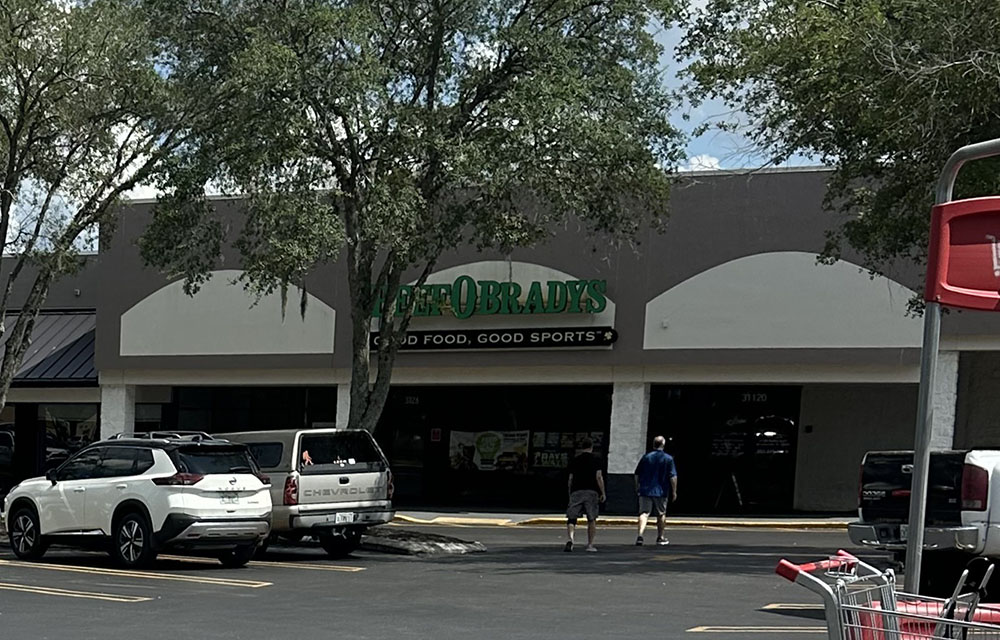
Island Associates negotiates lease extension for 2,160 s/f restaurant operated by Beef O’ Brady Bar and Grill at Lake Harris Square
Leesburg, FL Roger Delisle and Robert Monahan of Island Associates negotiated a lease extension for 2,160 s/f restaurant operated by Beef O’Brady Bar and Grill at Lake Harris Square located at





Quick Hits
 (2).gif)

Columns and Thought Leadership

New York’s streets are full again, and the retail numbers prove it - by Noam Aziz
Walk down any New York block this year and you can feel it. The sidewalks are crowded, the storefronts are lit, and the energy that defines this city is back at full volume.

Hunt commercial real estate question and answer: Fortune 500 wisdom - by David Hunt
Yes, there are lessons to be learned from the largest companies in America when comes to managing your real estate. But the decision to buy or lease real estate may not be one of

The death of the generic offering memorandum: What buyers expect in 2025 - by Kimberly Zar Bloorian
There was a time when an offering memorandum (OM) was pretty bare bones, some photos, a few bullet points on income, and a rent roll thrown in at the back. That used to get the job done. Not anymore. In 2025, buyers are sharper, faster, and more selective. They’re looking
Hunt commercial real estate question and answer: The total cost of relocation - by David Hunt
You have a right to be concerned. I am always surprised at the companies that will negotiate the price of their new facility down to the last dollar, without thoroughly analyzing their
.gif)
September Promotion
