



News:
Brokerage
Posted: November 12, 2013
90-year-old tenant expanding as enclave of innovation economy makers emerges at Sunset Park industrial facility
As part of a manufacturing resurgence in Brooklyn, Virginia Dare, a flavor and extract company that signed its first lease at Industry City 90 years ago, is increasing its presence at the Sunset Park manufacturing complex through the addition of 30 jobs and extending its lease for the 150,000 s/f it occupies for another 10 years.
Another maker-tenant expanding at Industry City is custom bass guitar manufacturer Fodera Guitars, which expanded from 6,500 s/f to 13,000 s/f and has grown from 15 to 18 employees. Reflecting the diverse tenant roster at the complex, high-end kitchenware supplier Williams-Sonoma also expanded its photography and catalogue production facility from 24,000 s/f to 36,240 s/f for 15 employees.
"Industry City's tenants increasingly embody the diverse mix of modern-day makers that reflect the emerging innovation economy in New York" said Andrew Kimball, CEO of Industry City. "We are building a community where makers of a broad range of physical, digital and engineered products can come together to design, produce and sell their wares while creating much-needed local jobs."
In all, more than 100 businesses have signed new, renewed or expanded leases over the last six months at the century-old Industry City. These businesses - including 53 new, 45 renewed and four expanded tenants - represent a wide range of manufacturing sectors, occupy more than 300,000 square feet and employ more than 800 people.
The growth comes as a new partnership led by managing partner Jamestown Properties, Belvedere Capital and Angelo, Gordon & Co. have joined with the Schron and Fruchthandler families to recapitalize the property to convert its 30 acres into a hub for tech and manufacturing, with a focus on local job creation. The new partnership plans to upgrade the property, which currently houses fewer than 1,400 manufacturing jobs, in order to attract more modern-day manufacturing tenants and double employment over the next three years.
Industry City is currently working with Southwest Brooklyn Industrial Development Corporation, Center for Family Life, Opportunities for a Better Tomorrow and others to establish community employment opportunities.
In an effort to cast a spotlight on artisan manufacturing in New York, Industry City launched a 22,000 square-foot marketplace for local makers in October, known as Factory Floor. The new space will act as a venue for makers to showcase and sell their quality and often hand-made goods to the public. The Factory Floor space debuted with a showcase of more than 40 furniture and home goods designers and is currently preparing for its next makers' market.
Recent growth at Industry City has begun to reserve a long decline at the storied manufacturing complex that was significantly damaged by Superstorm Sandy last year.
Tags:
Brokerage
MORE FROM Brokerage
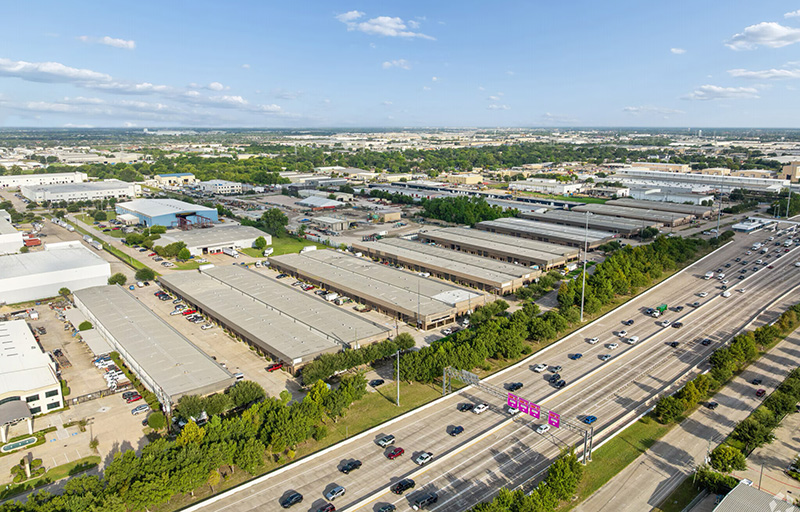
Simi Capital enters Texas with acquisition of 359,000 s/f small-bay industrial portfolio in Northwest Houston
Houston, TX Simi Capital acquired a three-property, 359,000 s/f small-bay industrial portfolio. The transaction, completed in a joint venture with Decker Capital, marks Simi


Quick Hits
 (2).gif)

Columns and Thought Leadership

A guide to finding the right NYC property management company - by Sanjay Gandhi
Being a small to midsize landlord in NYC is an increasingly demanding endeavor. From navigating complex regulations, increased compliance demands to dealing with tenant issues and remediating violations. It is wise to enlist the assistance of a partner, a professional

Hunt commercial real estate question and answer: Fortune 500 wisdom - by David Hunt
Yes, there are lessons to be learned from the largest companies in America when comes to managing your real estate. But the decision to buy or lease real estate may not be one of

New York’s streets are full again, and the retail numbers prove it - by Noam Aziz
Walk down any New York block this year and you can feel it. The sidewalks are crowded, the storefronts are lit, and the energy that defines this city is back at full volume.

Hunt CRE question and answer: Choosing a real estate agent - by David Hunt
First, we will only work with one agent exclusively. The primary reason is that we want that agent to legally represent our client’s interests. In New York State, a real estate agent has a fiduciary
.gif)