



News:
Brokerage
Posted: April 23, 2012
Westchester is number 1, yeah!...in real estate taxes
Can we fight city hall to lower our taxes, and win? Usually when you're voted number 1 in the nation it's a good thing, except when that placement refers to you living in the county that pays the highest real estate taxes in America. But do our property taxes reflect the best public services, amenities and educational system in the nation? That's a complex question for another day's debate. (For the record, I happen to be pro Westchester and love living here.) So for today, let's just focus on the issue at hand. As homeowners enjoyed record setting real estate appreciation until 2007-2008, our municipalities increased our taxes proportionate to that increase. But did the quality of our public services increase as well? Again, open to another day's debate. Today's question is whether or not your real estate taxes have decreased in similar proportion to the decline in your property's value. First, let's give credit to where credit is due; some municipalities have taken a blanket initiative to lower assessments and subsequent taxes up to 4.5% in some areas, a nice gesture, but it hardly makes up for the actual depreciation that in some cases approaches 40%. Some cities have unfairly raised the assessment ratio, which only makes it more difficult for a homeowner to achieve the reduction that may rightfully belong to them. Individual assessors and assessment office policies vary greatly from town to town, I have found most to be fair and pleasant. Others can be biased and adversarial, to the point where one would believe their position is deliberately intended to send a message of discouragement to homeowners who seek a reduction. In a recent conversation with one local assessor, I came to realize that some assessors are frustrated in that they would like to have accurate valuations of every property within their jurisdiction but they just lack the man (and woman) power to do just that.
As for the basic steps within the process, they are loosely defined as follows: 1. Read tax bill, 2. Kick the dog (just kidding), take a seat, put your eyeglasses on and read tax bill again (just to make sure), 3. Wave a finger of your choice in the air and scream "We are number one!" 4. Find the section of your tax bill that states, "Your taxes are based on the market value of i.e. $200,000," 5. Ascertain whether or not your actual market value is lower than the bill's stated value. 6. If the broker/appraiser opinion is lower than the town's stated value then you may have a case. The rest of the process includes some time-consuming and often frustrating steps. The property owner or representative must complete the confusing NYS RP-524 form and submit it along with the proof to the assessor. This can be submitted and discussed with the assessor in person or just hand delivered. After a few months a determination is made and sent via mail. If a decrease has been awarded, and the property owner is satisfied, the process ends there. If a partial or no reduction has been granted, the decision can be appealed at the county level and a small claims court date is set for arbitration. I know what you're thinking, "good times" right?
Many property owners select to avoid the personal confrontation, anxiety, and tedium of the process and hire a grievance company or attorney to act in their interest. Fees usually range from 50% to 75% of the first years savings, and some charge and additional 10% to 20% for the second year. To go it alone or hire a representative depends on the property owner and is mostly an issue of personal preference. Sometimes the "powers that be" are reasonable, and other times we are forced to "fight city hall," but either way it is a property owner's legal right to challenge what they think is unfair.
Anthony Sarro is the owner of www.e-TaxReductions.com, Bronxville, N.Y.
Tags:
Brokerage
MORE FROM Brokerage
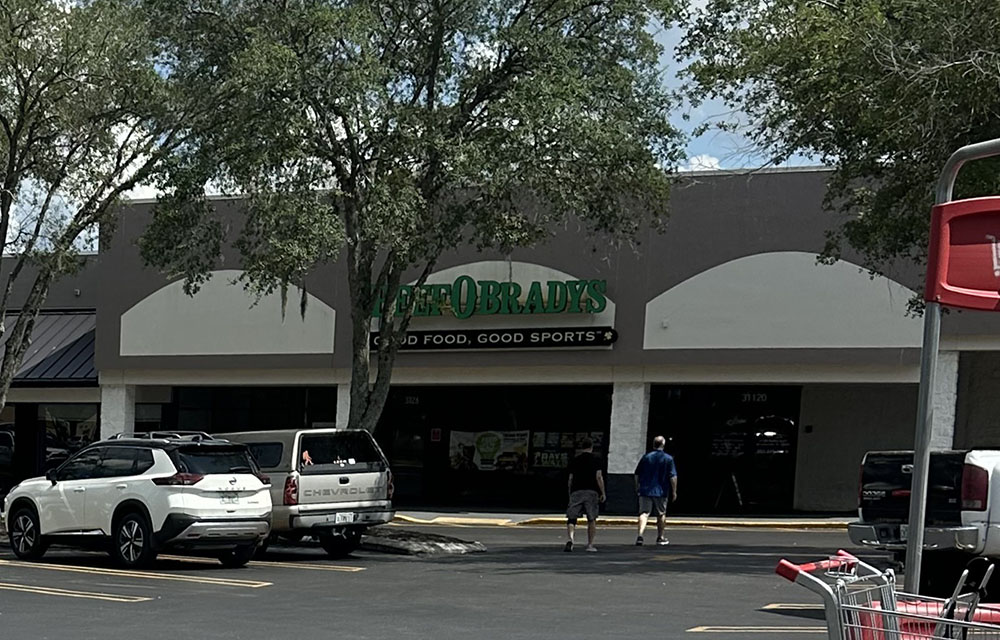
Island Associates negotiates lease extension for 2,160 s/f restaurant operated by Beef O’ Brady Bar and Grill at Lake Harris Square
Leesburg, FL Roger Delisle and Robert Monahan of Island Associates negotiated a lease extension for 2,160 s/f restaurant operated by Beef O’Brady Bar and Grill at Lake Harris Square located at






Quick Hits

Columns and Thought Leadership

Hunt commercial real estate question and answer: The total cost of relocation - by David Hunt
You have a right to be concerned. I am always surprised at the companies that will negotiate the price of their new facility down to the last dollar, without thoroughly analyzing their
Hunt commercial real estate question and answer: Fortune 500 wisdom - by David Hunt
Yes, there are lessons to be learned from the largest companies in America when comes to managing your real estate. But the decision to buy or lease real estate may not be one of

The death of the generic offering memorandum: What buyers expect in 2025 - by Kimberly Zar Bloorian
There was a time when an offering memorandum (OM) was pretty bare bones, some photos, a few bullet points on income, and a rent roll thrown in at the back. That used to get the job done. Not anymore. In 2025, buyers are sharper, faster, and more selective. They’re looking

New York’s streets are full again, and the retail numbers prove it - by Noam Aziz
Walk down any New York block this year and you can feel it. The sidewalks are crowded, the storefronts are lit, and the energy that defines this city is back at full volume.
.gif)
September Promotion
