


 (2).gif)
News:
Spotlight Content
Posted: March 28, 2023
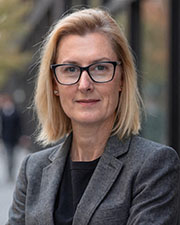
2023 Women in Construction: Masha Dinaburg, MG Engineering D.P.C.

Associate Principal
MG Engineering D.P.C.
In the past year, what project or accomplishment are you most proud of? One of the most exciting projects I recently completed was the conversion of an existing office building located at 730 Fifth Ave., to a new state-of-the art, luxury Aman Brand Hotel. The project included residential dwelling units, restaurants, wine room, jazz club, 10,000 s/f outdoor garden terrace, and a hi-end wellness center/spa with treatment suites and hot and cold plunge pools, all totaling 400,000 s/f.
Which professional associations or organizations would you recommend to women who are starting out in the AEC industry? I highly recommend getting involved with ASHRAE early on in your career. It is great for networking. In addition, when possible, also join trade related committees within your city and state. I am currently a member of the NYC DOB Construction Code Committee for the mechanical trade.
What was a pivotal point in your career? I would say after several years once I designed various complex projects and gained sufficient practical experience that adequately supported my strong academic knowledge was a pivotal point for me. It gave me confidence in my role and later led me to become a principal at my firm.
How can AEC companies recruit more women? By promoting more female leadership at all levels within your company. Women would like to know that with experience and hard work they can reach the top of their company. When you see women leaders presented in your company’s website it makes a difference. In general, providing more information on successful career opportunities within AEC companies.
What is your favorite building in New York? I have a few favorites. I was involved in converting several buildings including Walker Tower, Stellar Tower, 140 West Street, and 730 Fifth Avenue to residential occupancy. I truly admire original architecture and love to see buildings evolve into a new role, from commercial to residential.
Tags:
Spotlight Content
MORE FROM Spotlight Content

Artificial intelligence war stories - by Thomas Kearns
The proliferating artificial intelligence products for law firms show promise of improving the quality of legal services and making lawyers more efficient, but as with any developing technology, the results are mixed, with some results being not worth



.png)



Columns and Thought Leadership

CRE Guide Featured Company: Merritt Environmental Consulting Corp.
Merritt Environmental Consulting Corp. (MECC) was established in June of 2009 after being part of a larger engineering firm for almost 20 years. The focus of the company is to assist lending institutions, attorneys, real estate investors, and property owners with environmental concerns. Today, MECC has offices in New York, Florida, and Vermont and has grown into a regional consulting firm serving clients along the East Coast.

Properly serving a lien law Section 59 Demand - by Bret McCabe
Many attorneys operating within the construction space are familiar with the provisions of New York Lien Law, which allow for the discharge of a Mechanic’s Lien in the event the lienor does not commence an action to enforce following the service of a “Section 59 Demand”.

From vacancy to vitality: How adaptive reuse is reshaping Long Island’s CRE landscape - by Andrea Tsoukalas Curto
Adaptive reuse has become one of the most important conversations in commercial real estate today. Long Island has a large inventory of aging retail, office and industrial

2026 Developing Queens: Long Island Board of Realtors advances commercial growth and advocacy in Queens
The Long Island Board of Realtors (LIBOR) Commercial Network continues to play a key role in advancing opportunities and strengthening the commercial real estate landscape across Queens. Through targeted programming and global outreach
September Promotion
