



News:
Spotlight Content
Posted: March 28, 2023
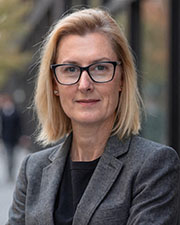
2023 Women in Construction: Alejandra Sepulveda, Outsource Consultants, Inc.

Senior Project Mgr. – Special Projects
Outsource Consultants, Inc.
What was your greatest professional achievement or most notable project in the last 12 months? Most of my work focuses on healthcare infrastructure, which is in high demand for upgrading in its response to what is happening in our country; providing renovations and new infrastructure for pandemics such as COVID and Hurricane Sandy. I am currently working on an 11-story resilient acute care hospital tower and am working closely with city agencies to meet the requirements of the unique flood driven location.
Why should women consider a career in construction? Because we have a chance to make a difference, as women we are known for our strong communication and interpersonal skills. We are very detailed oriented with a different perspective in a man-dominated, competitive industry. There is an immense reward of seeing a project from start to finish.
Starting out in the construction business, who or what empowered you? Having a background in architecture and sustainability allowed me to develop knowledge and expertise in the field. Also, having a deep understanding in the industry and staying up to date with the latest building codes, regulations and technology.
Who within your own firm has helped you succeed within the construction industry? You always pass failure on your way to success and within the construction industry this doesn’t go unnoticed. Talented and educated individuals within my firm are able to contribute highly to my success as we all share ideas daily and growth together. Many of our upper management and managers have pushed me out of my comfort zone, making me see that there is no limit in what can be achieved, always aiming to go above and beyond.
What advice would you offer to other women getting into the construction industry? If you are considering entering the industry start making that resume and don’t be led down by anyone. Gain any type of experience, discover your skill sets, and make sure that becomes your strongest asset.
Tags:
Spotlight Content
MORE FROM Spotlight Content

Artificial intelligence war stories - by Thomas Kearns
The proliferating artificial intelligence products for law firms show promise of improving the quality of legal services and making lawyers more efficient, but as with any developing technology, the results are mixed, with some results being not worth



.png)

 (2).gif)

Columns and Thought Leadership

CRE Guide Featured Company: Merritt Environmental Consulting Corp.
Merritt Environmental Consulting Corp. (MECC) was established in June of 2009 after being part of a larger engineering firm for almost 20 years. The focus of the company is to assist lending institutions, attorneys, real estate investors, and property owners with environmental concerns. Today, MECC has offices in New York, Florida, and Vermont and has grown into a regional consulting firm serving clients along the East Coast.

2026 Developing Queens: Long Island Board of Realtors advances commercial growth and advocacy in Queens
The Long Island Board of Realtors (LIBOR) Commercial Network continues to play a key role in advancing opportunities and strengthening the commercial real estate landscape across Queens. Through targeted programming and global outreach

Properly serving a lien law Section 59 Demand - by Bret McCabe
Many attorneys operating within the construction space are familiar with the provisions of New York Lien Law, which allow for the discharge of a Mechanic’s Lien in the event the lienor does not commence an action to enforce following the service of a “Section 59 Demand”.

From vacancy to vitality: How adaptive reuse is reshaping Long Island’s CRE landscape - by Andrea Tsoukalas Curto
Adaptive reuse has become one of the most important conversations in commercial real estate today. Long Island has a large inventory of aging retail, office and industrial
September Promotion
