



News:
Brokerage
Posted: March 25, 2025
Yates Exterior Restoration Commemorates 100th Anniversary
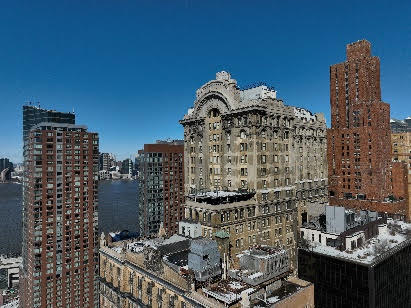
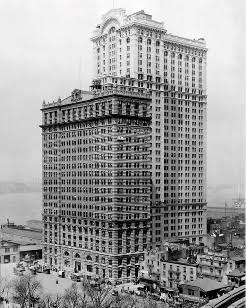 Long Island City, NY Yates Exterior Restoration Services, LLC, a full-service construction company, specializing in the restoration and maintenance of pre- and post-war buildings, founded in 1925, is celebrating its 100th year keeping New York City’s buildings safe and beautiful. In addition to having repaired and restored hundreds of commercial and residential properties, including landmark buildings that were new when the company was founded, Yates has been instrumental in developing many of the practices that have become standards in building restoration. More recently, it has influenced critical methods and techniques currently being used for Façade Inspection Safety Program (FISP) projects.
Yates' reputation and years of experience are among the reasons why the firm was chosen to restore the Statue of Liberty in preparation of the monument’s centennial in 1986. Likewise, it was selected to reproduce the missing statuary at the prow of the Flatiron Building to celebrate that building’s centennial anniversary. Over four generations, Yates Exterior Restoration has been family operated, led by Michael Yates, who has been the Company’s president since 1996.
“I am both proud of our contributions to this great city and humbled by my family’s legacy,” said Yates. “Our mission has always been to protect and preserve New York City’s facades with a sensitivity to the architecture and the building’s tenants. We are fortunate to have developed a world-class team over the years, which continues to advance and improve with the advent of new technologies and materials.”
In addition to FISP projects, Yates is especially well-regarded for projects completed on such landmark properties as Trinity Church, 1185 Park Avenue, The Carlyle Hotel, 1 Fifth Avenue, The Fred French Building, and 140 Riverside Drive, among others. The firm also provides ground-up restoration services, including complete façade replacements at 501 East 79th Street and 114 East 72nd Street, and a notable plaza replacement at 10 West 66th Street.
Yates said, “Over the years, we have been fortunate to have worked on a diverse range of projects, with clients who have been second to none in terms of placing great value on protecting and preserving their buildings. Together, with our parent company Central Construction Management, we look forward to continuing to play an important role in maintaining the architectural fabric of this city and being part of its continuing history.”
Tags:
Brokerage
MORE FROM Brokerage

Bestreich, Reynolds, Davila, and Flaherty of Investment Property Realty Group close $1.97 million sale of 343A Tompkins Ave. in Bed-Stuy
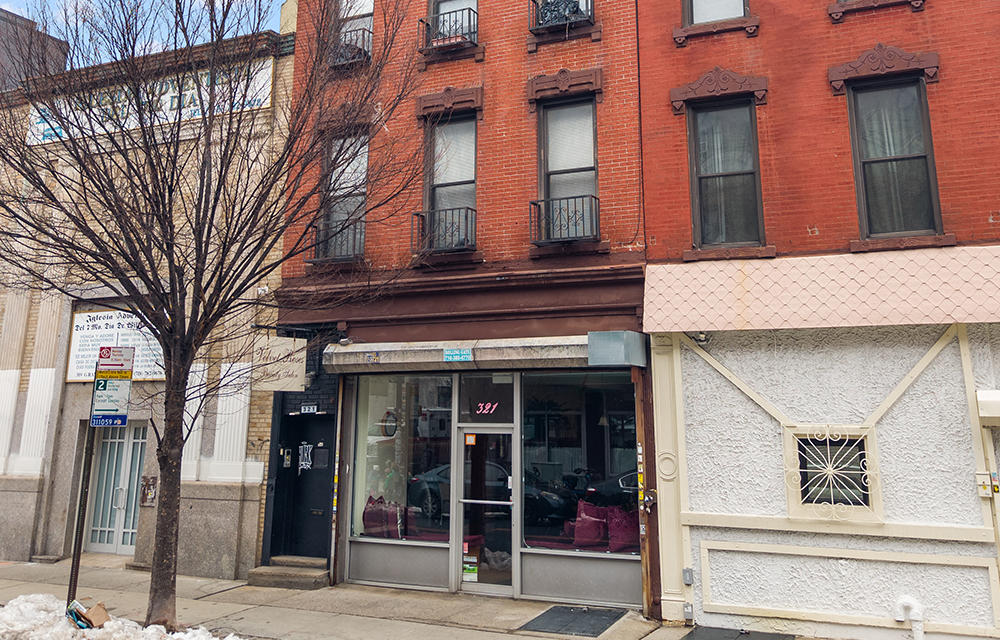
Brooklyn, NY Investment Property Realty Group (IPRG) closed the sale of 343A Tompkins Ave., a mixed-use building located in the Bed-Stuy section of the borough, for $1.97 million.




Columns and Thought Leadership

New York’s streets are full again, and the retail numbers prove it - by Noam Aziz
Walk down any New York block this year and you can feel it. The sidewalks are crowded, the storefronts are lit, and the energy that defines this city is back at full volume.

Hunt CRE question and answer: Choosing a real estate agent - by David Hunt
First, we will only work with one agent exclusively. The primary reason is that we want that agent to legally represent our client’s interests. In New York State, a real estate agent has a fiduciary

Hunt commercial real estate question and answer: Fortune 500 wisdom - by David Hunt
Yes, there are lessons to be learned from the largest companies in America when comes to managing your real estate. But the decision to buy or lease real estate may not be one of

A guide to finding the right NYC property management company - by Sanjay Gandhi
Being a small to midsize landlord in NYC is an increasingly demanding endeavor. From navigating complex regulations, increased compliance demands to dealing with tenant issues and remediating violations. It is wise to enlist the assistance of a partner, a professional
.gif)