



News:
Brokerage
Posted: August 27, 2024
Wonder Group and Bleuler sign long-term leases at Heritage Tower
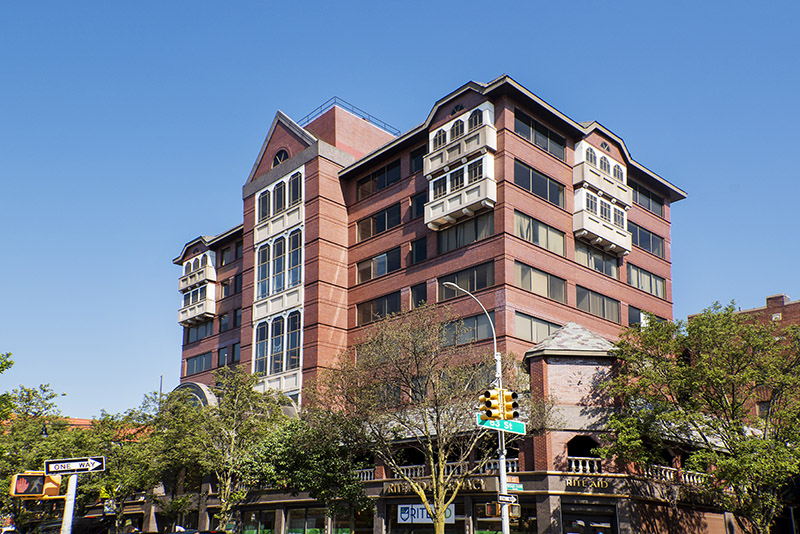
Queens, NY RockFarmer Properties has signed two new long-term leases at Heritage Tower, located at 82-11 37th Ave. in Jackson Heights, totaling 11,199 s/f. The new lease brings the 135,000 s/f mixed-use office building to 95% leased.
“Heritage Tower continues to see strong retail and office leasing momentum,” said John Petras, managing principal. “RockFarmer Properties continues to be bullish on well-located niche office buildings in New York City.”
In the first transaction, Wonder Group, a food delivery startup founded by Marc Lore signed a 10-year lease for 4,419 s/f of ground floor retail space. Wonder, which acquired meal-kit company Blue Apron for $103 million, plans to open additional locations across New York.
Benjamin Weiner and Christopher Walther of RIPCO Real Estate and Kostas Koutsothanasis of RockFarmer Properties represented the landlord, RockFarmer Properties, in the transaction; Jon Paul Pirraglia and Dilon Ross Fabisch of RIPCO Real Estate represented the tenant.
In the second transaction, Bleuler Psychotherapy Center Inc. signed a 10-year lease for 6,780 s/f of general and executive office space on the ninth floor. Bleuler, with offices in Forest Hills and Jackson Heights, is relocating from 37-61 72nd St. and expected to move in later this year following its build out.
Michael Lee of CBRE and Koutsothanasis of RockFarmer Properties represented the landlord, RockFarmer Properties, in the transaction; Roy Chipkin of CBRE represented the tenant.
Although the terms of the deal were not disclosed, asking rents for office spaces at Heritage Tower are approximately $55 per s/f for office space and $130 per s/f for the retail spaces, respectively.
Built in 1998, Heritage Tower, underwent a $4 million renovation in 2019. The renovation of the nine-story office tower included a complete renovation and upgrade of the building’s common areas, lobby and three-story atrium; the installation of new elevator cabs and mechanicals; the installation of a new roof; and the addition of turn-key incubator spaces for small businesses and entrepreneurs on the lower level.
Situated one block from the 7 train and a few blocks from the E, F, M and R trains, the Brooklyn-Queens Expwy. and served by multiple bus routes, Heritage Tower features views of Queens and Manhattan, on-site parking and an attended lobby and ground floor retail.
Tags:
Brokerage
MORE FROM Brokerage
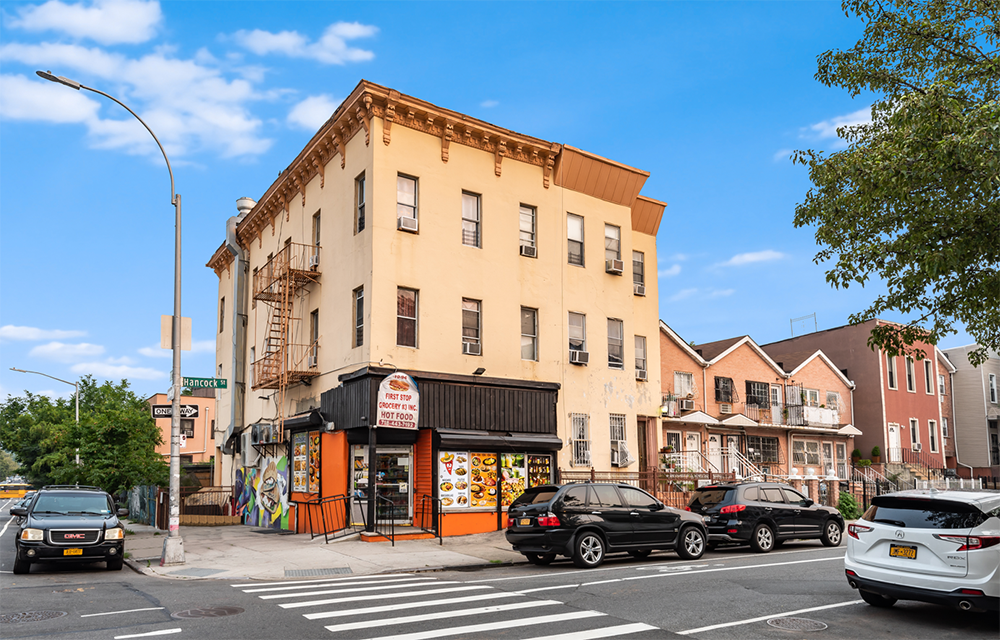
Investment Property Realty Group closes $1.75 million sale of 1094 Hancock Street in Brooklyn
Brooklyn, NY Investment Property Realty Group (IPRG), a New York-based commercial investment firm, has closed the sale of 1094 Hancock St., a mixed-use building in the Bushwick section, for $1.75 million.


Quick Hits

Columns and Thought Leadership

A guide to finding the right NYC property management company - by Sanjay Gandhi
Being a small to midsize landlord in NYC is an increasingly demanding endeavor. From navigating complex regulations, increased compliance demands to dealing with tenant issues and remediating violations. It is wise to enlist the assistance of a partner, a professional

New York’s streets are full again, and the retail numbers prove it - by Noam Aziz
Walk down any New York block this year and you can feel it. The sidewalks are crowded, the storefronts are lit, and the energy that defines this city is back at full volume.

Hunt CRE question and answer: Choosing a real estate agent - by David Hunt
First, we will only work with one agent exclusively. The primary reason is that we want that agent to legally represent our client’s interests. In New York State, a real estate agent has a fiduciary

Hunt commercial real estate question and answer: Fortune 500 wisdom - by David Hunt
Yes, there are lessons to be learned from the largest companies in America when comes to managing your real estate. But the decision to buy or lease real estate may not be one of
.gif)