



News:
Brokerage
Posted: May 21, 2019
“Women Building Women” panel discussion event held March 28th; Pimsleur, Hori and Sangster are speakers, Vailakis moderates

Manhattan, NY On March 28th, CEO of Ellipsis, LLC and creator of the Against The Current series, Karen Gamba, with Nancy Vailakis, brought together a panel of women and guests for the inaugural “Women Building Women” discussion. The event drew senior executives across a range of industries to learn about and focus on the steps women are taking to reach a better level of equality and opportunity in the business world and beyond.
 Speakers included: Julia Pimsleur, author, founder and chief empowerista of Million Dollar Women; Elissa Sangster, CEO of the Forté Foundation; and Roxanne Hori, associate dean at the NYU Stern School of Business. The event was moderated by Nancy Vailakis, director, funds of IQ-EQ.
This discussion was supported and sponsored by Julia Hoagland, principal at JH Advisors, LLC; Shannon Aronson of Keller Williams; and Laure Sheppe Miller of Houlihan Lawrence. The next “Women Building Women” event will take place July 16th on Wall St.
“Up until 1974 you couldn’t get a bank loan or a credit card without your husband or father’s signature. This is just one of the things that inspired me to start Million Dollar Women because that wasn’t that long ago. What are the women, that will look back at our time, remember us for?” said Pimsleur.

empowerista of Million Dollar Women
“What inspires me is the evolution I’ve seen occur, and there must be more conversations going on at home, by people who are raising their children. As a parent, you realize your child is going into a world where they have to think differently. The norms are changing and that is very inspiring, and all of us in this room are a part of making that change happen, by making our voices heard,” said Hori.
“I do think men need to educate men about what is going on and why there needs to be a change. The huge volume of press this issue has been getting over the last three to five years, I would say, has contributed to the conversation to open the eyes of people who didn’t previously think there was an equality issue,” said Sangster.
Tags:
Brokerage
MORE FROM Brokerage
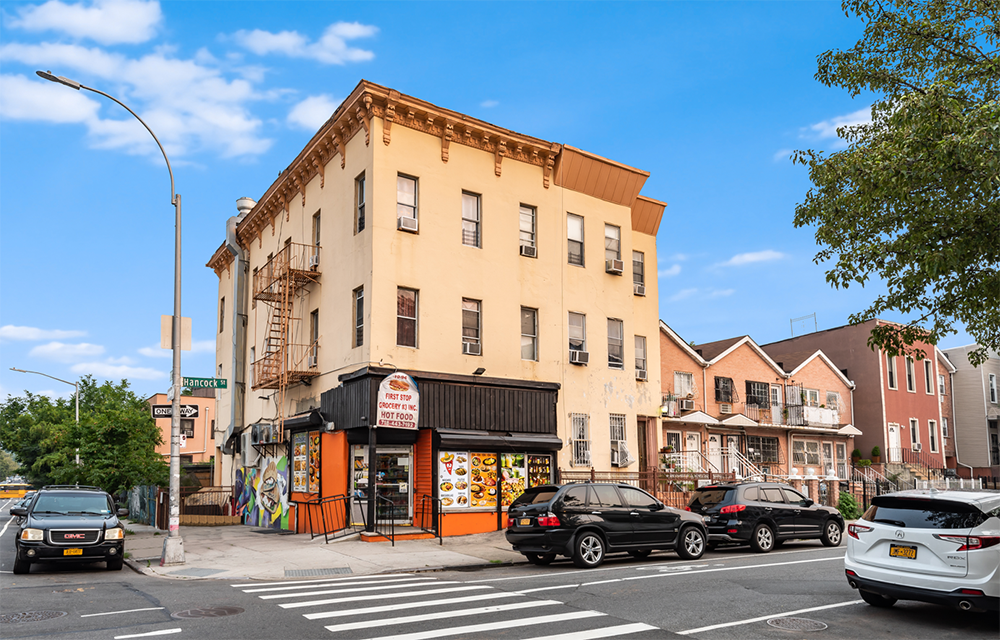
Investment Property Realty Group closes $1.75 million sale of 1094 Hancock Street in Brooklyn
Brooklyn, NY Investment Property Realty Group (IPRG), a New York-based commercial investment firm, has closed the sale of 1094 Hancock St., a mixed-use building in the Bushwick section, for $1.75 million.




Columns and Thought Leadership

Hunt commercial real estate question and answer: Fortune 500 wisdom - by David Hunt
Yes, there are lessons to be learned from the largest companies in America when comes to managing your real estate. But the decision to buy or lease real estate may not be one of

Hunt CRE question and answer: Choosing a real estate agent - by David Hunt
First, we will only work with one agent exclusively. The primary reason is that we want that agent to legally represent our client’s interests. In New York State, a real estate agent has a fiduciary

New York’s streets are full again, and the retail numbers prove it - by Noam Aziz
Walk down any New York block this year and you can feel it. The sidewalks are crowded, the storefronts are lit, and the energy that defines this city is back at full volume.

A guide to finding the right NYC property management company - by Sanjay Gandhi
Being a small to midsize landlord in NYC is an increasingly demanding endeavor. From navigating complex regulations, increased compliance demands to dealing with tenant issues and remediating violations. It is wise to enlist the assistance of a partner, a professional
.gif)