



News:
Brokerage
Posted: December 5, 2017
With East Harlem rezoning, Harlem still a great investment - by Lev Kimyagarov
No doubt we’re seeing a shift in New York City’s commercial real estate market with total investment property sales dropping year-over-year.
In Harlem, however, we’re finding that this decline is due to a lack of inventory, not a lack of demand. For properties priced right the commercial sales market is still robust making this a good time to consider selling, particularly multifamily properties facing increased scrutiny from city government and possibly rising expenses.
We expect that the demand for properties in East Harlem will increase after the East Harlem Rezoning Plan is adopted. The New York City Planning Commission approved the proposal on October 2 with a modification that limits the height of new buildings to 32 stories, even on the widest avenues of Park, Third, and Second Aves. The measure is now undergoing its final review in the city council.
The goal of the rezoning plan is to develop and preserve affordable housing and promote economic opportunity in an East Harlem area generally bounded by East 104th St. to the south, East 132nd St. to the north, Park Ave. to the west, and Second Ave. to the east.
The city estimates over the next 10 years the rezoning will result in as many as 3,500 new units of housing, with a significant number permanently affordable; 122,000 s/f of new retail stores and restaurants; and 275,000 s/f of office and industrial space.
Both the pending East Harlem Rezoning plan and recently adopted Affordable New York Housing Program, the successor to 421a that is making rental development possible again, already seem to be influencing development sales in East Harlem.
Development properties accounted for nearly 30% of all investment property sales in East Harlem in 1H 2017, with multifamily properties at 47.5% and 1-4 family buildings at 14.7%.
In contrast, multifamily sales dominated in West Harlem, accounting for 60.3% of the total investment sales in the first six months of 2017, followed by 1-4 family sales at 14.4%, and retail property sales at 11.6%.
Condo prices continued to rise in Harlem in 1H 2017 with the median price increasing to $950 per s/f in East Harlem in 2Q 2017, up 10% from 2Q 2016, and the median price rising to $1,079 per s/f in West Harlem, a year-over-year increase of 12%.
Residential rents also remain strong with one and two bedroom apartments in East Harlem averaging $2,099 and $2,450 respectively, and in West Harlem $1,975 and $2,175 per month, respectively.
Finally, the New York City economy continues to boom as indicated by an array of positive economic indicators. In the second quarter, New York City’s gross city product rose by 3.3% and the unemployment rate was 4.3%, an all-time low as the city continues adding jobs. The average daily hotel occupancy rate was 89.8%, and venture capital increased 66.3% in 2Q17 from 2Q16. Interest rates remain historically low with 30-year, fixed-rate mortgages still hovering around 4%.
Lev Kimyagarov is a senior director at Eastern Consolidated, New York, N.Y.
Tags:
Brokerage
MORE FROM Brokerage
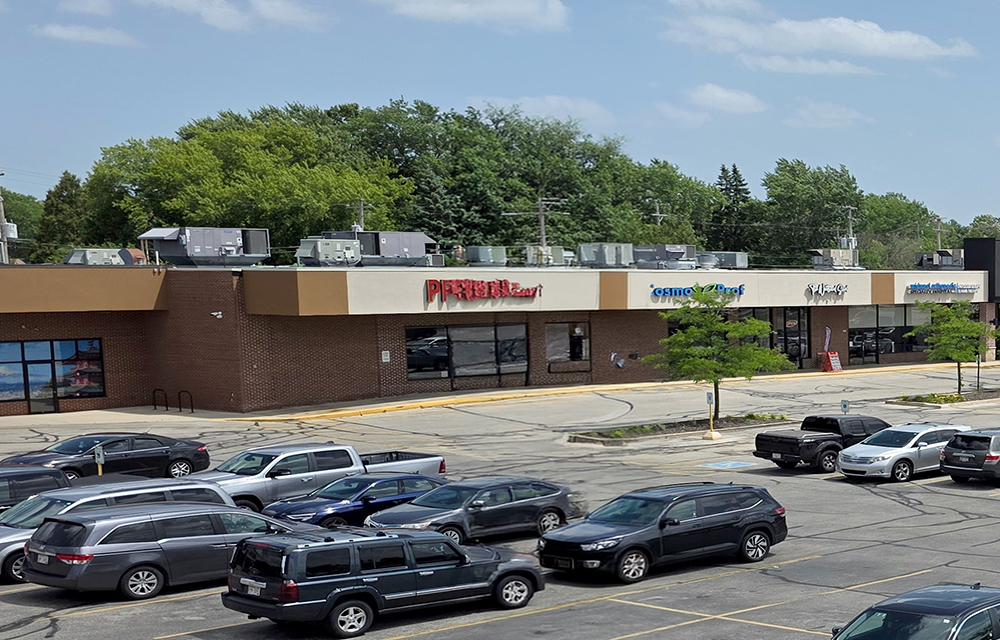
United Properties Corp. expands Wisconsin and Illinois retail presence adding 200,000 s/f
West Allis, WI United Properties Corp. completed two retail acquisitions totaling $27.4 million across Illinois and Wisconsin, adding 205,000 s/f of shopping center space to its portfolio


Quick Hits
 (2).gif)

Columns and Thought Leadership

Positive forecast for New York’s pro-housing push? - by Philip Butler
New York’s housing crisis remains a hot button topic despite growing consensus that varied and affordable housing is desperately needed statewide. Governor Hochul has recently introduced several initiatives to overcome N.Y.’s anti-housing

Hunt commercial real estate question and answer: Fortune 500 wisdom - by David Hunt
Yes, there are lessons to be learned from the largest companies in America when comes to managing your real estate. But the decision to buy or lease real estate may not be one of

A guide to finding the right NYC property management company - by Sanjay Gandhi
Being a small to midsize landlord in NYC is an increasingly demanding endeavor. From navigating complex regulations, increased compliance demands to dealing with tenant issues and remediating violations. It is wise to enlist the assistance of a partner, a professional

New York’s streets are full again, and the retail numbers prove it - by Noam Aziz
Walk down any New York block this year and you can feel it. The sidewalks are crowded, the storefronts are lit, and the energy that defines this city is back at full volume.
.gif)