



News:
Brokerage
Posted: March 19, 2019
Why have the retail rents fallen, and why do they continue to decline? - by Joseph Aquino

Why have retail rents fallen, and why do they continue to decline? It can’t be because sales are off. Young people’s closets are still full of designer shirts, khakis, and sneakers—for which they’re still paying top dollar. However, the way they buy their merchandise has changed dramatically.
Retail rents have always been a derivative of sales. If your store sells a certain amount, you can afford to pay a certain percentage of that number to rent the store. That holds true today. But brick-and-mortar retailers’ bottom line is smaller, now, because today’s shoppers have found online shopping to be just as much fun as wandering through a boutique or a department store—plus, the prices are frequently lower.
Many of us have an outdated notion of what today’s shopper looks like. We still tend to think of Carrie Bradshaw and her friends from Sex and the City, gadding around Manhattan in their designer shoes. Well, they’re 20 years older now, and their buying habits have changed. Some of them have children, who know an entirely different kind of life. Women are most retailers’ target customers, and most of them have gotten used to the online experience.
What does this mean for owners of retail property? It certainly doesn’t mean that your property is obsolete as retail space. But it often will mean re-thinking how tenants use that property. It will mean expanding your concept of “highest and best use” for retail real estate.
That’s where a knowledgeable broker can help. New concepts in retail leasing evolve all the time. It’s a smart broker’s business to keep up with them and use them to the client’s advantage. In my more than 30 years in this market, I’ve helped tenants and owners weather the savings and loan crisis, the bursting of the tech bubble, 9/11, and the Great Recession. Nothing surprises me much.
My specialties include the full spectrum of retail, whether, includes luxury, fast fashion or food & beverage. I also have experience and capability for the site selection of showroom and office, movie theatres, parking garage, and industrial. I have worked along Madison Ave., SoHo, the Meat Packing district, the Flatiron District and Nolita. Some of the tenants I have represented include Buccellati, Paul & Shark, Caruso Menswear, Paul Morelli, Tours, Sermonetta, Fogal, John Fluevog and Ports 1961. I have has also consulted for The 42nd Street Development Project in Times Sq. in 1992 when Times Sq. was changing from The Red Light District into the family center it is known for today. I also represented Amtrak for the retail level at Penn Station, along with The Downtown Alliance which is the business improvement association for The Financial District where I assisted in the analysis for “big box retail development,” along with assisting numerous hotels and casinos across the country in their retail use plans.
Joseph Aquino is the president of Joseph Aquino Commercial Real Estate Services (JAACRES), New York, N.Y.
Tags:
Brokerage
MORE FROM Brokerage
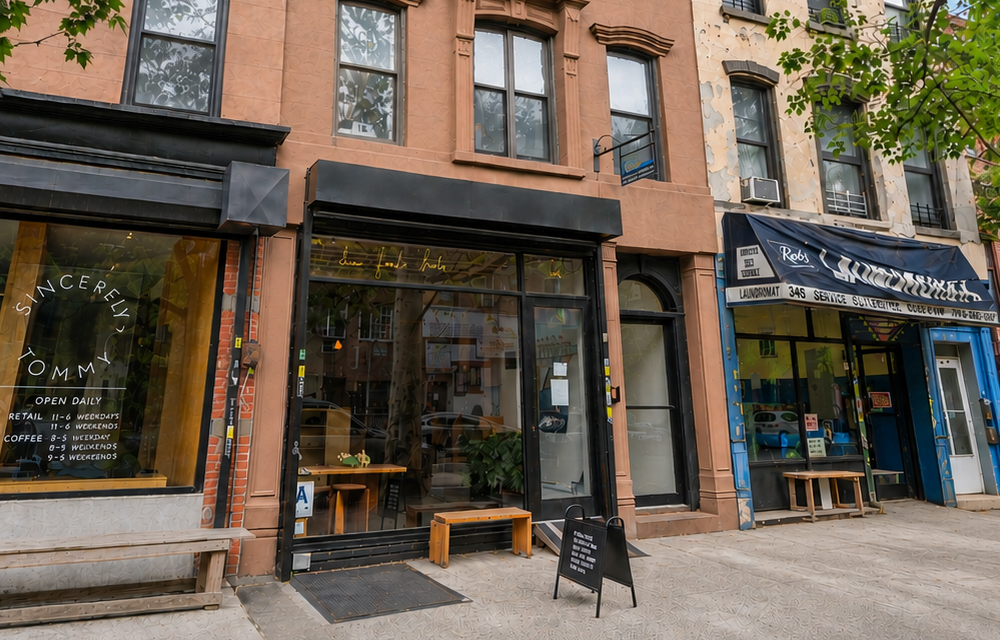
Bestreich, Reynolds, Davila, and Flaherty of Investment Property Realty Group close $1.97 million sale of 343A Tompkins Ave. in Bed-Stuy
Brooklyn, NY Investment Property Realty Group (IPRG) closed the sale of 343A Tompkins Ave., a mixed-use building located in the Bed-Stuy section of the borough, for $1.97 million.


Quick Hits

Columns and Thought Leadership

A guide to finding the right NYC property management company - by Sanjay Gandhi
Being a small to midsize landlord in NYC is an increasingly demanding endeavor. From navigating complex regulations, increased compliance demands to dealing with tenant issues and remediating violations. It is wise to enlist the assistance of a partner, a professional

Hunt CRE question and answer: Choosing a real estate agent - by David Hunt
First, we will only work with one agent exclusively. The primary reason is that we want that agent to legally represent our client’s interests. In New York State, a real estate agent has a fiduciary

New York’s streets are full again, and the retail numbers prove it - by Noam Aziz
Walk down any New York block this year and you can feel it. The sidewalks are crowded, the storefronts are lit, and the energy that defines this city is back at full volume.

Hunt commercial real estate question and answer: Fortune 500 wisdom - by David Hunt
Yes, there are lessons to be learned from the largest companies in America when comes to managing your real estate. But the decision to buy or lease real estate may not be one of
.gif)