



News:
Brokerage
Posted: May 2, 2017
Using 1031 exchanges: Change to passive ownership by Russell Gullo
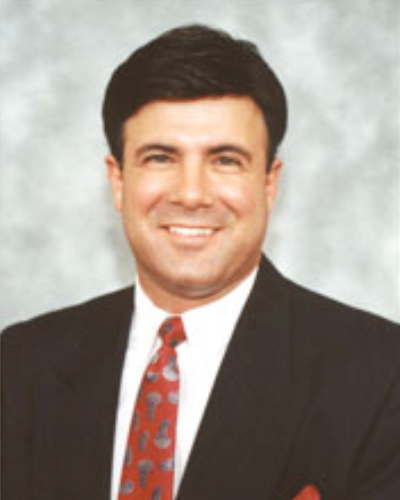
R.J. Gullo Cos.
So, you have owned real estate as an investment for many years and have been involved in the day-to-day management of these assets. You are at the point in your life where you can’t afford to sell because of the tax associated with your gain (profit) and are tired of being an “active investor” handling the day-to-day management.
The following solution allows you to stay in real estate as an investment, dispose of your management-intense properties, pay no tax as well as switch into a mange- ment-free form of a real estate investment.
In many cases, depending on how long you have owned your real estate investments, you may lose as much as a third of your selling price in the form of taxation that is associated with your gain. Most people are only aware of the capital gains tax, but very few people realize that in addition there is the recapture of depreciation as well as state tax.
The following strategies could be just what the doctor ordered for this problem. The first is the ability to dispose of your income-producing, investment-held or secondary residence properties through a “1031 exchange.” This opportunity to pay no tax is nothing new it has been part of the Internal Revenue Code since the early 1900s when the first exchange laws were enacted. Keep in mind there is a need for a professional “Qualified Intermediary” to handle a 1031 exchange.
The second part of our formula is how to come out of management- intense properties and go into management-free properties. Any time you take advantage of a 1031 exchange, you have to acquire a “replacement property,” which must be what’s called “like-kind” property to complete the exchange. Like-kind, means any real estate other then ones’ primary residence.
So, if you own doubles, duplexes, and/or larger multifamily properties that you have been actively managing in what’s called your Relinquished Property, you can go back into management-free property. Such properties can be known as a “NNN leased investment property” or even a “co-ownership real estate investment.” In this case, both would qualify as “like-kind” property to complete a successful “1031 exchange.”
An example of a NNN leased investment property would be a property that is rented long term to a tenant like Walgreens, CVS, Dollar General, Auto Zone, Advance Auto Parts, Family Dollar, just to name a few. Normally, the real estate is a free-standing building which is occupied by one of these tenants, which guarantees the rent anywhere from 15 to 50 years and not only pays the rents but also is responsible for the property taxes, property insurance, property maintenance and utilities– truly “management-free.” You own the real estate. The equity investment may require as little as $350,000 to own the whole asset or as little as $100,000 to own a partial interest in one of these “arm-chair investments.” Because these properties are truly management-free, it doesn’t matter where they are located. The tenant is responsible for all the day-to-day activities.
Another management-free investing strategy would be a co-ownership arrangement such as an institutional size apartment building that may range from 125 units to 250 units in size. A “sponsor” would locate such an asset, acquire it and manage it on behalf of a group of co-owners who can participate with as little as $100,000 equity investment. The objective may be to hold the asset anywhere from five to seven years and then dispose with the intent to receive all the same benefits of ownership that you would receive as if you owned the asset by yourself without the management.
So, if you like real estate as an investment, but are tired of the day-to-day headaches, through the use of a “1031 exchange,” there are management-free ownership options available to choose from.
Russell Gullo, CCIM, CEA, is the CEO of R. J. Gullo Cos., and director of operations for the American Institute of Real Estate Exchangors, Inc., Buffalo, N.Y.
Tags:
Brokerage
MORE FROM Brokerage

200E20TH sells out in Gramercy, penthouse A closes out sales at the CetraRuddy-designed condominium residences
Manhattan, NY 200E20TH, the CetraRuddy-designed architectural masterwork that brought a curved, contemporary sensibility to Gramercy’s Beaux-Arts streetscape, has





Quick Hits
 (2).gif)

Columns and Thought Leadership

New York’s streets are full again, and the retail numbers prove it - by Noam Aziz
Walk down any New York block this year and you can feel it. The sidewalks are crowded, the storefronts are lit, and the energy that defines this city is back at full volume.

Hunt commercial real estate question and answer: Fortune 500 wisdom - by David Hunt
Yes, there are lessons to be learned from the largest companies in America when comes to managing your real estate. But the decision to buy or lease real estate may not be one of

The art of investing in real estate - by Thomas Donovan
Real estate investing is as much an art as it is a skill. No one can time the market, or the factors that drive it, perfectly. Location, zoning, size, transportation, and neighborhood density give you a baseline for

Hunt CRE question and answer: Choosing a real estate agent - by David Hunt
First, we will only work with one agent exclusively. The primary reason is that we want that agent to legally represent our client’s interests. In New York State, a real estate agent has a fiduciary
.gif)