



News:
Brokerage
Posted: September 6, 2016
USA Niagara Development Corp. issues Request for Proposals for historic redevelopment
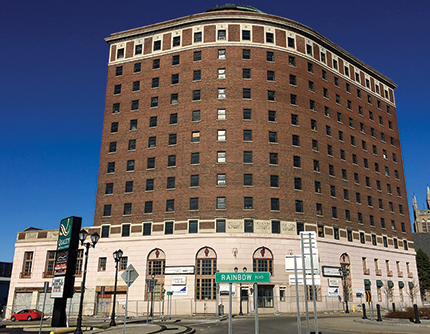 Hotel Niagara, 201 Rainbow Blvd. - Niagara Falls, NY
Niagara Falls, NY According to USA Niagara Development Corp., (USAN) it has issued a Request for Proposals (RFP) for qualified developers for redevelopment of a key historic building downtown. The Hotel Niagara is the oldest standing hotel in Niagara Falls and retains much of the architectural integrity that once made it an iconic piece of the city’s skyline. The property, which was recently acquired by USAN to facilitate its restoration and reuse, is located at 201 Rainbow Blvd.
The property offers several benefits to potential developers, including eligibility for both federal and state historic tax credits and its location adjacent to the USAN-owned Conference & Events Center Niagara Falls, Old Falls Street and Niagara Falls State Park. The overall restoration/reuse costs of the Hotel Niagara are expected to be in the $20 million range. The property is listed in the National Register of Historic Places, which makes it eligible for Historic Tax Credits (HTCs). While the value of the HTCs would be unique to a particular restoration/reuse scheme for the property, an advanced program prior to acquisition of the property by USAN estimated the HTCs for that program to be valued at minimum of $5 million.
The RFP and additional information is available at the New York State Contract Reporter website. Responses are due at 4 p.m. on October 14, 2016.
https://www.nyscr.ny.gov/login.cfm?page=/agency/adsView.cfm?numID=2025961 (Note: you will need to register for a free account).
Built in 1924, the 12-story Hotel Niagara was among the city’s finest lodging and banquet establishments, and it is now listed on the National Register of Historic Places. It has long held a prominent spot in the downtown Niagara Falls skyline but after decades of deferred maintenance, neglect and multiple changes in ownership, the property has declined to a low budget, limited service hotel property that has been closed since 2007.
Tags:
Brokerage
MORE FROM Brokerage
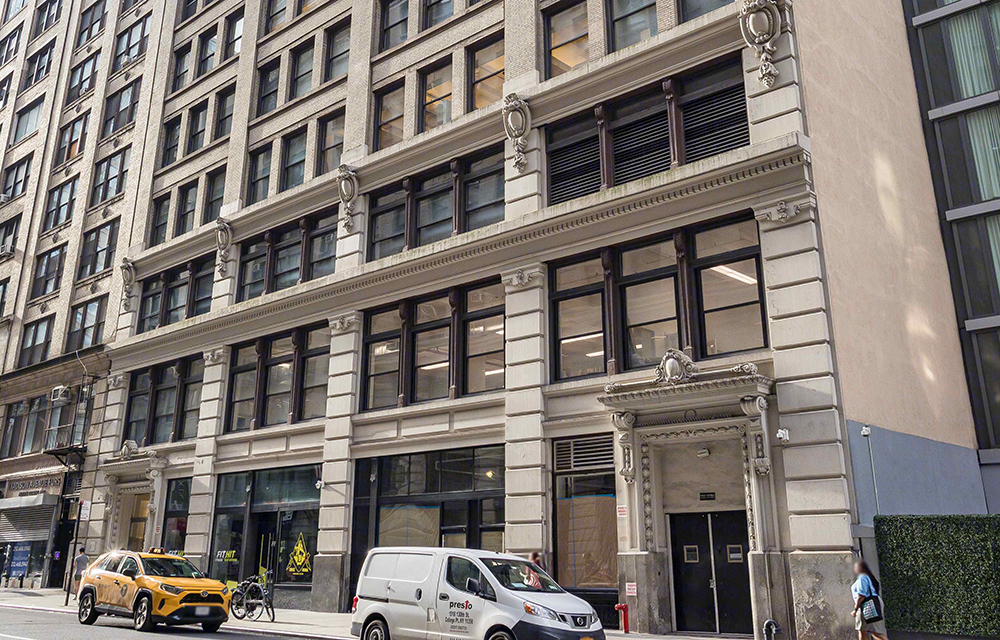
Koeppel Rosen inks 16-year 33,783 s/f lease for coworking firm Nomadworks at 122 West 27th St.
Manhattan, NY According to Koeppel Rosen LLC, leasing and management agent for the Rosen family portfolio, Nomadworks has signed a new 16-year, two-month lease totaling 33,783 s/f at 122 West



Quick Hits

Columns and Thought Leadership

New York’s streets are full again, and the retail numbers prove it - by Noam Aziz
Walk down any New York block this year and you can feel it. The sidewalks are crowded, the storefronts are lit, and the energy that defines this city is back at full volume.

The art of investing in real estate - by Thomas Donovan
Real estate investing is as much an art as it is a skill. No one can time the market, or the factors that drive it, perfectly. Location, zoning, size, transportation, and neighborhood density give you a baseline for

Hunt commercial real estate question and answer: Fortune 500 wisdom - by David Hunt
Yes, there are lessons to be learned from the largest companies in America when comes to managing your real estate. But the decision to buy or lease real estate may not be one of

Hunt CRE question and answer: Choosing a real estate agent - by David Hunt
First, we will only work with one agent exclusively. The primary reason is that we want that agent to legally represent our client’s interests. In New York State, a real estate agent has a fiduciary
.gif)