



News:
Brokerage
Posted: July 4, 2017
Understanding the appraiser’s “Big Four” of real estate rates - by John Rynne
Most college sports fans follow the Big Ten which is now 14 teams instead of 10 teams but is still called the “Big Ten.” I guess that’s an oxymoron. Most know the term “Big Three” in regards to the auto industry. Well, appraisers have the “Big Four” of real estate rates. These are outlined as follows:
1.) Equity dividend rates;
2.) Equity yield rates;
3.) Discount rates and;
4.) Overall capitalization rates.
The sexiest of the “Big Four” are overall capitalization rates, which command the most notoriety but equity dividend rates, equity yield rates and discount rates also play a very important role in valuation. In fact, they are the building blocks of overall capitalization rates.
The equity dividend rate, sometimes called “cash on cash” return or cash throwoff (CTO), is estimated by the following formula: CTO/Equity.
In a real life example, the CTO is $530,000 and the equity is $5.5 million. Thus, the equity dividend rate is 9.64% ($530,000/$5.5 million).
B.) Equity yield rate is the summation of the equity dividend rate and the annualized change in the equity position. The change in the equity position is attributed to a change in value and mortgage amortization over a holding period. Using the same real life example the equity yield rate is 13.25% which is based upon market requirements for similar properties.
C.) Discount rate is also referred to as a risk rate or an internal rate of return. Using the same real life example, the discount rate is 8.14%. The interest rate on a mortgage could be considered a discount rate in relationship to the annual constant.
D.) The overall capitalization rate is a ratio of Net Operating Income (NOI)/Value. In this real life example the NOI is $1,593,895 and the sales price is $22 million. The overall capitalization rate is 7.24% ($1,593,895/$22 million).
By using the real life example in the above the
1.) The equity dividend rate is 9.64%;
2.) The equity yield rate is 13.25%;
3.) The discount rate is 8.14% and;
4.) The overall capitalization rate is 7.24%.
In an appreciating market the equity dividend rate is always less than the equity yield rate and the discount rate. The overall capitalization rate is always less than discount rate and the equity yield rate in an appreciating market. In a substantial depreciating market the equity dividend rate can be greater than equity yield rate and the discount rate. When that happens, the overall capitalization rate can be greater than the equity dividend rate and discount rate. This applies primarily to leveraged (mortgaged) transactions. For “all cash” (non leveraged) transactions the “Big Four” rates sometimes correlate differently to each other. As an example, the overall capitalization rate is always equal to the equity dividend rate in all cash transactions.
Selecting the “Big Four” rates is based upon property sales activity in a region. Lower end rates generally represent newer/modernized, higher quality suburban properties. Some single-tenant, high-credit leases reflect some lower rates, but are the exception. Upper end rates generally represent older, lower quality urban properties or highly distressed properties. These rates assume that adequate management and reserves are considered.
The 1st quarter of 2017 at the beginning and at the end showed some upward pressure on real estate investment rates compared to the 4th quarter of 2016, due to increases in some treasuries by as much as 100 basis points during the last part of the 4th quarter of 2016. Mortgage interest rates again trended upward at the end of the 1st quarter. During the first quarter rates leveled off in the first part of the quarter, but again increased in response to the Federal Reserve increase in mid-March. There is an extraordinary wide range of rates for nursing homes and hotels depending upon what combination of real estate, business enterprise value (BEV) and furniture, fixtures & equipment (FF&E) is being appraised.
Documenting comparable “Big Four” real estate rates is based upon :
A.) Abstraction of sales;
B.) Band of Investment techniques; and
C.) Opinions of investors and other market participants.
Equity dividend rates; equity yield rates; discount rates; and overall capitalization rates can be estimated using band of investment techniques which utilize the other three of the “Big Four” rates. Understanding the interrelationship between the “Big Four” rates can make a “big” difference in the quality of the appraisal report.
In summary, to us nerdy appraisers, the “Big Four” rates are more fascinating than the “Big Ten” and the “Big Three” put together!
John Rynne, MAI, SRA, is the president and owner of Rynne, Murphy & Associates, Inc., Rochester, N.Y.
Tags:
Brokerage
MORE FROM Brokerage

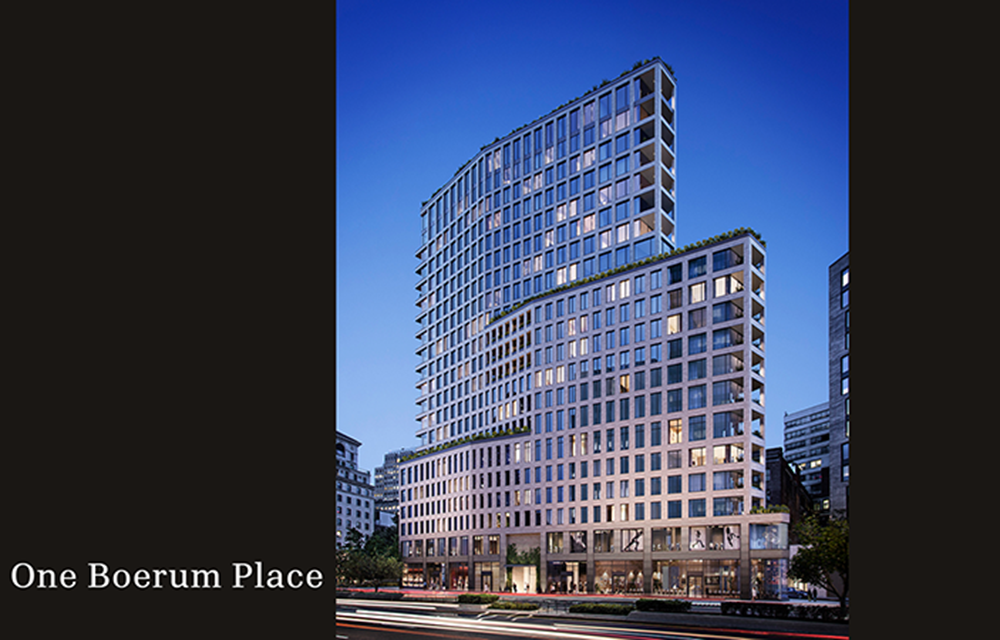
200E20TH sells out in Gramercy, penthouse A closes out sales at the CetraRuddy-designed condominium residences
Manhattan, NY 200E20TH, the CetraRuddy-designed architectural masterwork that brought a curved, contemporary sensibility to Gramercy’s Beaux-Arts streetscape, has



Quick Hits

Columns and Thought Leadership

The art of investing in real estate - by Thomas Donovan
Real estate investing is as much an art as it is a skill. No one can time the market, or the factors that drive it, perfectly. Location, zoning, size, transportation, and neighborhood density give you a baseline for

Hunt CRE question and answer: Choosing a real estate agent - by David Hunt
First, we will only work with one agent exclusively. The primary reason is that we want that agent to legally represent our client’s interests. In New York State, a real estate agent has a fiduciary

New York’s streets are full again, and the retail numbers prove it - by Noam Aziz
Walk down any New York block this year and you can feel it. The sidewalks are crowded, the storefronts are lit, and the energy that defines this city is back at full volume.

Hunt commercial real estate question and answer: Fortune 500 wisdom - by David Hunt
Yes, there are lessons to be learned from the largest companies in America when comes to managing your real estate. But the decision to buy or lease real estate may not be one of
.gif)