



News:
Brokerage
Posted: February 27, 2012
UAlbany plans for multi-sport complex
For many University at Albany sports fans, an announcement of the construction of a legitimate football stadium seemed like a pipe dream that would never come to fruition.
But at a press conference, that fantasy became a reality when school officials announced plans for construction of a multi-use sports complex to replace the dilapidated UniverÂsity Field.
As part of the complex, a new football and soccer stadium will be built where the current socÂcer field stands, east of SEFCU Arena and south of the practice bubble. The track around UniÂversity Field will be replaced and where the current field lies, areas for shotput, javelin and other field games will be built.
The third part of the megaprojÂect, which is slated to cost $24 million with a groundbreaking in mid-April, is the construction of a multi-use intramural field east of the tennis courts by Dutch Quad where the rugby team curÂrently plays their matches.
"It's about the past, the present and the future," said UAlbany athletics director Lee McElroy, who has long championed the building of a new complex to compete with schools such as Stony Brook and Buffalo, who have built stadiums in recent years. "It really bodes well for the future, bodes well for recruiting, bodes well for the Capital Region, bodes well for the community and it will really help elevate us to another level in how we do things."
The timeline of construction for the project is somewhat hazy, despite April's groundbreaking, as bids for the project are due to be submitted on Feb. 21.
As currently formulated, the construction will take place in three phases, with the intramural field built first with completion this fall, the stadium second with completion in the fall of 2013 and the track facility last with completion in the winter of 2013.
However, retiring UAlbany President George Philip said the school hopes to have the football facility done in time for the team's last home game in late November.
The $24 million for the project will be split between $18 million in state appropriations earmarked for capital projects as well as $6 million from donors. School ofÂficials said $1 million of that had already been given to the univerÂsity by an anonymous donor.
"We have a great deal of interÂest (from donors) because we've had so many false starts on this in the past," Philip said. "We have a lot of people who are sayÂing 'Put a shovel in the ground and put pen to paper.'"
Philip said a significant amount of football coach Bob Ford's forÂmer players have shown interest in giving a donation.
The stadium, which the school hopes will draw local high school games, will feature 4,000 permanent seats, 2,000 grass berm seats and 2,000 temporary seats as well as six luxury suites. The project is being designed by Heery International, an Atlanta-based architecture firm that has designed stadiums including the Georgia Dome and Turner Field as well as renovations of the CotÂton Bowl and Clemson's football stadium.
The stadium is capable of being expanded - termed "modular" by Philip - should the program grow and move into a bigger league than the Northeast Conference, such as the America East, if it decides to sponsor football.
"I think that's where this institution belongs, with the Delaware's and the UMass's and the New Hampshire's and the Maine's," Ford said. "I say to the kids we'll play anywhere, anytime, anyone. But, I'm happy we're getting the stadium."
Albany Mayor Jerry Jennings said the school has been talking about renovating the facilities since he was a graduate student at UAlbany in 1973.
The project's construction will heighten the abilities of the school to recruit students and "put (UAlbany) on a nationally competitive field," Jennings said.
The new track will replace years of embarrassment for track director Roberto Vives, whose teams have long been forced to use other schools' facilities. Vives, in his 27th year as director of arguably the school's most successful athletic program, said the announcement of new faciliÂties was a long time coming.
"This is truly an incredible day," Vives said. "This is going to be tremendous for our student-athletes and for the university community."
Philip said the construction of the project would accommodate the training camp of the New York Giants in the summer. He said the team has supports the project and a financial contribuÂtion is possible from the team.
Reprinted from Albany Student Press
Tags:
Brokerage
MORE FROM Brokerage
United Properties Corp. expands Wisconsin and Illinois retail presence adding 200,000 s/f
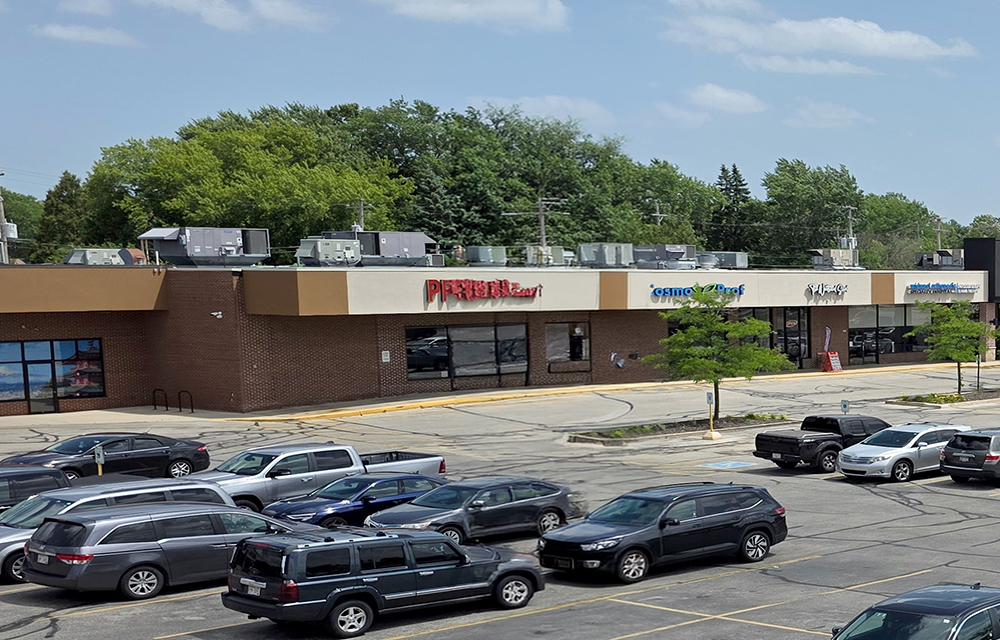
West Allis, WI United Properties Corp. completed two retail acquisitions totaling $27.4 million across Illinois and Wisconsin, adding 205,000 s/f of shopping center space to its portfolio





Quick Hits

Columns and Thought Leadership

Hunt commercial real estate question and answer: Fortune 500 wisdom - by David Hunt
Yes, there are lessons to be learned from the largest companies in America when comes to managing your real estate. But the decision to buy or lease real estate may not be one of

New York’s streets are full again, and the retail numbers prove it - by Noam Aziz
Walk down any New York block this year and you can feel it. The sidewalks are crowded, the storefronts are lit, and the energy that defines this city is back at full volume.

A guide to finding the right NYC property management company - by Sanjay Gandhi
Being a small to midsize landlord in NYC is an increasingly demanding endeavor. From navigating complex regulations, increased compliance demands to dealing with tenant issues and remediating violations. It is wise to enlist the assistance of a partner, a professional

Positive forecast for New York’s pro-housing push? - by Philip Butler
New York’s housing crisis remains a hot button topic despite growing consensus that varied and affordable housing is desperately needed statewide. Governor Hochul has recently introduced several initiatives to overcome N.Y.’s anti-housing
.gif)