



News:
Brokerage
Posted: November 24, 2014
Towery retiring after 40 years heading Greater Jamaica Development Corp.
F. Carlisle Towery, who devoted the last four decades to rebuilding Jamaica, Queens' central business district into a larger multi-purpose regional sub-center through a model downtown community development partnership, announced today that he will step down in 2015 as president of Greater Jamaica Development Corporation (GJDC).
"It has been gratifying, both personally and professionally, to be instrumental in a broadly-supported, energetic public-private initiative of community leaders and government officials in revitalizing one of New York's most significant and promising downtowns" said Towery.
Trained as an architect at Auburn University and product of Columbia University's graduate urban planning and design program. Towery was on the staff of Regional Plan Association before he accepted the presidency of GJDC, one of the city's first private community-based local development corporations.
"My aim has been to plan, promote and facilitate public and private investment that leverages this downtown's considerable attributes and positions it as an accessible, equitable center for growth and opportunity," Towery said. "GJDC's commitments and productive partnerships with government have fostered great progress in this special place so that more and more people want to live, work, visit, play and invest here."
The GJDC board has formed a search committee to seek a successor to Towery and hired Machlowitz Consultants, a Manhattan-based executive recruiting firm, to coordinate that search.
"Carlisle has been a visionary, seeing the end game of possibilities before others, and putting together the team to get there," said Peter Kulka, Chairman of the GJDC board, who has a lifelong connection to the neighborhood and now runs a real estate business there. "The result is a far more vibrant and forward-looking Jamaica, one where investors see the neighborhood as a hotbed of economic opportunity that will benefit all of us who live, work and visit here."
"He is leaving big shoes to fill," Kulka said.
The Regional Plan Association, in the late 1960's, singled out Jamaica for its regional importance, special needs and potentials, in large part because of its extensive transportation hub, where subways, buses and commuter rail converged. Towery, who had worked for RPA, was chosen by local business and civic leaders to head the newly-created non-profit GJDC.
He set out in partnership with community allies and government, particularly New York City's Mayor John Lindsay -- and with a 3-year grant for start-up operating support from the Fund for the City of New York -- to overcome economic decline and address demographic change and uncertainty in helping the downtown reclaim its once-central role in the economic life of Queens and beyond.
With the addition in 2003 of the AirTrain light rail linking downtown Jamaica and its transit hub to John F. Kennedy Airport - which now draws hundreds of thousands of riders a year - and development of the City University's York College campus, which is a now dynamic centerpiece of activity, the area has seen substantial investment in new residential, commercial, cultural and institutional development.
With Towery at the helm, GJDC -- currently operating with a $12 million annual budget and 50 employees -- has been a leader advocate and active partner with government in facilitating major public and private developments in Jamaica's transformation, including:
* Removing the Jamaica Avenue El and its replacement underground in the extended new Archer Avenue subway line with three stations;
* The decision to locate the 50-acre York College campus in downtown Jamaica;
* Building new regional headquarters for the U.S. Social Security Administration and U.S. Food and Drug Administration;
* Creating three downtown special assessment, business improvement districts (BIDs) - one, a first and pioneering initiative in New York City and a federally-capitalized revolving loan fund for small businesses in Southeast Queens;
* Development and GJDC-operated deteriorated former municipal parking facilities, which are now a popular affordable off-street system;
* Establishing Jamaica Arts Center and its performing arts center affiliate (JPAC), and improving local cultural institutions, including King Manor Museum;
* Consolidating Queens civil courts in three new and rehabilitated Downtown Jamaica courthouses;
* Fostering housing preservation, facilitating renovation and development of new mixed-income multi-family housing;
* Preservation and re-use of six historically-significant neglected or abandoned structures;
* Creating and operating the City's first farmer's green market, and Jamaica Green open space at JPAC;
* Supporting, planning and development of AirTrain service and Jamaica terminal, connecting the downtown and its transportation hub directly to JFK International Airport.
* Creation and operation of Jamaica Market development food court, office space, and meeting facility.
GJDC participated in the city's 2007 rezoning of downtown, particularly around the transportation hub to enable commercial and residential development. He was active in expanding arts and cultural institutions, designating architecturally and historically significant structures as landmarks. Under his efforts GJDC secured funds and landed a $90 million transportation infrastructure program around the AirTrain/Jamaica Station to support development there.
Towery has worked with seven mayors and eight governors over his tenure, dating back to the administrations of John Lindsay and Nelson Rockefeller, shepherding the neighborhood from a period marked by decline and disinvestment to its current upswing.
From 1978 through 1996, for example, private disinvestment in Downtown Jamaica property outweighed investment in developments which totaled $17 million, compared with $364 million in the years since through 2012. That does not include substantial public investments or several hundred million private dollars more being invested in hotels, mixed-income apartment buildings and retail stores now under way or in the pipeline since 2012.
Downtown's private property values increased by almost 50 percent between 1997 and 2010; property tax revenue went up 130 percent; and retail sales tax revenue in Downtown Jamaica doubled over the same period.
Recently completed or underway now in various phases in Downtown Jamaica are a number of major new public and private developments, including:
240-room, 26-story hotel, opposite the AirTrain terminal;
580 unit residential development with 100,000 square feet of commercial space, opposite Jamaica Station;
Linking the new hotel and residential development at the transportation hub, conversion of a repellent loading dock to an inviting pedestrian arcade and shopping strip;
150,000 square-foot retail anchor development with a 550-car garage on 168th Street;
Several small, limited-service hotels along Hillside, Jamaica and Archer Avenues;
Completed 101-unit mixed-income residential project with office and retail space.
Born in Alexander City, Alabama, Towery attended Antioch College then graduated from Auburn University before earning a M.S. degree in architecture from Columbia University, where he served as an instructor and then Associate Professor in the Graduate School. He served Regional Plan Association as its Chief Urban Designer before accepting the helm of GJDC.
Tags:
Brokerage
MORE FROM Brokerage
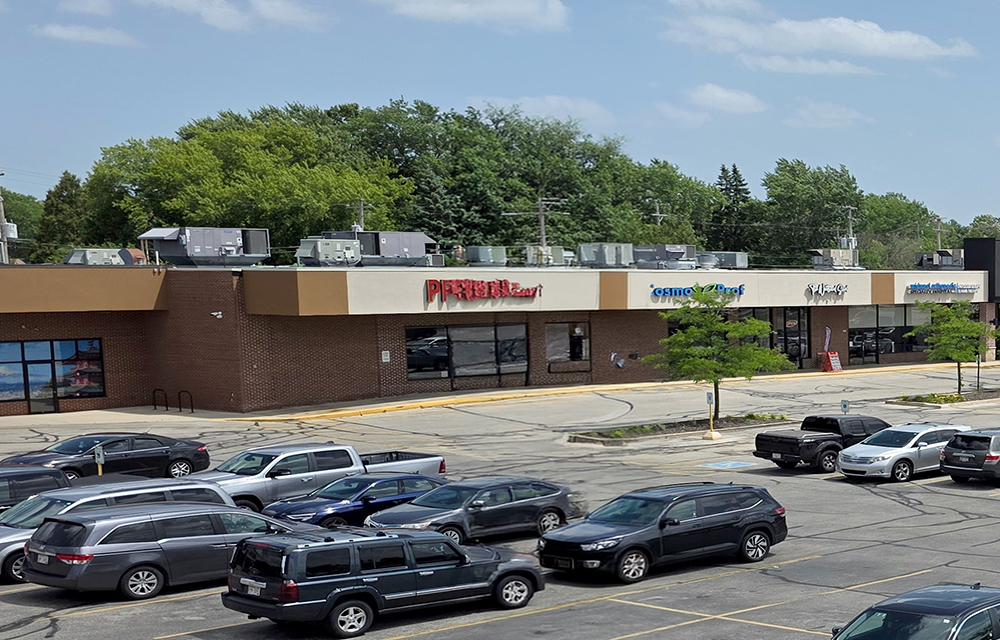
United Properties Corp. expands Wisconsin and Illinois retail presence adding 200,000 s/f
West Allis, WI United Properties Corp. completed two retail acquisitions totaling $27.4 million across Illinois and Wisconsin, adding 205,000 s/f of shopping center space to its portfolio


Quick Hits
 (2).gif)

Columns and Thought Leadership

A guide to finding the right NYC property management company - by Sanjay Gandhi
Being a small to midsize landlord in NYC is an increasingly demanding endeavor. From navigating complex regulations, increased compliance demands to dealing with tenant issues and remediating violations. It is wise to enlist the assistance of a partner, a professional

New York’s streets are full again, and the retail numbers prove it - by Noam Aziz
Walk down any New York block this year and you can feel it. The sidewalks are crowded, the storefronts are lit, and the energy that defines this city is back at full volume.

Positive forecast for New York’s pro-housing push? - by Philip Butler
New York’s housing crisis remains a hot button topic despite growing consensus that varied and affordable housing is desperately needed statewide. Governor Hochul has recently introduced several initiatives to overcome N.Y.’s anti-housing

Hunt commercial real estate question and answer: Fortune 500 wisdom - by David Hunt
Yes, there are lessons to be learned from the largest companies in America when comes to managing your real estate. But the decision to buy or lease real estate may not be one of
.gif)