



News:
Brokerage
Posted: July 27, 2015
Tolchin, Oelsner, Ledesma, Gold and Baxter of JLL rep two joint ventures in acquisition of Gotham Court for $29.1 million
A partnership of two joint ventures that purchased Gotham Court (152 Ludlow St. and 149-151 Essex St.) on the Lower East Side for $19.1 million in 2013 has sold the properties for $29.1 million.
The principals of one joint venture include Nathan Halegua and Josh Halegua of Jonis Realty, and Martin Newman, an independent real estate investor. The principals of the other joint venture are David Schneiderman and Joshua Landau of Four Winds Real Estate. A JLL team of Glenn Tolchin, Yoav Oelsner, Anthony Ledesma, Jason Gold and Richard Baxter represented the partnership in the sale, along with Eric Hoberman, Esq. of law firm Kriss & Feurstein LLP.
The purchaser was HUBB, NYC.
Gotham Court, built in 2004, is situated across from the transformative Essex Crossing mixed-use development. 152 Ludlow St. is a five-story walk-up with two duplex rentals and a retail space occupied by the music venue Cake Shop. 149-151 Essex St. is a seven-story elevator building with 20 rental units and two retail spaces, which are occupied by two tenants, including the restaurant Tijuana Picnic.
After purchasing the properties in 2013, the sellers renovated a number of apartments at the two properties, and leased a vacant retail space to Tijuana Picnic.
"The partnership knew that Gotham Court had great potential when we purchased it," said Halegua. "The area is thriving, and the renovations we implemented had a positive effect on the aesthetics of the property. It was rewarding to be involved in such a successful project."
"This was a rare opportunity to acquire a sizable footprint in the dynamic Lower East Side neighborhood of New York City," said Schneiderman, who is the co-founder and managing principal of Four Winds Real Estate. "Since the acquisition in 2013, the Lower East Side has continued its transformation into the cultural epicenter of New York City. Four Winds is looking forward to continued involvement in the neighborhood through its remaining portfolio of buildings."
Tags:
Brokerage
MORE FROM Brokerage
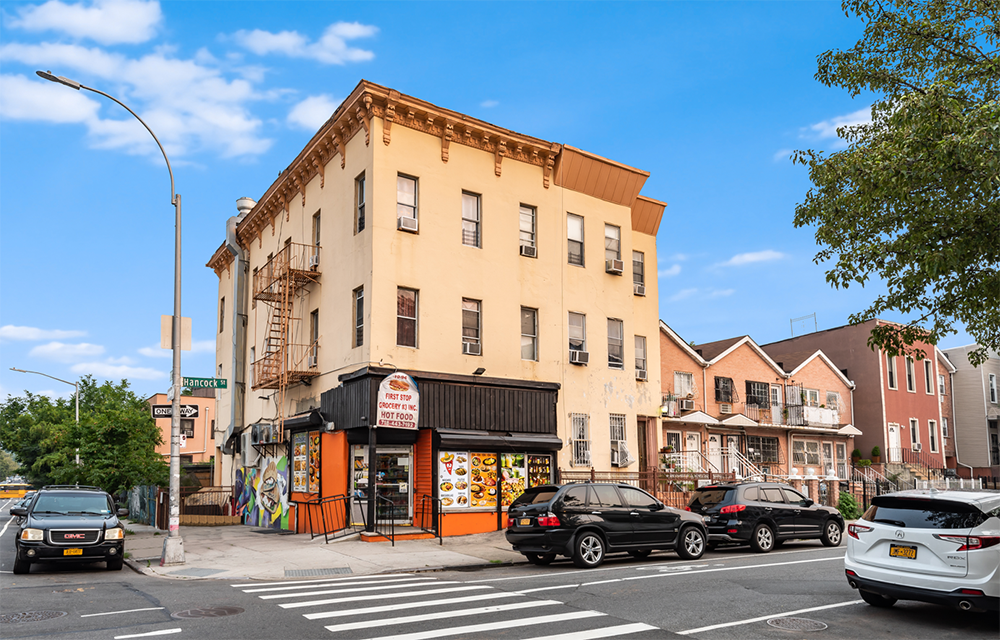
Investment Property Realty Group closes $1.75 million sale of 1094 Hancock Street in Brooklyn
Brooklyn, NY Investment Property Realty Group (IPRG), a New York-based commercial investment firm, has closed the sale of 1094 Hancock St., a mixed-use building in the Bushwick section, for $1.75 million.


Quick Hits
 (2).gif)

Columns and Thought Leadership

Hunt CRE question and answer: Choosing a real estate agent - by David Hunt
First, we will only work with one agent exclusively. The primary reason is that we want that agent to legally represent our client’s interests. In New York State, a real estate agent has a fiduciary

A guide to finding the right NYC property management company - by Sanjay Gandhi
Being a small to midsize landlord in NYC is an increasingly demanding endeavor. From navigating complex regulations, increased compliance demands to dealing with tenant issues and remediating violations. It is wise to enlist the assistance of a partner, a professional

New York’s streets are full again, and the retail numbers prove it - by Noam Aziz
Walk down any New York block this year and you can feel it. The sidewalks are crowded, the storefronts are lit, and the energy that defines this city is back at full volume.

Hunt commercial real estate question and answer: Fortune 500 wisdom - by David Hunt
Yes, there are lessons to be learned from the largest companies in America when comes to managing your real estate. But the decision to buy or lease real estate may not be one of
.gif)