



News:
Brokerage
Posted: February 4, 2020
Tishman Speyer secures 530,000 s/f lease with Debevoise & Plimpton; Sukenik, Mongeluzo, Cohen of NKF rep. tenant
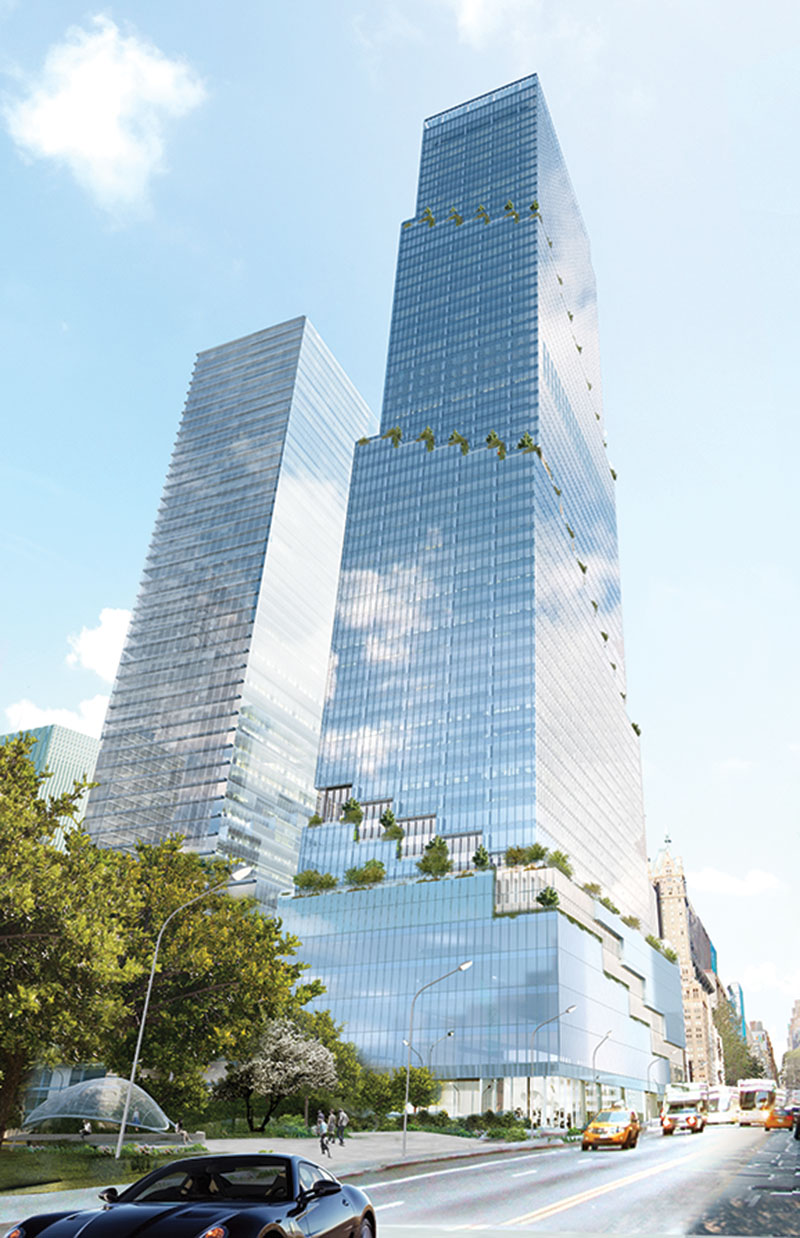 Manhattan, NY According to Tishman Speyer, Debevoise & Plimpton LLP will relocate its law firm headquarters to The Spiral, its 65-story office tower currently under construction at 66 Hudson Blvd.
Debevoise will occupy 530,000 s/f on floors 40 through 52 under a 20-year lease agreement. The firm is expected to move to The Spiral from its current offices at 919 Third Ave. in the second half of 2022.
With this transaction, Tishman Speyer has pre-leased 54% of the 2.8 million s/f office tower two-and-a-half years prior to its completion. Pfizer is relocate its global headquarters to 800,000 s/f in The Spiral, while AllianceBernstein committed to 189,000 s/f earlier this year.
Tishman Speyer was represented in-house while Debevoise was represented by Moshe Sukenik, Chris Mongeluzo and Brian Cohen of Newmark Knight Frank.
“The Spiral, with its cascading gardens and collaborative spaces, will be unlike any other office environment in New York,” said Tishman Speyer president and CEO Rob Speyer. “We are thrilled that Debevoise & Plimpton, which thrives on the talent, ingenuity and hard work of its workforce, sees the power and value of The Spiral.”
Designed by BIG-Bjarke Ingels Group, The Spiral will rise 1,031 ft. and feature a cascading series of landscaped terraces and hanging gardens as its signature element. The terraces will ascend, one per floor, in a spiraling motion to create a unique, continuous green pathway that wraps around the façade of the tower and supplies occupants with readily accessible outdoor space.
Located at the intersection of the High Line and the four-acre Bella Abzug Park, The Spiral will encompass a full block stretching from West 34th to West 35th Streets and from 10th Avenue to the park. The six-story base of the building will include a lobby with ceiling heights of up to 28 feet and entrances on Hudson Boulevard East and 10th Avenue. The base also will include approximately 25,000 square feet of first-class retail.
The Spiral is accessible from all five boroughs, Westchester County and New Jersey. It is close to New York’s transit hubs, including Penn Station, the Port Authority Bus Terminal, Midtown Ferry Terminal, Lincoln Tunnel and West Side Highway. The 7 Train is close and three stops from Grand Central Terminal.
Tags:
Brokerage
MORE FROM Brokerage
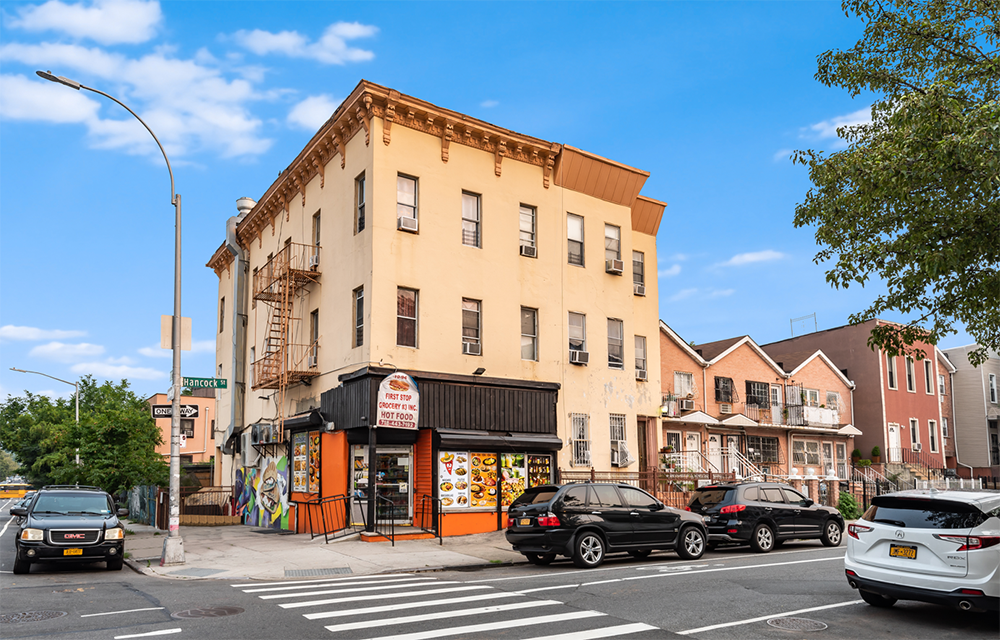
Investment Property Realty Group closes $1.75 million sale of 1094 Hancock Street in Brooklyn
Brooklyn, NY Investment Property Realty Group (IPRG), a New York-based commercial investment firm, has closed the sale of 1094 Hancock St., a mixed-use building in the Bushwick section, for $1.75 million.


Quick Hits
 (2).gif)

Columns and Thought Leadership

Hunt CRE question and answer: Choosing a real estate agent - by David Hunt
First, we will only work with one agent exclusively. The primary reason is that we want that agent to legally represent our client’s interests. In New York State, a real estate agent has a fiduciary

Hunt commercial real estate question and answer: Fortune 500 wisdom - by David Hunt
Yes, there are lessons to be learned from the largest companies in America when comes to managing your real estate. But the decision to buy or lease real estate may not be one of

A guide to finding the right NYC property management company - by Sanjay Gandhi
Being a small to midsize landlord in NYC is an increasingly demanding endeavor. From navigating complex regulations, increased compliance demands to dealing with tenant issues and remediating violations. It is wise to enlist the assistance of a partner, a professional

New York’s streets are full again, and the retail numbers prove it - by Noam Aziz
Walk down any New York block this year and you can feel it. The sidewalks are crowded, the storefronts are lit, and the energy that defines this city is back at full volume.
.gif)