



News:
Brokerage
Posted: April 17, 2018
Thru the Lens: New York Women’s Chamber of Commerce launches ContractHER initiative
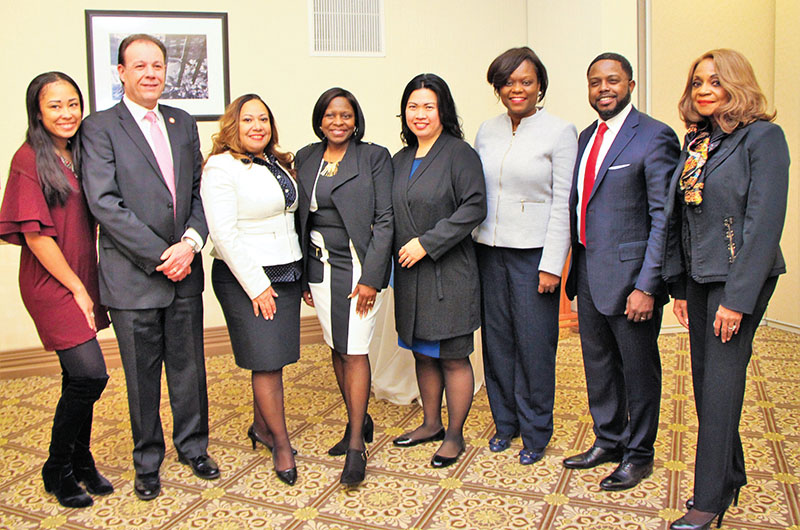
New York, NY Quenia Abreu, CEO and founder of the New York Women’s Chamber of Commerce (NYWCC), launched ContractHER, a new NYWCC initiative designed to help Minority and Women-Owned Business Enterprises (MWBEs) navigate the procurement process and secure more government contracts at the organization’s annual State of Women in Business Forum held March 23 at Columbia University. Abreu and Jacquelyn Martell, NYWCC deputy director, program management & development, outlined the ContractHER program to a crowd of over 100, including many heads of MWBEs.
According to Abreu, “Economically empowering women is what it’s all about…We have to get involved, stand up, bring it to the table...” She said that with hard work, determination, and a lot of lobbying, women can speed up current projections calculating 130 years before economic parity is reached.
ContractHER is a contract readiness program geared to assist certified women-owned MWBEs (firms) in all industries by providing industry knowledge, expert support, mentorship and tools to help companies compete for city and state contracts. ContractHER, according to Martell, focuses on helping women of color, still the smallest group(s) obtaining contracts, by showing them ways to advocate for and actively work to create fair and equal business opportunities that nurture the growth of MWBEs.
Rebecca Rodriguez, principal of Eos Strategies who will consult on ContractHER, said, “The ContractHER program will position MWBE firms to understand what tools they need, and [explain] how to leverage these…to grow their businesses.”
Keynote speaker Mark Gjonaj, chair of the Small Business Committee and a NYC council member, 13th district, said that “small businesses are the engine of the nation’s economy.” He noted that businesses with fewer than 10 employees make up 80% of all businesses.
Gjonaj said that government bureaucracy and red tape impede the growth of small businesses, pointing out that contracts for MWBEs hover around 11% despite a 25% increase in the number of MWBEs between 2015 and 2017. He spoke of the need to simplify the contract approval process; raise the cap for discretionary spending for MWBEs; and judge success of participation goals by the amount spent, not contracts awarded.
Rodneyse Bichotte, assembly woman, 42nd Assembly District, chair of the Oversight of MWBEs subcommittee, told all that “a lot of small MWBEs aren’t getting paid” and the penalties need to be changed. She spoke of the urgent need to reauthorize Article 15-A, expiring this year, which allows for an aspirational goal for MWBEs to be set for government contracts after a study is completed proving disparity. Discretionary spending for MWBEs was recently increased to $150,000; she argued that it should be increased to $400,000
Jonell Doris, senior advisor and director of NYC’s Mayor’s Office of Minority and Women-Owned Businesses, said that the goal is for 30% of NYC contracts to go to MWBEs. He applauded the impassioned audience members, several of whom spoke during the Q & A saying, “Your voice is the most powerful – the voice of the businesses themselves.”
Vanessa Best, founder of Precision Healthcare Consultants and the SBA’s Woman Business Champion of the Year, said there is value to being certified by the federal government as well as the City and State. It can be helpful to operate not as a prime but a subcontractor and to partner with another firm.
Annabelle Santos, CEO of Spadet and a finalist among the Top 30 in the Tory Burch Foundation Fellowship competition, said entrepreneurs need to “get out and network” with different groups. She credited the NYWCC and Abreu, saying, “These people are your lifeline; we are more powerful together.”
Attendees praised the event and the NYWCC. Rasheedah Omar, president of You Have a Purpose, a college and test prep program, said “At every event I learn something different…I find a team of like-minded people who share goals. Women encouraging women…[we] help each other.”
Tags:
Brokerage
MORE FROM Brokerage
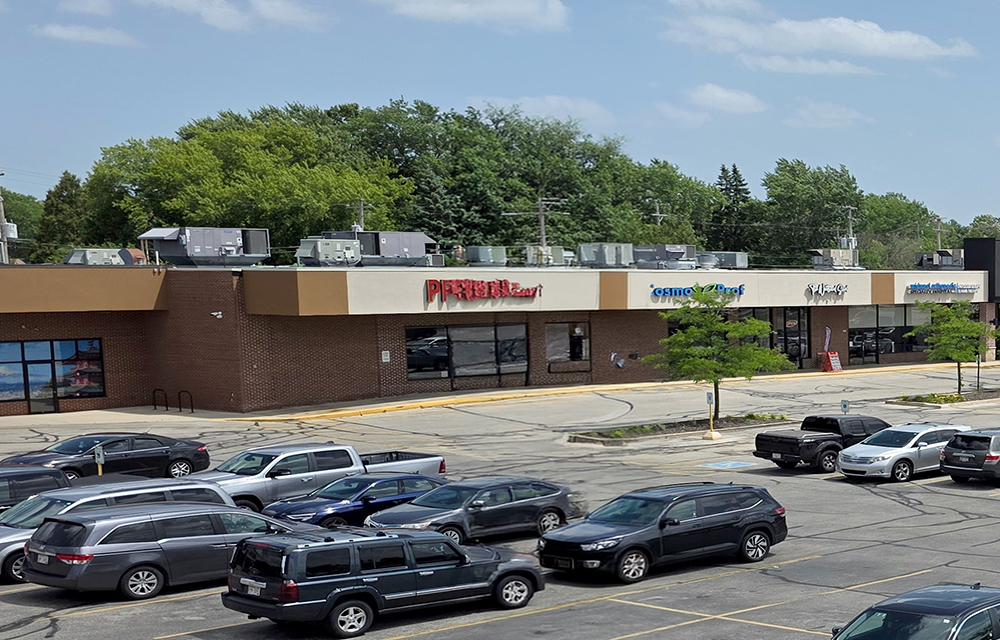
United Properties Corp. expands Wisconsin and Illinois retail presence adding 200,000 s/f
West Allis, WI United Properties Corp. completed two retail acquisitions totaling $27.4 million across Illinois and Wisconsin, adding 205,000 s/f of shopping center space to its portfolio





 (2).gif)

Columns and Thought Leadership

Positive forecast for New York’s pro-housing push? - by Philip Butler
New York’s housing crisis remains a hot button topic despite growing consensus that varied and affordable housing is desperately needed statewide. Governor Hochul has recently introduced several initiatives to overcome N.Y.’s anti-housing

Hunt commercial real estate question and answer: Fortune 500 wisdom - by David Hunt
Yes, there are lessons to be learned from the largest companies in America when comes to managing your real estate. But the decision to buy or lease real estate may not be one of

A guide to finding the right NYC property management company - by Sanjay Gandhi
Being a small to midsize landlord in NYC is an increasingly demanding endeavor. From navigating complex regulations, increased compliance demands to dealing with tenant issues and remediating violations. It is wise to enlist the assistance of a partner, a professional

New York’s streets are full again, and the retail numbers prove it - by Noam Aziz
Walk down any New York block this year and you can feel it. The sidewalks are crowded, the storefronts are lit, and the energy that defines this city is back at full volume.
.gif)