



News:
Brokerage
Posted: September 29, 2008
The "what" of buying multifamily properties
Lately, I've found myself speaking with investors from across the country about the state of the economy, the debt markets and other issues relating to the "how, when, and where" of buying commercial real estate property. Surprisingly, however, those subjects have recently taken a back seat to conversations based around the "what" of buying properties.
It's human nature to stick to what you know. If you've made money owning multi-tenant office property in the past, why stray when searching for an exchange property today?
I say it is time to open up to the idea of diversification by strategically investing in assets classed that you may not have owned before. When the property types are viewed historically from an asset class perspective, we find that each sector has unique, enduring characteristics that differentiate it from the others. Commercial real estate is traditionally divided into five sectors/asset classes: multifamily, office, industrial, retail and alternative (hotels, golf courses, marinas, etc.).
We will start with what is probably the most popular type of investor-owned real estate in the country: multifamily. Multifamily properties have historically benefited investors with a low volatility of physical occupancy, enhanced tax sheltering and superior rent flexibility.
Multifamily properties can be as small a duplex or as large as Starrett City, one of the largest residential complexes in the U.S., with 6,000 units across 46 buildings in Brooklyn. Due to the wide range in size and price of multi-unit residential properties, there is accessibility and selection for nearly all levels of investor experience and level of financial resources.
Properties are further divided into urban high-rise, suburban garden-style and small properties. The main problem with small properties is that a single unleased unit can represent a large portion of the total rentable space. By investing in a multifamily property with numerous tenants, investors can realize a stability that other asset classes often can't provide.
Apartments do not generally see the volatility in vacancy rates that are experienced in multi-tenant retail or office because they have more units and the units themselves are smaller in size. How likely is it, for example, that an owner of a 400-unit apartment complex would lose 20% of his tenants in one month? However, it's quite typical to have a single tenant represent that much space in an anchored retail center. If the end of their lease comes around and they choose not to renew, the impact of vacancy and lost income would be severe.
Regardless of how many units are in the property, when it comes to cost recovery (also known as depreciation), the entire residential asset class receives a shorter 27.5 year schedule versus 39 years for all other non-residential classes of real property. This is valuable information to keep in mind when evaluating multiple investment options and calculating returns for a residential project versus an office, retail or industrial property.
Another distinct benefit that owning multifamily properties provides is the ability to raise rents to correspond with inflation and the competitive properties surrounding you. As opposed to a long-term corporate retail or office lease with minimal or no annual escalations, owners of apartment buildings can change their rents every day or even throughout the day if they wish.
The major pitfall in multifamily investing is that apartments tend to be management-intensive. The "terrible T's" of being a landlord (tenants, trash, toilets) often catch up to novice investors who are inexperienced with handling the day-to-day needs of apartment buildings and their occupants. This issue can be easily overcome in the form of hiring a professional management company.
In addition to the aforementioned long-standing advantages of multifamily ownership, many market factors make the case to invest in apartments even more compelling in today's market. Tighter mortgage lending standards, steady immigration rates, and the large "Echo-Boomer" demographic (ages 18-28) that are unable to afford home ownership should help the demand for apartment rentals stay high.
Successful real estate investors can, of course make an argument to stick with what they know. But with some additional self-education through research and the guidance of a competent advisor or broker, investors who haven't owned a multifamily asset before should consider the benefits of including this asset in an investment allocation. If you're not ready to jump in with both feet and buy yourself an apartment home on your own, there are many ways to get started on a smaller scale. A number of apartment REITs, funds, LLCs and tenant-in-common programs exist to help you dip your toes in the water.
Josh Slaybaugh is the president and CEO of Trade Up 1031, Inc., West Chester, Penn.
Tags:
Brokerage
MORE FROM Brokerage
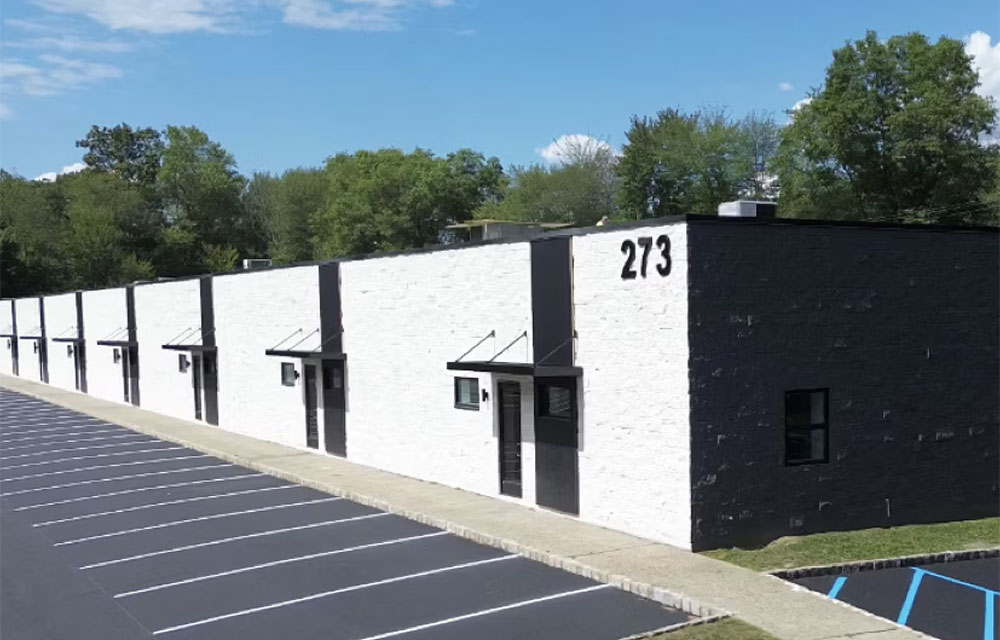
Resource Realty of Northern NJ delivers complete lease-up of 235 Franklin Rd. for Commerce Park Investors
Randolph, NJ Resource Realty of Northern New Jersey (RRNNJ) has completed the lease-up of a 10-unit small-bay industrial property at 273 Franklin Rd., marking the culmination of an investment strategy that began




Columns and Thought Leadership

Hunt commercial real estate question and answer: Fortune 500 wisdom - by David Hunt
Yes, there are lessons to be learned from the largest companies in America when comes to managing your real estate. But the decision to buy or lease real estate may not be one of

A guide to finding the right NYC property management company - by Sanjay Gandhi
Being a small to midsize landlord in NYC is an increasingly demanding endeavor. From navigating complex regulations, increased compliance demands to dealing with tenant issues and remediating violations. It is wise to enlist the assistance of a partner, a professional

Positive forecast for New York’s pro-housing push? - by Philip Butler
New York’s housing crisis remains a hot button topic despite growing consensus that varied and affordable housing is desperately needed statewide. Governor Hochul has recently introduced several initiatives to overcome N.Y.’s anti-housing

New York’s streets are full again, and the retail numbers prove it - by Noam Aziz
Walk down any New York block this year and you can feel it. The sidewalks are crowded, the storefronts are lit, and the energy that defines this city is back at full volume.
.gif)