



News:
Brokerage
Posted: May 25, 2010
The S/L/A/M Collaborative opens Syracuse office at Bentley Settle Bldg.
The S/L/A/M Collaborative national architectural practice has opened an office at The Bentley Settle Building, 120 Walton St. It is SLAM's fourth national office: others are located in Atlanta and Boston, with the headquarters in Glastonbury, Conn. The firm is repeatedly ranked among America's leading design firms.
The new location in downtown's Armory Square makes the firm accessible to many of its State University of New York clients, including Upstate Medical University and the College of Environmental Science & Forestry in Syracuse and the state university campuses in Binghamton, Oneonta, Buffalo and Ithaca. This initiative also coincides with the commencement of construction on three major projects: Syracuse's Central New York Biotechnology Research Center (a joint venture between SUNY Upstate and the SUNY College of Environmental Science and Forestry), the SUNY University at Buffalo's new School of Pharmacy and Pharmaceutical Sciences, and SUNY Binghamton's major Science III/IV Addition.
By establishing roots in the state, SLAM becomes an active participant in the local business and intellectual community as well as a resource to institutions and companies seeking distinctive planning and architectural solutions to harness the power of New York State's information economy. SLAM's desire and commitment to advance the state's vitality has never been stronger. Approaching the firm's 35th Anniversary in 2011, SLAM's decision to select Syracuse was made consistent with the firm's Strategic Business Plan, thus enabling the firm's future growth for the next 35 years of professional practice to be focused in New York State.
President Robert Pulito, AIA, said, "SLAM is proud of its contributions to Syracuse, the region and State and we cherish the many relationships with clients, peer professionals, civic and business leaders, and members of government with whom the firm has worked closely over the past three and a half decades of professional practice. Evidenced by the establishment of SLAM/Syracuse, our commitment to the responsibilities of corporate citizenship, job creation and reinvestment back into the State's economy is as serious as it is strong."
Tags:
Brokerage
MORE FROM Brokerage
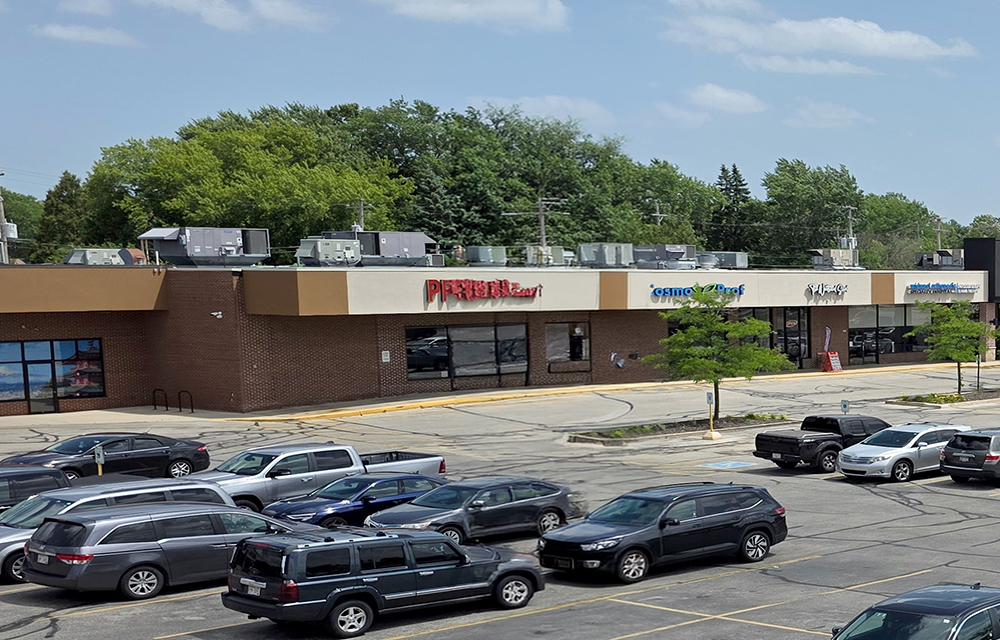
United Properties Corp. expands Wisconsin and Illinois retail presence adding 200,000 s/f
West Allis, WI United Properties Corp. completed two retail acquisitions totaling $27.4 million across Illinois and Wisconsin, adding 205,000 s/f of shopping center space to its portfolio



Quick Hits

Columns and Thought Leadership

Positive forecast for New York’s pro-housing push? - by Philip Butler
New York’s housing crisis remains a hot button topic despite growing consensus that varied and affordable housing is desperately needed statewide. Governor Hochul has recently introduced several initiatives to overcome N.Y.’s anti-housing

New York’s streets are full again, and the retail numbers prove it - by Noam Aziz
Walk down any New York block this year and you can feel it. The sidewalks are crowded, the storefronts are lit, and the energy that defines this city is back at full volume.

Hunt commercial real estate question and answer: Fortune 500 wisdom - by David Hunt
Yes, there are lessons to be learned from the largest companies in America when comes to managing your real estate. But the decision to buy or lease real estate may not be one of

A guide to finding the right NYC property management company - by Sanjay Gandhi
Being a small to midsize landlord in NYC is an increasingly demanding endeavor. From navigating complex regulations, increased compliance demands to dealing with tenant issues and remediating violations. It is wise to enlist the assistance of a partner, a professional
.gif)