



News:
Brokerage
Posted: January 22, 2019
The land of opportunity zones - Latest market report from GFI Realty
New York, NY After federal tax reform introduced the Opportunity Zone program in late 2017, a significant portion of the New York City real estate community evolved their investment strategies with an eye toward developing in these areas, according to GFI Realty Services’ most recent research report.
The report, entitled The Land of Opportunity Zones, explains the various criteria that must be met by investors seeking to capitalize on the program, while detailing the growth of transaction activity and fund formation related to these areas. With interest in these opportunity zones increasing rapidly, the report notes, it is not surprising that, on a national level, sales of development sites in opportunity zones spiked by 80 percent in the first three quarters of 2018 when compared to the same period last year.
As detailed in the report, the program will defer and reduce or eliminate taxes on capital gains invested in opportunity zones, in an effort to bolster development in these historically distressed neighborhoods. By putting their capital gains in a Qualified Opportunity Fund – which is required to have 90 percent of its assets invested in opportunity zones – and investing at least the purchase price in capital improvements, developers are able to reap significant benefits and avoid or reduce their tax payment on those capital gains.

“While the increase in investment was expected – and was indeed the objective of the program – the fact that activity increased so dramatically before details of the program were even finalized is clear indication of the appetite investors have for these tax incentives,” said GFI Realty research analyst Justin Fitzsimmons.
Market participants who have already created Qualified Opportunity Zones include:
• RXR Realty and Youngwoo & Associates, each of which has launched a $500-million fund
• Viceroy Equities, which launched the “B’KOZ Opportunity Fund” with a $75-million investment and plans to invest solely in Brooklyn projects
Notably, the program is significantly more broad than the 1031 exchange; while 1031 exchange tax deferments only apply to investments of “like-kind” – i.e. real estate – capital gains, any capital gains can be invested in qualified opportunity zones, including gains realized from the sale of stocks.
“As much as New York’s investors expect to gain from this new program, the greatest beneficiary is likely to be residents and businesses located in under-served areas of the city,” said Fitzsimmons. “Many opportunity zones in New York are situated in neighborhoods that were either recently rezoned or have been pegged for rezoning. With the combined benefits of these two programs, we can expect to see developers enhance a wide range of neighborhoods in all five boroughs, which will benefit local residents and businesses alike.”
Some of the specific areas poised for revitalization due to opportunity zones and rezoning initiatives include:
• Harlem – Central Harlem and East Harlem have recently been rezoned, and both subsections are already hotbeds of development that have attracted new retail options, including a Whole Foods. Prominent developers such as The Durst Organization and Extell Development have already been active in the area, and with opportunity zones in Harlem providing additional incentive, further investment is likely to follow.
• Crown Heights – Driven in no small part by rezoning, Crown Heights has seen immense growth over the last five years, with new developments sprouting up across the area. In the coming years, opportunity-zone investment will likely combine with the existing new development pipeline to continue the area’s path to full revitalization.
• Far Rockaway – In its recent Far Rockaway rezoning, the city focused its efforts on the area’s commercial district, but Far Rockaway’s growth has extended to residential development, including several large multifamily buildings that are currently under construction. With the opportunity zone tax incentive, an increasingly strong downtown and added transportation, Far Rockaway is primed to reach unseen heights in the near term.
To download The Land of Opportunity Zones, visit http://gficap.com/wp-content/uploads/2018/12/Market-Report_Q2-2018_Final_v6.pdf
Tags:
Brokerage
MORE FROM Brokerage
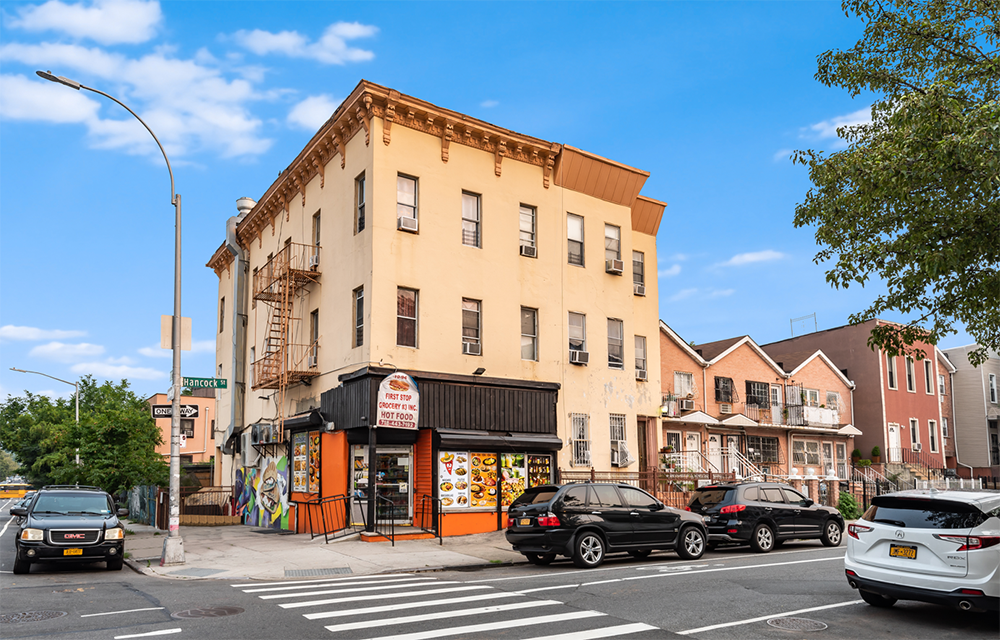
Investment Property Realty Group closes $1.75 million sale of 1094 Hancock Street in Brooklyn
Brooklyn, NY Investment Property Realty Group (IPRG), a New York-based commercial investment firm, has closed the sale of 1094 Hancock St., a mixed-use building in the Bushwick section, for $1.75 million.


Quick Hits

Columns and Thought Leadership

Hunt commercial real estate question and answer: Fortune 500 wisdom - by David Hunt
Yes, there are lessons to be learned from the largest companies in America when comes to managing your real estate. But the decision to buy or lease real estate may not be one of

Hunt CRE question and answer: Choosing a real estate agent - by David Hunt
First, we will only work with one agent exclusively. The primary reason is that we want that agent to legally represent our client’s interests. In New York State, a real estate agent has a fiduciary

New York’s streets are full again, and the retail numbers prove it - by Noam Aziz
Walk down any New York block this year and you can feel it. The sidewalks are crowded, the storefronts are lit, and the energy that defines this city is back at full volume.

A guide to finding the right NYC property management company - by Sanjay Gandhi
Being a small to midsize landlord in NYC is an increasingly demanding endeavor. From navigating complex regulations, increased compliance demands to dealing with tenant issues and remediating violations. It is wise to enlist the assistance of a partner, a professional
.gif)