



News:
Brokerage
Posted: November 5, 2019
The hidden perils of open permits - by Valeria Kozhich
 Most people know that a permit is required whenever any non-cosmetic improvement or alteration is made to a property. It’s less common knowledge that permits also need to be closed when the work is completed. Open permits—like open violations—can pose difficulties when a property is being sold or when further improvements are being planned.
Increased Expense
In a recent transaction, Holm & O’Hara LLP represented the seller of a mixed use property, consisting of a multi-family dwelling and professional office space. The seller was eager to complete the transaction and unwilling to alter the purchase price. However, the property had open plumbing permits dating back to the mid-1990s and a landmarks permit violation. In order to expedite the sale, the seller put funds into escrow to handle closing the permits. Typically, these escrowed amounts are double what is likely to be required for closing out the permit. In this case, closing the plumbing permits was substantially more complicated—and expensive—than anticipated. Because plumbing codes had changed and because the original renovation team was unavailable, the seller incurred significant expense in bringing the plumbing up to code, as well as expenses associated with recruiting and managing a new renovation team and expediter for the plumbing. Although the transaction closed on time, the seller remained involved with the property for several months after the closing and spent most of the funds placed into escrow on expenses related to closing out the permits.
Increased Timeframe
On another transaction, Holm & O’Hara LLP represented a buyer seeking to purchase a commercial condominium unit from an estate. The buyer wanted to make renovations to the property before putting it into service; however the space had a number of outstanding permits which had to be closed before new permits could be issued. Additionally, the contract specified that the closing could not take place until the open permits were closed. The executors of the estate wanted to complete the transaction as quickly as possible, but the buyer was under no pressure and refused to schedule the closing until all outstanding permits were closed. As a result, the closing took three months longer than anticipated, resulting in the estate remaining open and likely incurring additional legal fees.
Uncertain Outcomes
Coop and condo sales can also be impacted by open and incomplete permits. A Holm & O’Hara LLP client sold two coop apartments that had an open permit to combine the two into one apartment. Since the property was legally two units at the time of sale, the NYC transfer tax was calculated at the higher commercial rate per NYC Department of Finance (DOF) regulations. In order to obtain a refund for the overpaid portion of taxes, the DOF required proof that the combination was taking place. This required six months of back and forth, extensive provision of documentation—including architectural plans and various affidavits—and a lot of support from the legal team. Even with all of that, the outcome was not a foregone conclusion.
Conclusion
Open permits can be a tricky issue for both buyers and sellers. Widespread availability of information online makes it much easier for savvy buyers to complete extensive due diligence prior to contract execution. It won’t necessarily be easy to cure open permits in advance of a sale, due to increased demand for Department of Buildings resources. Additionally, some lenders may be wary of the potential impact of open permits on the property value. Depending on the specific issues, it may make sense for buyer and seller to agree on a credit against the purchase price, especially if the buyer is already planning to do significant work on the property and the seller does not want the headache of dealing with open permits post-closing.
Valeria Kozhich, Esq., is a partner with Holm & O’Hara LLP, New York, N.Y.
Tags:
Brokerage
MORE FROM Brokerage
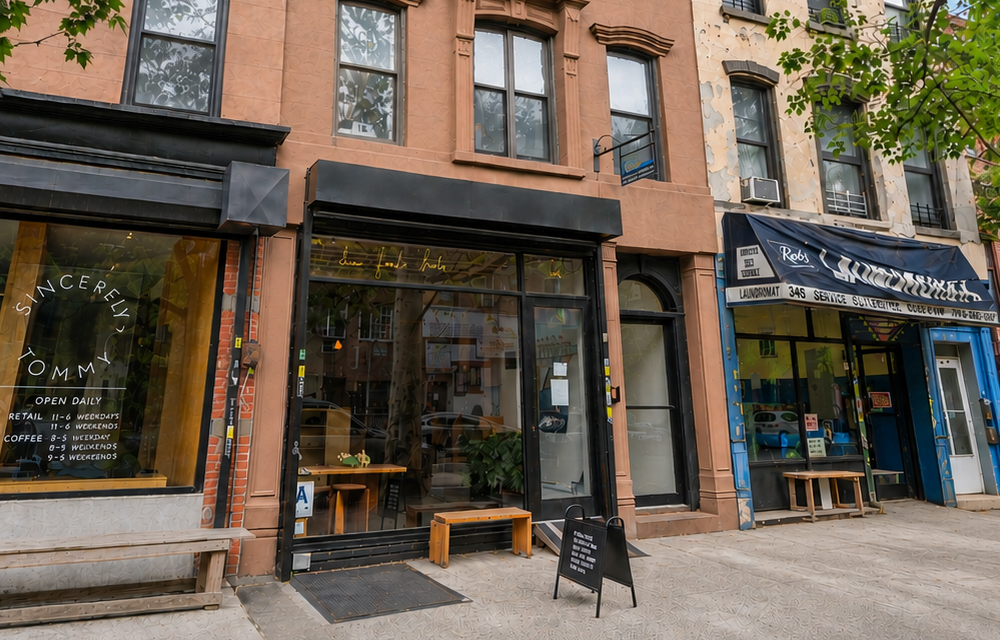
Bestreich, Reynolds, Davila, and Flaherty of Investment Property Realty Group close $1.97 million sale of 343A Tompkins Ave. in Bed-Stuy
Brooklyn, NY Investment Property Realty Group (IPRG) closed the sale of 343A Tompkins Ave., a mixed-use building located in the Bed-Stuy section of the borough, for $1.97 million.


 (2).gif)

Columns and Thought Leadership

Hunt commercial real estate question and answer: Fortune 500 wisdom - by David Hunt
Yes, there are lessons to be learned from the largest companies in America when comes to managing your real estate. But the decision to buy or lease real estate may not be one of

Hunt CRE question and answer: Choosing a real estate agent - by David Hunt
First, we will only work with one agent exclusively. The primary reason is that we want that agent to legally represent our client’s interests. In New York State, a real estate agent has a fiduciary

New York’s streets are full again, and the retail numbers prove it - by Noam Aziz
Walk down any New York block this year and you can feel it. The sidewalks are crowded, the storefronts are lit, and the energy that defines this city is back at full volume.

A guide to finding the right NYC property management company - by Sanjay Gandhi
Being a small to midsize landlord in NYC is an increasingly demanding endeavor. From navigating complex regulations, increased compliance demands to dealing with tenant issues and remediating violations. It is wise to enlist the assistance of a partner, a professional
.gif)