



News:
Brokerage
Posted: April 2, 2020
The Agency establishes COVID-19 Emergency Loan Fund
Binghamton, NY The Agency (Broome County IDA/LDC) released today, details of an emergency loan fund for businesses impacted by COVID-19 crisis. The Agency has modified existing loan funds to be responsive to the immediate needs for cash flow that many businesses are experiencing.
Through the Broome County Emergency Loan Fund, businesses can receive the following benefits:
-
No principal and interest payments for 12-months
-
No equity requirement
-
Associated application and closing fees waived
-
Expedited closing process
-
Expedited loan review by the Advisory Loan Committee
Applicants will be required to provide the following documentation:
-
Most recent tax return (if not complete for 2019, year-end financials will be required)
-
List of current debt
-
An authorized credit check will be required
Loans will be reviewed on a first-come, first-served basis and there is approximately $1,000,000 in funds available for lending. In addition, funds that draw from one of The Agency’s accounts can also be used to assist businesses in Chenango, Cortland, Delaware, Otsego, Tioga and Tompkins counties. This is because the origination of the funds comes from a federal agency and is a requirement of the program.
The interest rate on loans will be at 75% of the prime interest rate at the time the deferral period ends.
Agency officials state that this program will complement the many emergency loan funds in the area that can assist during this time.
“We recognize that what most businesses need to do at this time is to protect cash flow,” said Stacey Duncan, executive director of The Agency and president & CEO of the Greater Binghamton Chamber of Commerce. “We’re hopeful that these funds can assist businesses with their immediate needs while we gain a better understanding of what our long-term recovery will look like.”
Businesses interested in applying should contact Tom Gray at 607.584.9000 or [email protected]. Additional contacts include Natalie Abbadessa at 607.584.9000 or [email protected].
For more coronavirus resources, go to http://theagency-ny.com.
Tags:
Brokerage
MORE FROM Brokerage
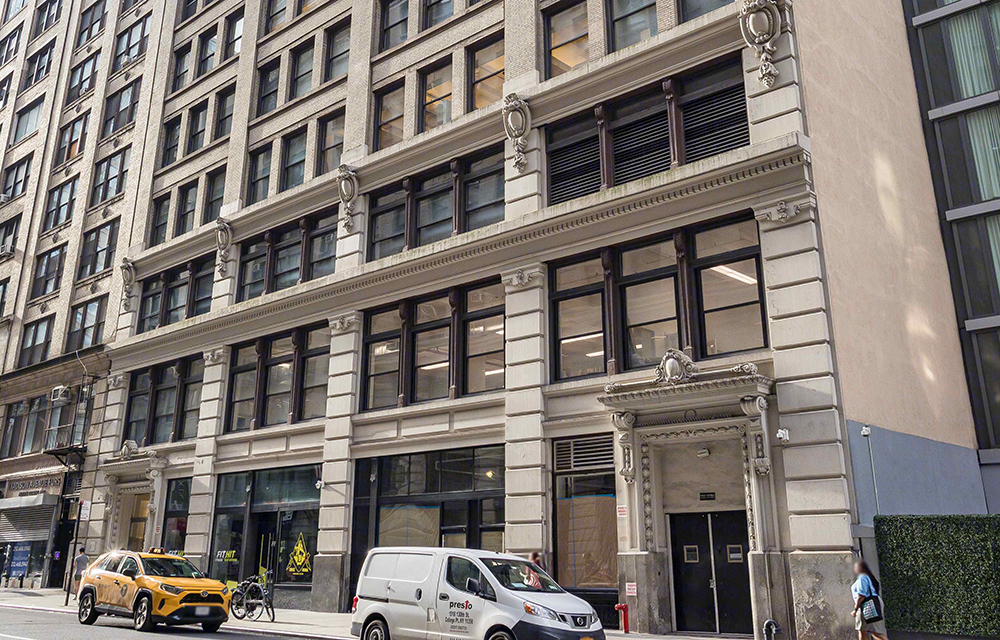
Koeppel Rosen inks 16-year 33,783 s/f lease for coworking firm Nomadworks at 122 West 27th St.
Manhattan, NY According to Koeppel Rosen LLC, leasing and management agent for the Rosen family portfolio, Nomadworks has signed a new 16-year, two-month lease totaling 33,783 s/f at 122 West




Quick Hits
 (2).gif)

Columns and Thought Leadership

The art of investing in real estate - by Thomas Donovan
Real estate investing is as much an art as it is a skill. No one can time the market, or the factors that drive it, perfectly. Location, zoning, size, transportation, and neighborhood density give you a baseline for

Hunt CRE question and answer: Choosing a real estate agent - by David Hunt
First, we will only work with one agent exclusively. The primary reason is that we want that agent to legally represent our client’s interests. In New York State, a real estate agent has a fiduciary

New York’s streets are full again, and the retail numbers prove it - by Noam Aziz
Walk down any New York block this year and you can feel it. The sidewalks are crowded, the storefronts are lit, and the energy that defines this city is back at full volume.

Hunt commercial real estate question and answer: Fortune 500 wisdom - by David Hunt
Yes, there are lessons to be learned from the largest companies in America when comes to managing your real estate. But the decision to buy or lease real estate may not be one of
.gif)