



News:
Brokerage
Posted: March 21, 2011
TAYLOR - The Builders and KSS Architects partner in $14 million SUNY Cortland 20,000 s/f addition
The Professional Studies building, located on SUNY Cortland campus at 47 Pashley Dr., was a $14 million project that provided an approximately 20,000 s/f two-story addition to the already existing approximately 48,000 s/f one-story academic building (originally constructed in 1948 and renovated in the 1990s). The addition project included the following:
* Speech Pathology and Audiology clinic with an audiology chamber, observation and therapy rooms, library and resource area
* Addition of academic offices and classrooms
* Renovations to existing offices, classrooms and labs
* Addition of a 30 by 80 ft. courtyard and connector linking it to the existing building
* Site work included the addition of a small parking lot, geothermal walls and a green space
* Project will meet certifiable LEED Silver standards.
The project, which broke ground in October of 2009, transformed the school's former Studio West, located on the south entrance of the college campus. KSS Architects, architect, and TAYLOR - The Builders, general contractor, teamed up for this project out of the institution's ever expanding needs for space to house four of the six academic departments with the School of Professional Studies. The addition became the new Professional Studies Building consolidating four of the six departments in the institution's School of Professional Studies including the Recreation, Park and Leisure Studies Department and Communication Disorders and Sciences Department with the Kinesiology and Sport Management Departments, along with the Dean's office.
Should the college choose to obtain LEED Silver certification for the project, it will verify the building as a highly energy efficient, environmentally responsible and green building. The design of the Professional Studies Building incorporates several measures to meet this certification level such as improving the building's energy performance and enhancing its thermal performance through the renovation by connecting new zone-mounted heat pumps to geothermal wells which will provide conditioning for the interior and by replacing air handling units on the existing roof with two energy recovery units. Some other measures that meet LEED Silver certification standards are:
* At least 35% of the building's electricity provided from a renewable resource.
* 30% reduction in water use and water efficiencies.
* Control erosion to reduce negative impacts on water and air quality.
* 20% increase of energy performance above building code requirements.
* Recycling of waste material: 50% diversion from landfill.
* Purchase of construction material with high-recycled content.
* Purchase of low-emitting construction materials for enhanced indoor air quality.
The project was publically financed with funds by the campus to maintain academic standards for the community.
The project was completed in
January of this year.
Tags:
Brokerage
MORE FROM Brokerage
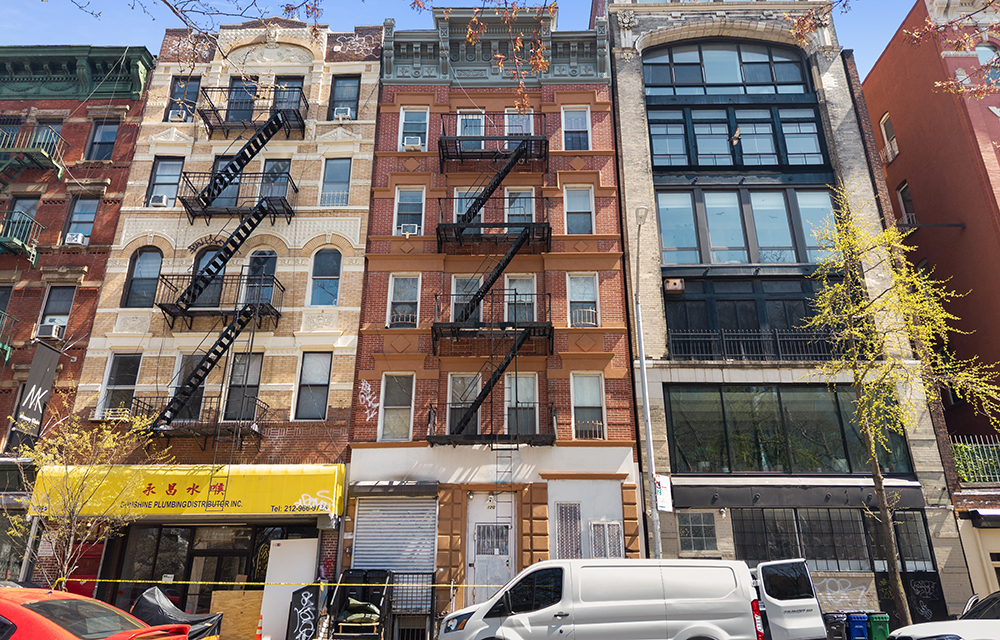
Investment Property Realty Group sells 120 Forsyth St. for $1.35 million
Manhattan, NY Investment Property Realty Group (IPRG) closed the sale of 120 Forsyth St., a mixed-use building located in the Lower East Side section of the city, for $1.35 million.




Quick Hits

Columns and Thought Leadership

Positive forecast for New York’s pro-housing push? - by Philip Butler
New York’s housing crisis remains a hot button topic despite growing consensus that varied and affordable housing is desperately needed statewide. Governor Hochul has recently introduced several initiatives to overcome N.Y.’s anti-housing

A guide to finding the right NYC property management company - by Sanjay Gandhi
Being a small to midsize landlord in NYC is an increasingly demanding endeavor. From navigating complex regulations, increased compliance demands to dealing with tenant issues and remediating violations. It is wise to enlist the assistance of a partner, a professional

New York’s streets are full again, and the retail numbers prove it - by Noam Aziz
Walk down any New York block this year and you can feel it. The sidewalks are crowded, the storefronts are lit, and the energy that defines this city is back at full volume.

Hunt commercial real estate question and answer: Fortune 500 wisdom - by David Hunt
Yes, there are lessons to be learned from the largest companies in America when comes to managing your real estate. But the decision to buy or lease real estate may not be one of
.gif)