Ariel Property Advisors





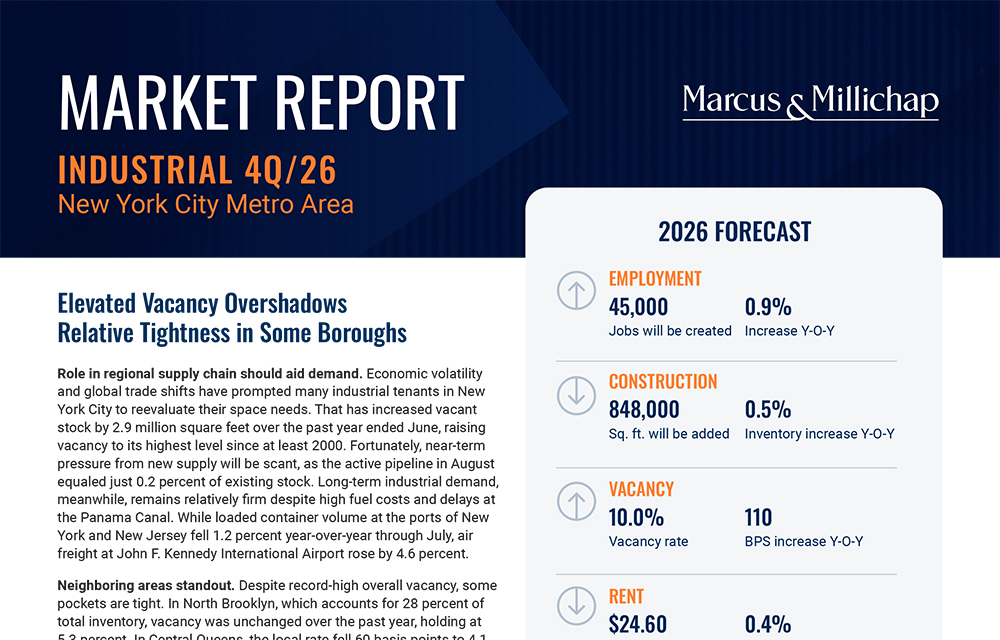
Real estate investors have become increasingly optimistic about Sunset Park’s industrial and warehouse assets, motivated by the neighborhood’s proximity to major thoroughfares and relative affordability. With New York’s new rent regulation laws expected to dampen demand for multifamily buildings dominated by rent stabilized units moving forward, investors will pivot their focus to these properties, particularly given the growing need for e-commerce space.
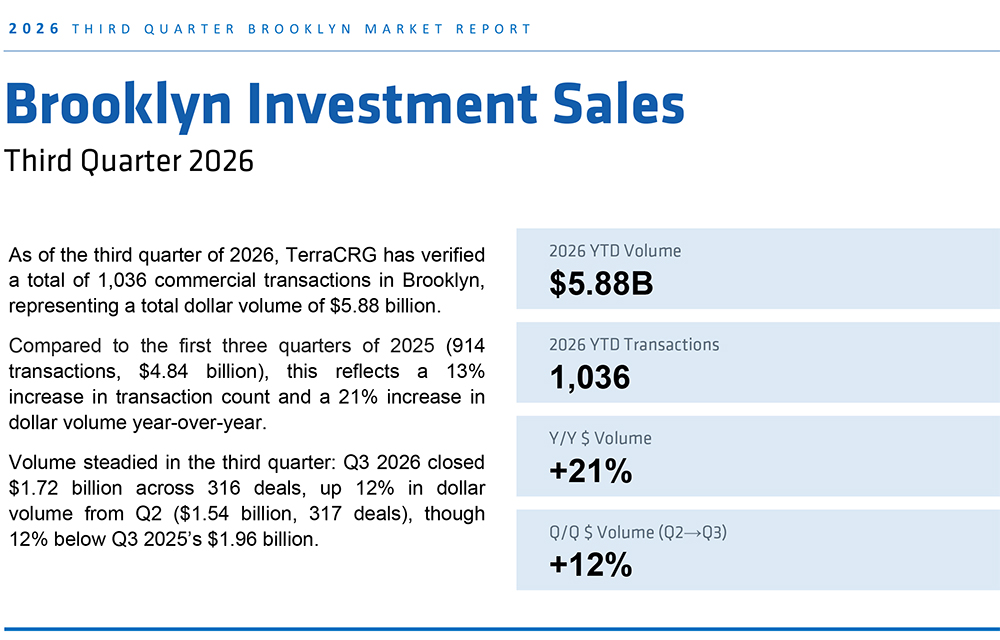
Uncertainty leading up to the June 15th expiration of New York’s rent regulation laws made a profound impact on Brooklyn’s investment sales market in the first half of 2019, with sales sliding 29% to 376 transactions compared to the first half of 2018, according to our research. Multifamily assets, unsurprisingly, witnessed a steep slump in Brooklyn, falling 36% to 216 sales during this period.
Sweeping new rent regulation laws enacted last month removed several important benefits to rent stabilized property owners, such as the ability to increase rents after making renovations or the right to remove an apartment from rent regulated status when the monthly rent surpassed a pre-determined threshold. This will push investors to consider purchasing other asset types, namely industrial sites and warehouses as they are unregulated and serve a growing need in NYC.
With the softening of brick-and-mortar retail stores and shopping malls paving the way for the need for industrial space, online retailers have been snatching up buildings for storage and shipment. Throughout NYC, shipping and logistics have become an extremely competitive business too, so delivery centers that offer the capability of same-day and soon-to-be two-hour delivery are the most coveted. Few other regions in the city fit the bill for this type of “last mile” distribution more than Sunset Park. The area is a mere five miles from the Verrazano Bridge, and is right next to both the Gowanus Expressway and Prospect Expressway, allowing nearly unfettered access to Manhattan, Queens, New Jersey and Long Island.
Through rezonings and residential conversions, Brooklyn has lost millions of square feet of industrial space in recent years, creating a dire need for the creation of Industrial Business Zones to protect the remaining supply of industrial and commercial properties. Sunset Park is located within the NYC Economic Development Corp.’s Southwest Brooklyn Industrial Business Zone. This zoning provides firms with economic incentives for relocation to the area, including business income tax credits of up to $3,000 per employee, property tax abatements and reduced energy costs.
As incentives and demand for industrial assets continue to rise, so have property values. Indeed, the average price per square foot for an industrial building in Sunset Park in 2018 was $386, an impressive 28% more than what they fetched a mere three years prior.
Sunset Park’s industrial assets should continue to appreciate, especially versus other areas that are perceived as being “maxed out” or already at the top of the market. For example, in Williamsburg, another hot spot for industrial properties, the average price per square foot in 2018 was $492, which is $100 more per ft. than what they sell for in Sunset Park.
Colossal Sale of Sunset Industrial Park
Vertical warehouses are extremely popular as developers in condensed markets like NYC try to meet the demand for last mile accessibility. In what will perhaps be one of New York City’s biggest commercial real estate deals of the year, Bridge Development Partners and DH Property Holdings, coupled with equity partner Banner Oak Capital Partners, recently announced plans to acquire Sunset Industrial Park for $255 million. The sprawling 18-acre site – situated on Third Ave. between 19th St. and 21st St., along the Gowanus Canal – will include an up to 1.3 million s/f stacked distribution center, which will make it the largest of its kind in the country. Demolition of the property is expected to begin in early 2020 and construction is scheduled to commence later in the year.
The project at Sunset Industrial Park will undoubtedly be the blueprint that many other industrial developers and investors will seek to replicate. With the growing emphasis on last mile delivery, the project is rooted in the idea that e-commerce tenants will pay a premium to be in an area that allows them to quickly and more efficiently deliver their products. Sunset Park certainly satisfies that need.
Lastly, Sunset Park’s abundance of “Economic Opportunity Zones,” which run along the Brooklyn Queens Expressway and spans two miles, is yet another developer incentive. Investors in these zones benefit from substantial tax benefits, such as the deferment of capital gains taxes. A portion of the land within Sunset Park’s Opportunity Zones is M-zoned, which allows for the development of manufacturing and industrial use. This should further incentivize industrial development in these areas.
Due to the above-mentioned factors, the outlook for Sunset Park’s industrial and warehouse properties is definitively optimistic, with changes to New York’s rent regulation laws a big boon for these assets as buyers shift their attention. Whether it be its prime location and attractive valuations or the large swaths of Opportunity Zones, Sunset Park is high on investors’ radar screens, paving the way for a strong market for the foreseeable future.
Stephen Vorvolakos is a director – investment sales, and Kristen Ostach is an analyst – investment research at Ariel Property Advisors, New York, N.Y.


 (2).gif)





.gif)