



News:
Brokerage
Posted: October 17, 2017
Steinmetz and Velotta of Meridian Investment Sales broker $29.8 million

Bronx, NY Meridian Investment Sales, the commercial property sales division of Meridian Capital Group, exclusively represented the seller, Eric Silverstein, son of the late landlord Harry Silverstein, and procured the buyer, Pistilli Realty Group, in the sale of a multifamily building. Meridian’s Mark Steinmetz and Richard Velotta negotiated both sides of the transaction.
Located at 1555 Grand Concourse in the Mount Eden neighborhood, the six-story 139,000 s/f building is comprised of 149 units. Built in 1927, the multifamily property was recently upgraded with renovated elevators, a new intercom system, and a gas conversion is underway. Three-blocks east of the property, the green oasis of Claremont Park features meadows and rolling hills, a pool, tennis courts, and two playgrounds. Shops, restaurants, and a supermarket are within walking distance of the property.

“As one of the largest properties in the Silverstein family’s multifamily portfolio, 1555 Grand Concourse is a great addition to Pistilli Realty Group’s holdings in the Bronx,” said Velotta. “As significant property owners in the Bronx, Pistilli Realty Group is well-positioned to manage this property by leveraging its existing talent and platform to maximize value and make 1555 Grand Concourse accretive to their portfolio from day one.”
Founded in 1991, Meridian Capital Group is America’s most active deal maker and one of the nation’s leading commercial real estate finance and investment sales firms. In 2016, Meridian closed $35 billion in loan volume and sold over $2 billion in commercial properties. Since inception, the company has closed more than $270 billion in financing with the full complement of capital providers, encompassing local, regional and national banks, CMBS lenders, agency lenders, mortgage REITs, life insurance companies, credit unions and private equity funds. Meridian represents many of the world’s leading real estate investors and developers and the company’s expansive platform has specialized practices for a broad array of property types including office, retail, multifamily, hotel, mixed-use, industrial, healthcare, student housing and self-storage properties. Meridian is headquartered in New York City with offices in New Jersey, Maryland, Illinois, Ohio, Florida and California. www.meridiancapital.com
Tags:
Brokerage
MORE FROM Brokerage
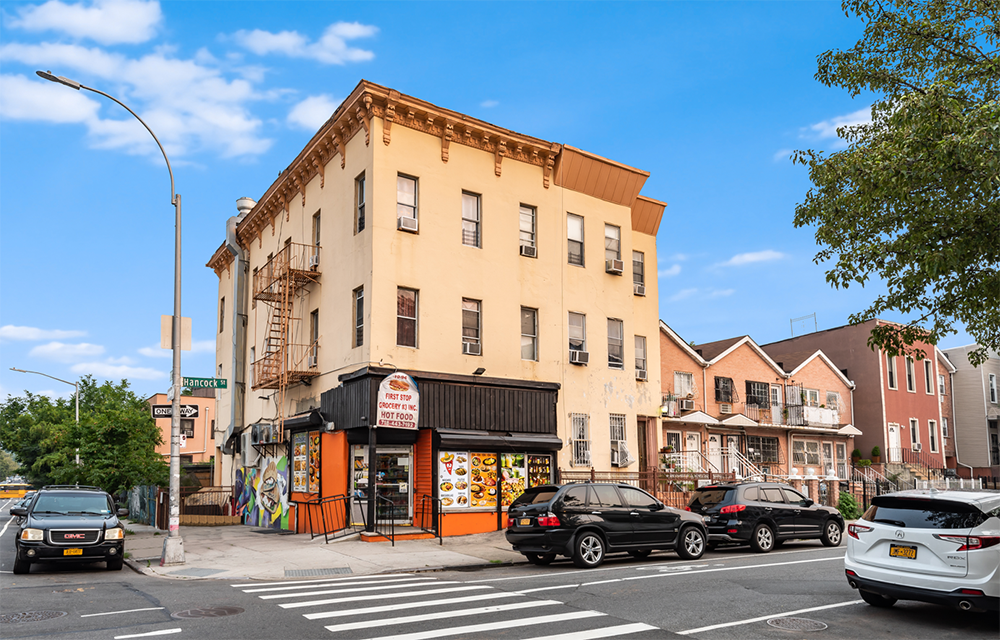
Investment Property Realty Group closes $1.75 million sale of 1094 Hancock Street in Brooklyn
Brooklyn, NY Investment Property Realty Group (IPRG), a New York-based commercial investment firm, has closed the sale of 1094 Hancock St., a mixed-use building in the Bushwick section, for $1.75 million.




Quick Hits

Columns and Thought Leadership

Hunt CRE question and answer: Choosing a real estate agent - by David Hunt
First, we will only work with one agent exclusively. The primary reason is that we want that agent to legally represent our client’s interests. In New York State, a real estate agent has a fiduciary

A guide to finding the right NYC property management company - by Sanjay Gandhi
Being a small to midsize landlord in NYC is an increasingly demanding endeavor. From navigating complex regulations, increased compliance demands to dealing with tenant issues and remediating violations. It is wise to enlist the assistance of a partner, a professional

Hunt commercial real estate question and answer: Fortune 500 wisdom - by David Hunt
Yes, there are lessons to be learned from the largest companies in America when comes to managing your real estate. But the decision to buy or lease real estate may not be one of

New York’s streets are full again, and the retail numbers prove it - by Noam Aziz
Walk down any New York block this year and you can feel it. The sidewalks are crowded, the storefronts are lit, and the energy that defines this city is back at full volume.
.gif)