



News:
Brokerage
Posted: July 16, 2019
State of land use in New York City - Four key findings - by Ron Cohen

The Besen Group
Land use is arguably one of the most critical issues for the effective planning and development of our fair city. There are various rezoning initiatives that have recently passed to foster growth in neighborhoods such as Inwood, East Harlem, Jerome Avenue (Bronx), and East New York. Here are four key updates from most recently available data on the state of land use in New York City, from NYU Furman Center’s State of NYC’s Housing and Neighborhoods in 2018 report:
1. The number of housing units authorized by new building permits in New York City decreased between 2017 and 2018. New York City issued permits for 20,012 new housing units in 2018, down 6.7% from 2017. Aside from 2015, the year the 421-a tax incentive expired, the number of permits issued during the post-recession years is about one third lower than the pre-recession years. Fewer units were authorized in new buildings with five to 49 units than in 2017 (-19.8% to 4,844) while the number of units authorized in new buildings with 50 or more units increased slightly (1.8% to 13,571). In 2018, the largest share of newly authorized units continued to be in buildings with 50 or more units (67.8%) and that share increased by 5.7 percentage points from 2017.
2. Citywide, there were over 26,000 new residential units authorized for occupancy in 2018. Between 2017 and 2018, the number of new units receiving a certificate of occupancy in New York City increased by 5% to 26,992, exceeding the previous peak in 2007. The vast majority of new units authorized for occupancy were in buildings with 50 or more units (72.7%, up from 70.0% in 2017).
3. Two new historic districts covering 461 tax lots were approved in 2018. In 2018, the New York City Landmarks Preservation Commission (LPC) designated two new historic districts: An extension to the existing Boerum Hill Historic District in Brooklyn (291 lots) and a new historic district in Central Harlem from West 130th to 132nd Sts. (170 lots).
4. In 2018, New York City designated 12 individual landmarks in Manhattan, Brooklyn, and Queens. The New York City Landmarks Preservation Commission (LPC) designated six buildings in Manhattan, four buildings in Brooklyn, and two buildings in Queens as landmarks. There were no interior landmarks designated in 2018.
Ron Cohen is the chief sales officer for The Besen Group, N.Y., N.Y.
Tags:
Brokerage
MORE FROM Brokerage
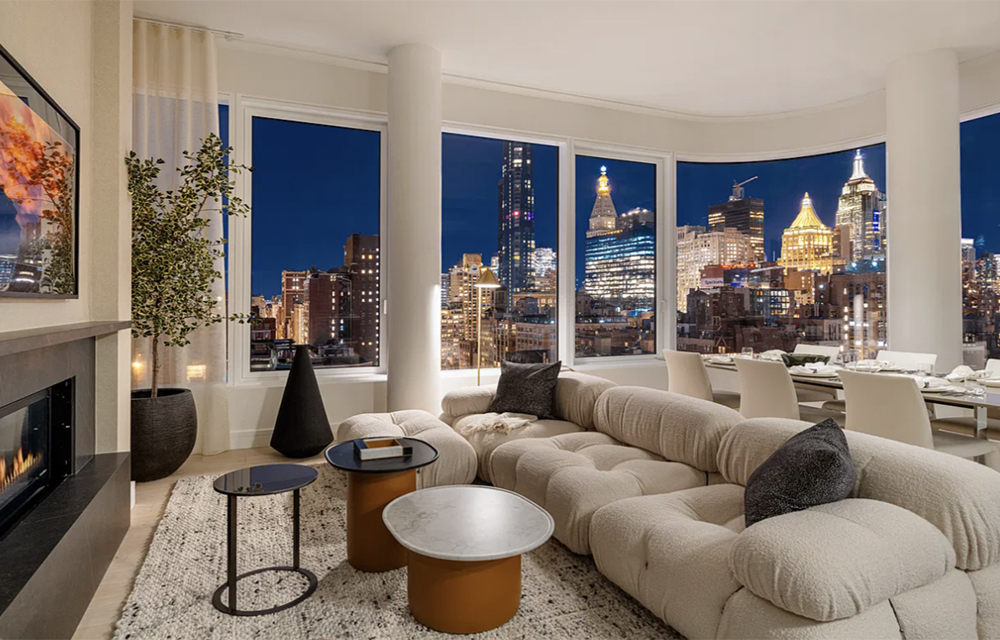
200E20TH sells out in Gramercy, penthouse A closes out sales at the CetraRuddy-designed condominium residences
Manhattan, NY 200E20TH, the CetraRuddy-designed architectural masterwork that brought a curved, contemporary sensibility to Gramercy’s Beaux-Arts streetscape, has






Columns and Thought Leadership

New York’s streets are full again, and the retail numbers prove it - by Noam Aziz
Walk down any New York block this year and you can feel it. The sidewalks are crowded, the storefronts are lit, and the energy that defines this city is back at full volume.

Hunt commercial real estate question and answer: Fortune 500 wisdom - by David Hunt
Yes, there are lessons to be learned from the largest companies in America when comes to managing your real estate. But the decision to buy or lease real estate may not be one of

Hunt CRE question and answer: Choosing a real estate agent - by David Hunt
First, we will only work with one agent exclusively. The primary reason is that we want that agent to legally represent our client’s interests. In New York State, a real estate agent has a fiduciary

The art of investing in real estate - by Thomas Donovan
Real estate investing is as much an art as it is a skill. No one can time the market, or the factors that drive it, perfectly. Location, zoning, size, transportation, and neighborhood density give you a baseline for
.gif)