



News:
Brokerage
Posted: May 25, 2010
SBA 504 loan encourage small business investments in owner user real estate
Even in good economic times, access to capital is often a concern for small businesses. And in a challenging economic climate many small business owners assume they won't be able to obtain the financing they need to expand their businesses.
But, for small businesses with good fundamentals, credit is available. U.S. Small Business Administration (SBA) growth is a bright spot in the current economic picture. One lending program that works for many small businesses is a relatively little known SBA loan program that helps companies purchase land, buildings, equipment and machinery without depleting working capital.
The SBA 504 loan program, which was introduced in the 1980s when double-digit interest rates made conventional loans difficult for small businesses to afford, has been gaining popularity because it allows business owners to make significant investments in their businesses, benefits communities by encouraging job development and limits the lender's risk.
How the SBA 504 loan program works is that it brings together two lenders, sharing the risk. These loans are a partnership between a bank and a certified development corporation (CDC), which are nonprofit lending consortiums with the mission of encouraging economic development and supporting job development. SBA 504 loans fulfill the CDC's economic development mission by requiring that the borrower must create or retain one job per an average of $65,000 in CDC funds lent.
Using the program, qualified small businesses can obtain a range of $1.5 million to $4 million, for projects valued up to $10 million. Depending on the industry, the long-term, fixed rate financing can require as little as 10% down and does not end in a balloon payment. This equates to a 90% Loan to Value (LTV). The funds can be used to purchase, build or renovate owner-occupied business property, or purchase machinery and equipment. 504 loans cannot be used to provide working capital.
In an SBA 504 loan deal, the bank lends 50% of the funds and takes a first mortgage or lien, significantly reducing its risk in making the loan. The CDC partner lends 40% of the loan funds, taking a second mortgage or lien, and the borrower generally only has to put in 10% of the project value, keeping more capital available in the business than would be possible with a standard, conventional loan. Start-up companies and companies in some industries may be required to contribute additional equity.
Interest rates are currently at an historic low point, and interest rates are fixed for 20 years when the CDC funds the second mortgage. The 504 interest rates for April 2010 were 5.52% for real estate and 4.6% for equipment loans; these rates are good for 20 years and 10 years, respectively. By comparison, many traditional small business loans require 20 to 25% down and have terms of 10 to 15 years for real estate, ending in a balloon payment.
The SBA 504 program gained popularity during the booming real estate market — now strictly in the rearview mirror — as borrowers looked for a way to reduce down payments and lenders recognized the value of sharing the risk with a CDC partner. While still producing only half the dollar volume of the SBA's 7a loan program, 504 loans offer an alternative for small businesses that see upside opportunities even in a down economy.
For small business owners who have a solid plan to grow through the purchase of property or equipment, the SBA 504 loan program can be the right tool to get the deal done.
Patrick Mucci is the SBA relationship manager at KeyBank, Capital Region and Hudson Valley, N.Y.
Tags:
Brokerage
MORE FROM Brokerage
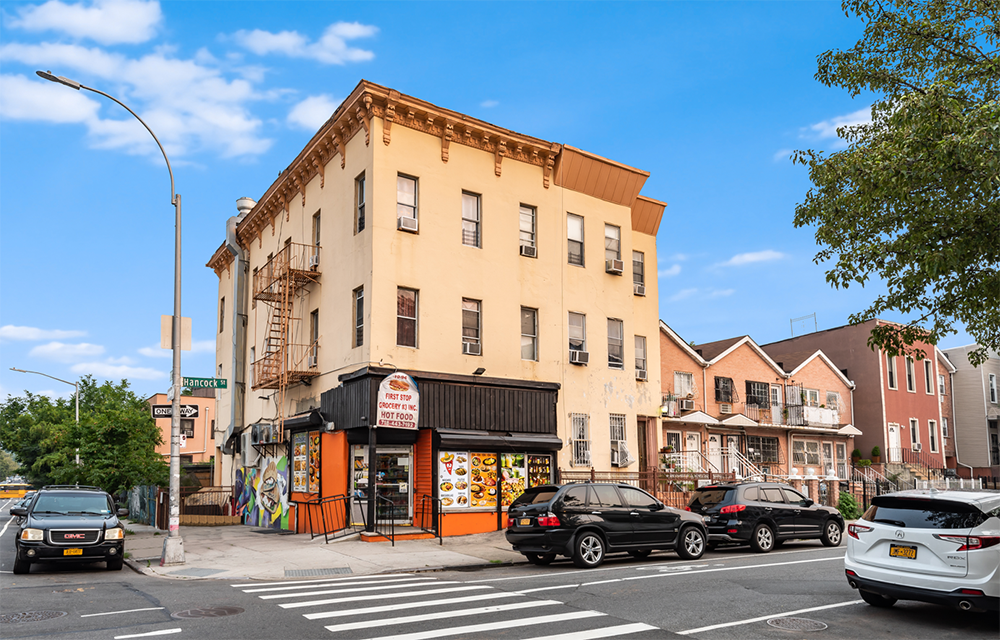
Investment Property Realty Group closes $1.75 million sale of 1094 Hancock Street in Brooklyn
Brooklyn, NY Investment Property Realty Group (IPRG), a New York-based commercial investment firm, has closed the sale of 1094 Hancock St., a mixed-use building in the Bushwick section, for $1.75 million.




Quick Hits
 (2).gif)

Columns and Thought Leadership

A guide to finding the right NYC property management company - by Sanjay Gandhi
Being a small to midsize landlord in NYC is an increasingly demanding endeavor. From navigating complex regulations, increased compliance demands to dealing with tenant issues and remediating violations. It is wise to enlist the assistance of a partner, a professional

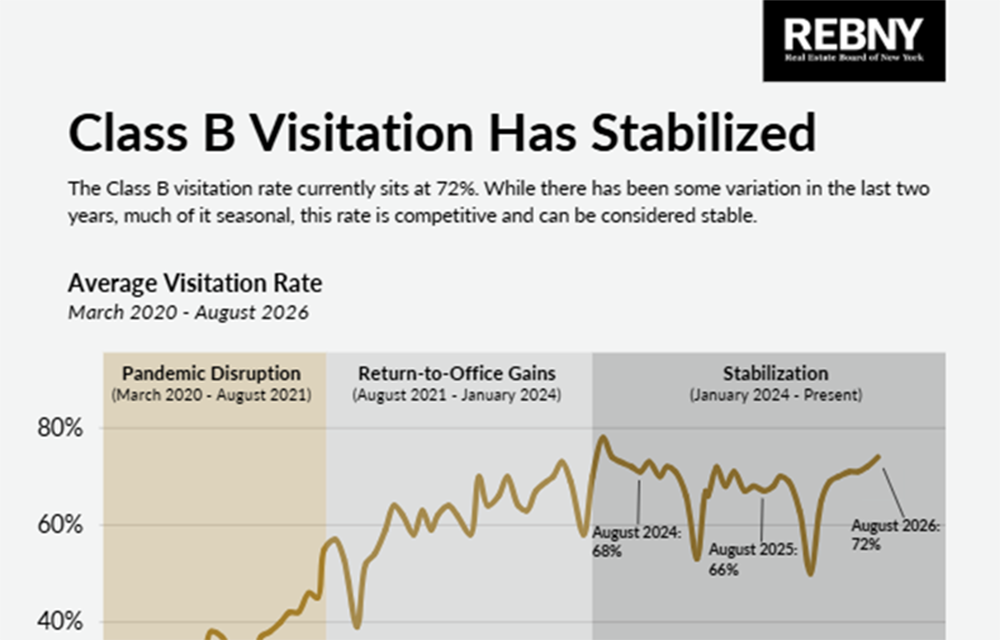
New York’s streets are full again, and the retail numbers prove it - by Noam Aziz
Walk down any New York block this year and you can feel it. The sidewalks are crowded, the storefronts are lit, and the energy that defines this city is back at full volume.

Hunt commercial real estate question and answer: Fortune 500 wisdom - by David Hunt
Yes, there are lessons to be learned from the largest companies in America when comes to managing your real estate. But the decision to buy or lease real estate may not be one of

Hunt CRE question and answer: Choosing a real estate agent - by David Hunt
First, we will only work with one agent exclusively. The primary reason is that we want that agent to legally represent our client’s interests. In New York State, a real estate agent has a fiduciary
.gif)